Music Department
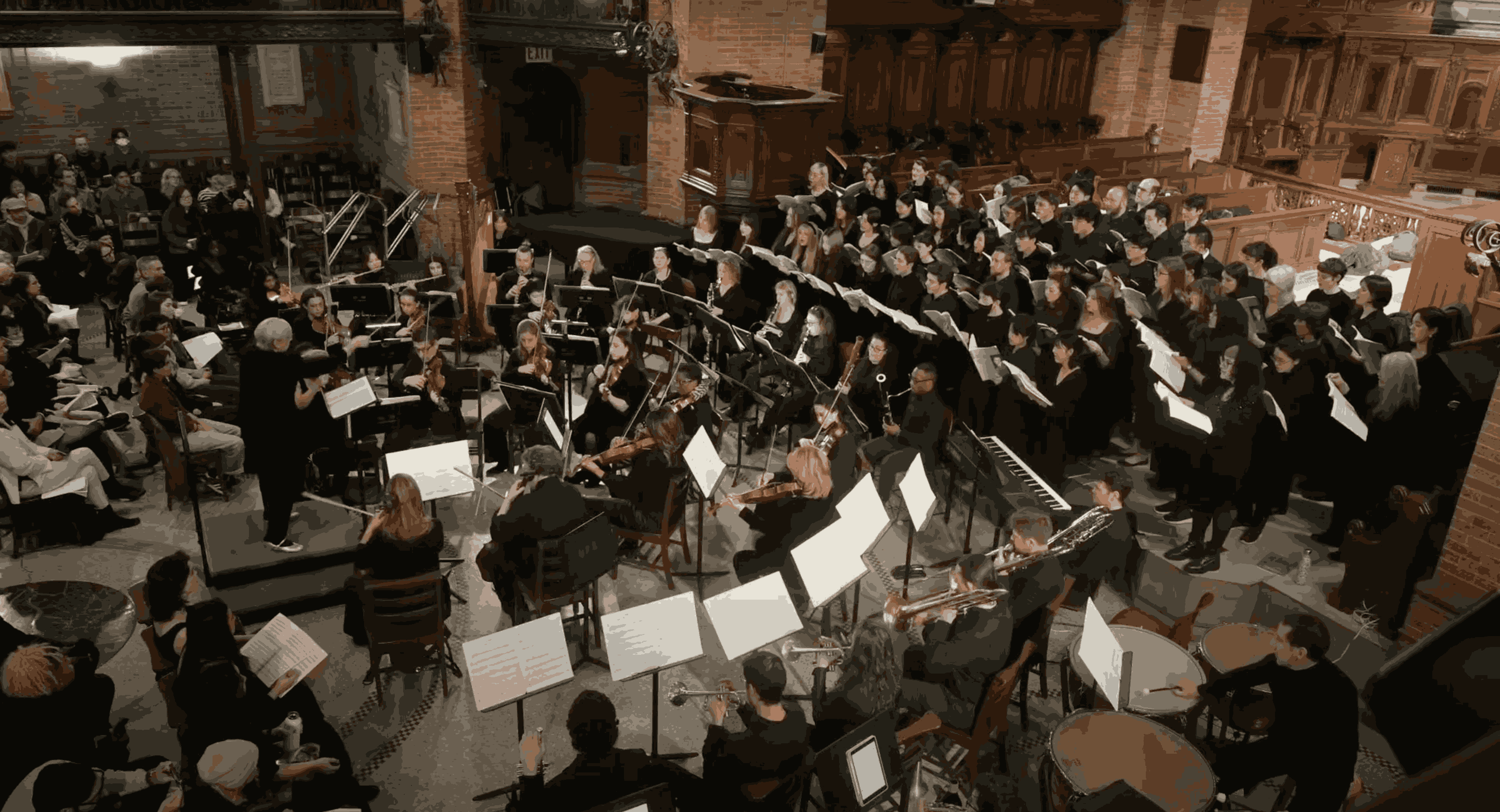
Barnard College enables young musicians to actively pursue training in all aspects of music such as composition, computer music studies, music history, ethnomusicology, or music theory as composition a unique position that allows him or her access to vast selections of additional course offerings from Columbia University, Manhattan School of Music, and the Juilliard School. Barnard College provides the core of foundational studies so its purpose is not designed to produce professional musicians though are encouraged to go on to be such but is to provide the student the experience of doing serious and scholarly work within the field of music. The music program is composed of leading scholars who serve as dedicated teachers to our pool of 2400 extraordinary women and the metropolitan location grants students access to excellent cultural, intellectual, and social resources. Head on out with a student ticket to Carnegie Hall!
Fall 2026 Holiday Choral Concert
What's Coming Up
Holiday Choral Concert
Spring 2027 Chorus/Chamber Singer and Voice Auditions — Day 1
Spring 2027 Chorus/Chamber Singer and Voice Auditions — Day 2
Solo Voice Auditions and Voice Classes — Day 1
Solo Voice Auditions and Voice Classes — Day 2
Major and Minor Requirements
Requirements of the Standard Major
Students who are interested in majoring in Music should consult a Music professor or the Chair in their sophomore year to plan their academic programs. Ethnomusicology students should consult with the Chair. Prospective Music majors should complete the prerequisites by the end of their sophomore year and are encouraged to complete them by the end of their freshman year. By the end of their first year as a Music major, the student should select a faculty advisor.
The Music major's courses should include:
- Foundation Courses:
- Courses: Minimum of 40 points, including
- Music Theory I - IV
- History of Western Music I: Middle Ages to Baroque
- History of Western Music II: Classical to 20th Century
- Topics in Music and Society
- Three courses in musicianship: Musicianship: Rhythm, Musicianship: Melody, Musicianship: Harmony
- At least three 3000- or 4000- level electives in an area of interest (theory, history, composition, or ethnomusicology)
- Remaining points from 2000- to 4000- level electives. (No more than 6 points of 2000- level courses and no more than 4 points of instrumental or vocal lessons count towards the major.)
- Senior Seminar (4 points)
- Senior Project: It can be an expansion of a paper written in a 4000- level course, a composition, or a recital.
Requirements of the Ethnomusicology Track
The Ethnomusicology major is not subdividable further without consultation with the Ethnomusicology faculty about whether that is appropriate.
- Prerequisites
- Choose one:
- An Introduction to Music
- An Introduction to Music II
- Choose one to take ideally during sophomore year; cannot be deferred to senior year:
- Topics in Music and Society
- Social Science of Music
- Choose one:
- Courses
- Diatonic Harmony/Counterpoint
- Diatonic Harmony/Counterpoint
- Ear Training I
- Ear Training II
- Topics in Music and Society
- Up to 4 performance credits (lessons or ensembles)
- One 3000-level Western music history course
- One Asian Humanities-Music (AHMM) course
- Three ethnomusicology electives, one at the 2000 level and the others from the upper division electives
- Two courses in Anthropology, one at the introduction to cultural anthropology level; the other, an elective
- Strongly recommended in junior or senior year - Field Methods and Techniques in Ethnomusicology
- Ethnographic thesis of 30-40 pages, developed over the senior year
Recommendations
- Languages: Students who plan to do graduate work in music, the study of German, French, Italian, and/or Latin is recommended.
- Music Lessons at the Manhattan School of Music or the Juilliard School: Current students should consult with Gail Archer, the Barnard Director, to apply to take lessons. Prospective students and current students should refer to the Juilliard School Programs and the Manhattan School of Music Program information page. (For non-majors, there is a six-semester limit but majors may continue for the remainder of the program.)
Resources
- Regular Practice Rooms: Practice rooms are available, at a nominal fee, upon application to the Music Department in 319 Milbank. Applications should be made during the first week of class. Preference in assigning hours is given to students taking piano instruction and majors.
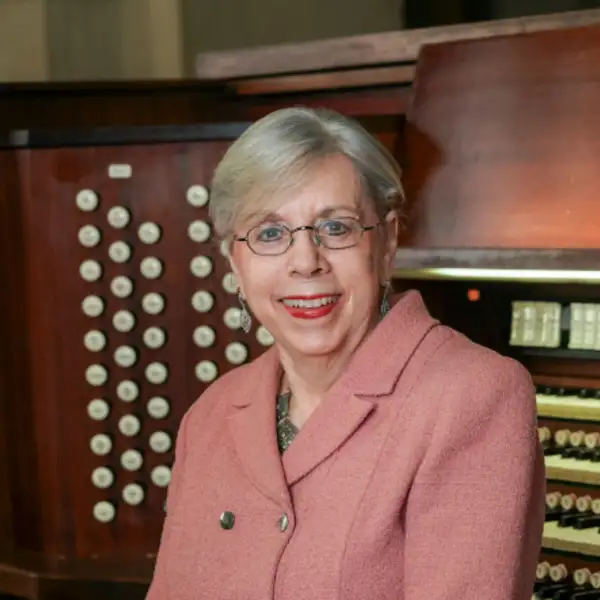
‘Choir is family’: Gail Archer on community, care, and choral music at Barnard
Classical Music Groups on Campus
Barnard Bacchantae
Columbia University Orchestra
Columbia Classical Performers
Columbia University Bach Society
Columbia Pops
Columbia New Music
Columbia University Wind Ensemble
Columbia Musical Mentors Collaborative
Barnard College Music Program: Fall 2026
Gail Archer
Music Associates:
Marilyn L. McCoy
Lauren Ninoshvili
Coralie Gallet
Jean-Paul Bjorlin
Voice Instructors:
Jean-Paul Bjorlin
Harolyn Blackwell
Coralie Gallet
FAQ
For those with strong prior experience, the Music Performance Program is the perfect place to further your musical education. It offers private lessons and the opportunity to participate in various ensembles including cultural groups such as Latin American Music Ensemble as well as classical chamber music groups. It also presents an annual concert at the world-famous Carnegie Hall. For $300 per semester, students from both Columbia and Barnard are eligible to take private instrumental lessons. During the first week of fall semester, it offers auditions for those who are interested. Unfortunately, auditions are required unless you’re interested in beginner piano lessons, which are also offered by MPP. If you decide to take private lessons and are accepted into the program, there are six required hours of lesson per semester, which are taken for one credit. The program is offered for both jazz and classically trained musicians.
Our Partnership
Barnard College is in a unique position that allows students to cross-register with neighboring Manhattan School of Music. Please see their website for more information on eligibility, applying, auditioning, and what the program entails.
Contact Information:
Professor Gail Archer, Barnard College Music Major Advisor (garcher@barnard.edu)
Get to know our students:
In the news:
Contact Us
319 Milbank Hall
Barnard College
10027 NY
United States