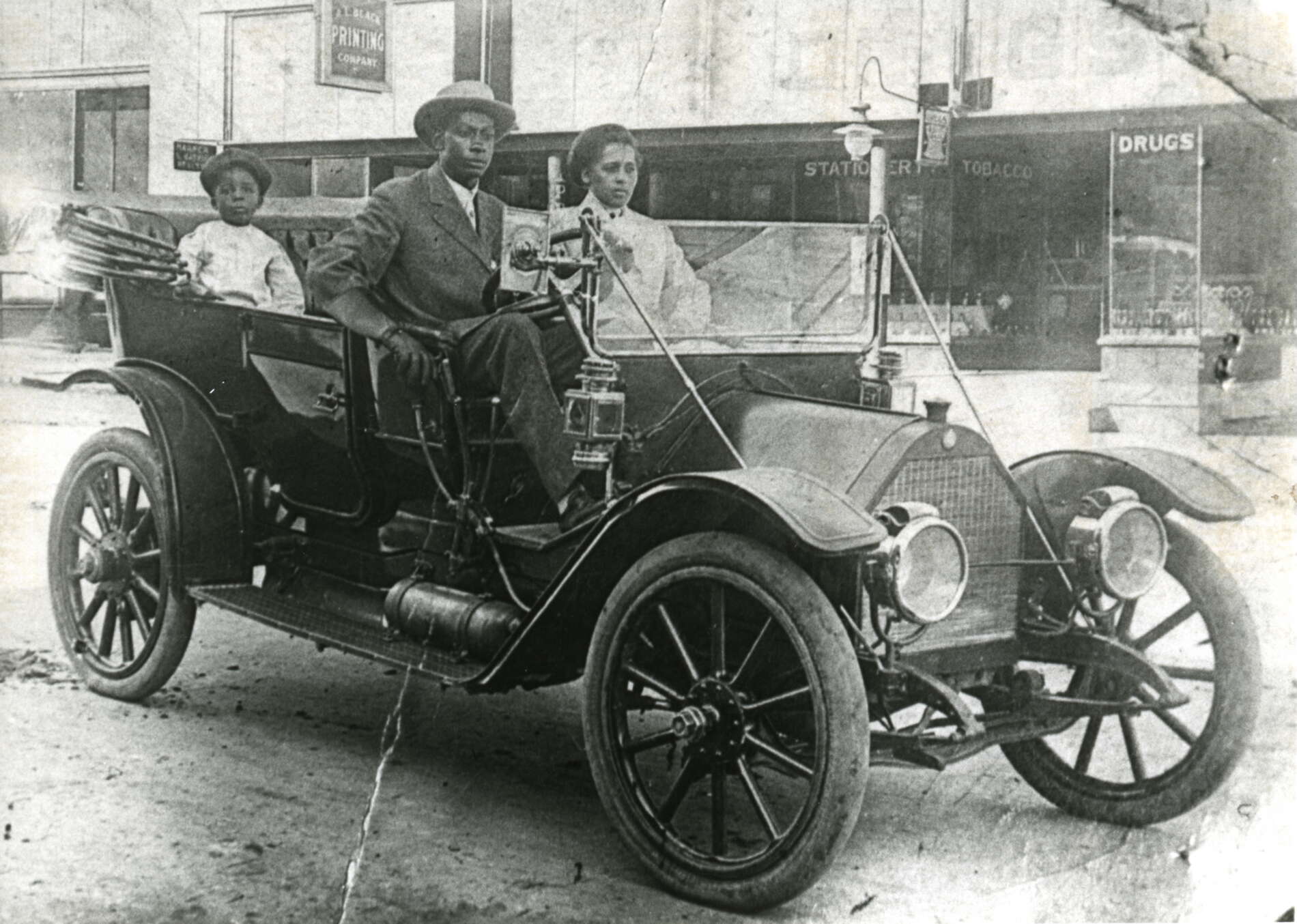
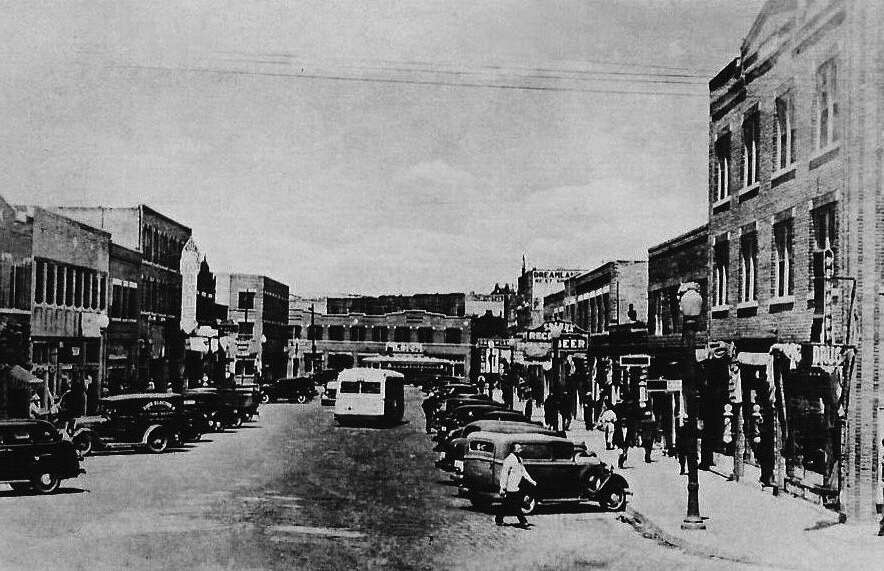
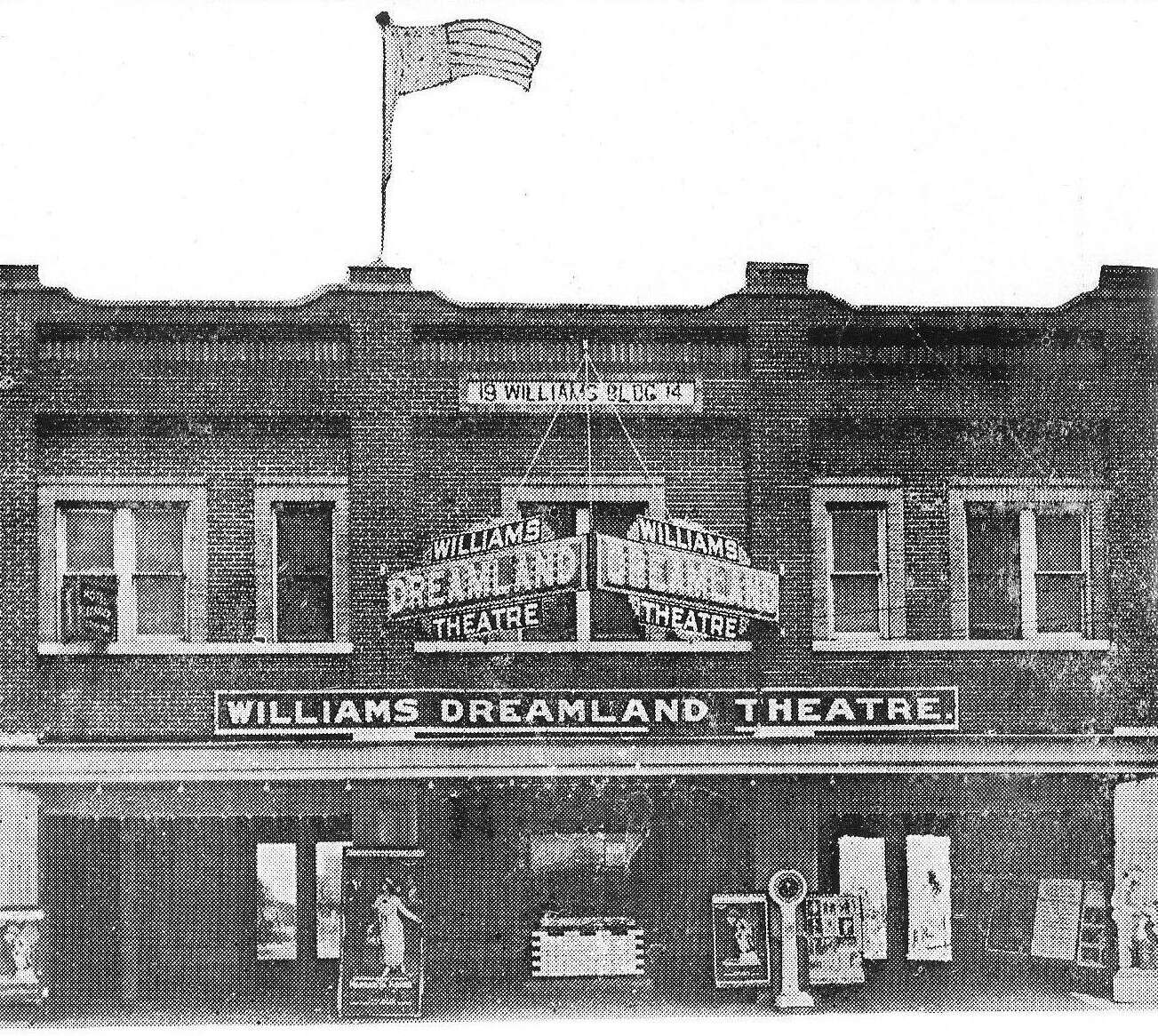
The Nails family thrived in the Greenwood District of Tulsa, Oklahoma. In the 1910s, it was a bustling center of business and culture — what would later be called the "Black Wall Street," a name that grew out of Booker T. Washington’s description of the district. There were Black-owned entertainment venues, newspapers, and an airline service. Just on Greenwood Avenue, there were some 30 restaurants and 45 grocery stores and meat markets serving residents. Amidst the injustices of the Jim Crow era, here was an enclave of prosperity for Black Americans.
James Nails Sr., his brother, Henry Nails, and his wife, Vasinora Nails-Green, were committed entrepreneurs themselves, owning several locations of the Nails Brothers Shoe Shop & Record Shop, as well as a Limousine and Taxi Service. Then, through the morning hours of June 1, 1921, their livelihoods were ravaged. In one of the most gruesome stains on U.S. history, a mob of armed white Tulsans descended on the District, setting fire to homes and businesses and attacking Black residents. James and Vasinora ran for their lives, clutching their two-year-old daughter. They returned to find Greenwood, once a beacon of wealth and success, decimated.
In 2003, Brenda Nails-Alford received a letter in the mail — she was included in a lawsuit against the City of Tulsa that pertained to reparations for survivors of the massacre and their descendants. She read the letter five times in shock. She hadn’t known that her grandparents, James and Vasinora, were survivors. More than that, she wasn’t aware of the incident to begin with. “I remember walking down the street one day, as I did as a kid, wondering ‘How could something as terrible as this have happened in the community that I grew up in and I didn’t know?,’” she said to a crowded room in Barnard College’s LeFrak Theatre this past April.
Historians estimate that around 300 people were killed and 9,000 rendered homeless in the Tulsa Race Massacre of 1921, making it the single deadliest incident of racial violence in the U.S.. But it is difficult to gauge the true extent of the carnage and destruction — in its wake, victims were buried in mass unmarked graves, and many families abandoned Tulsa in despair. For decades, the event was marred in silence and misinformation. Local officials misrepresented the violence as a “riot.” It seemed that identification of victims was a lost cause.
Tulsa Race Massacre Archives
AI as Excavation
Assistant Professor of Computer Science Corey Toler-Franklin first learned about the modern effort to repatriate victims of the massacre from Phoebe R. Stubblefield, a forensic anthropologist who specializes in missing persons. In the late nineties, Stubblefield was asked to join the Tulsa Race Riot Commission, a state initiative to investigate the event and begin the process for reparations — what led to the letter in Nails-Alford’s mailbox.
In 2018, G.T. Bynum, the 40th Mayor of Tulsa, appointed Stubblefield to advance these efforts with a long-requested forensic investigation of the unmarked graves. It would be called “The 1921 Graves Investigation.” Toler-Franklin and Stubblefield, both of whom were based in Florida at the time, connected through their shared interest in modern forensic science, and Stubblefield brought Toler-Franklin into the project’s fold.
The problem — one of them, at least — was age. Even with informed ideas about where the bodies might be found and government support for the search, the fact of the matter was that remains and artifacts had deteriorated over the last hundred years. But Toler-Franklin, through her expertise in computer vision, graphics, and optics, can reveal details in on-site materials that are invisible to the naked eye.
“ChatGPT is a neural network, right? You’re putting questions into this thing that has all these components and algorithms, and it’s magically giving you answers. But we work in the business of designing those things. We are actually developing the math. For us, it’s not magic,” Toler-Franklin said this past spring, speaking to Barnard Magazine from her office overlooking Claremont Avenue.
Toler-Franklin joined Barnard’s computer science faculty from the University of Florida in 2024, tasked with leading the Graphics Imaging & Light Measurement Laboratory. In the previous decade, she became the first African American to earn a doctorate in computer science from Princeton University. Although Toler-Franklin had been connected to the Graves Investigation since 2021, her work on the project began after arriving at Barnard College.
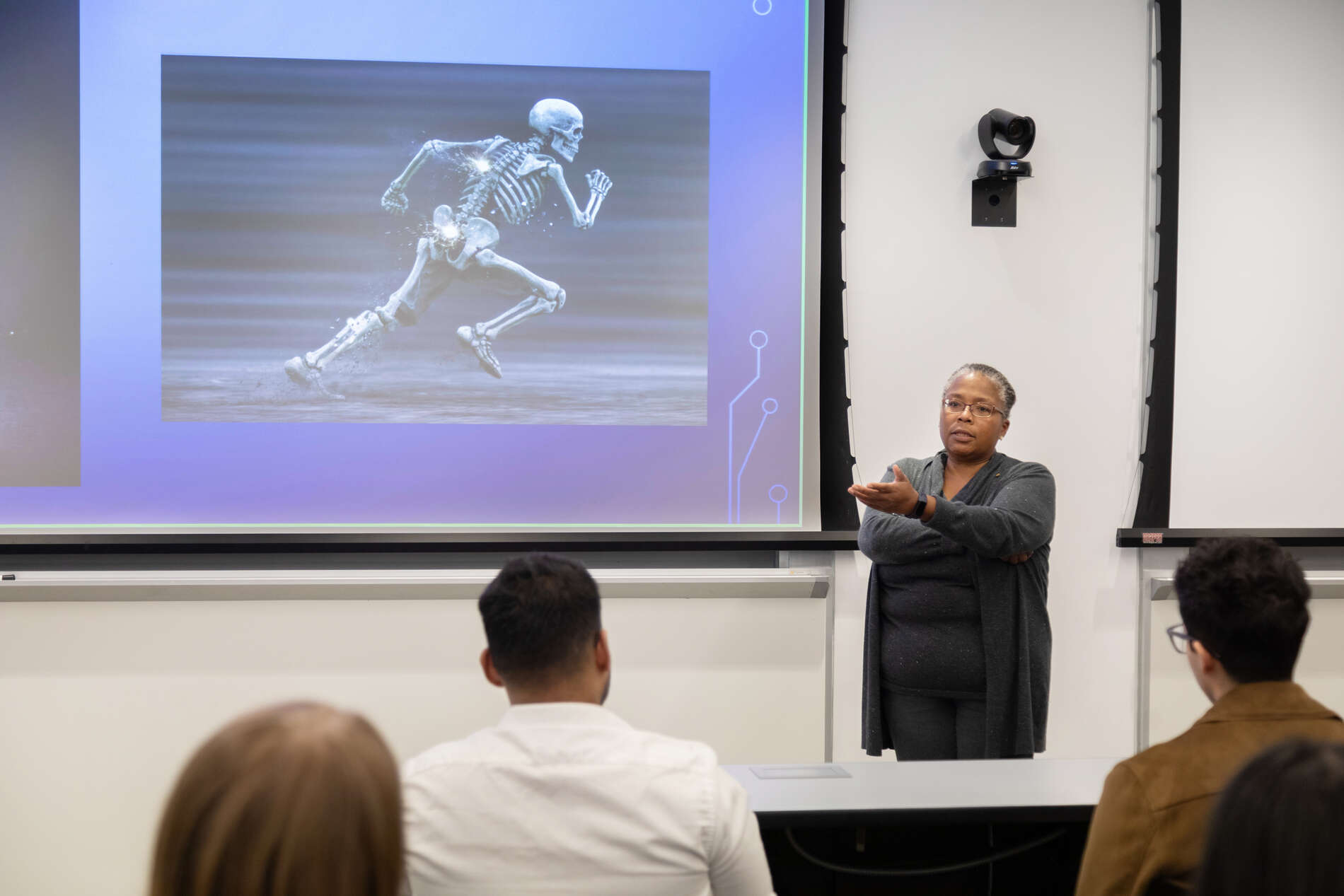
There are three main elements to the research, she explained: graph neural networks for social network reconstruction; multimodal analysis of continuous embedding spaces; and neural scene representations for real-time rendering of multimodal data. As she described them, Toler-Franklin, a natural-born teacher, stood up to begin breaking the elements down on her white board.
Neural networks can be thought of like “computational models,” she said. Within artificial intelligence (AI), there is machine learning, and within machine learning, there is deep learning. That’s where the neural networks live, creating the basis for new information. This means that instead of working with one possible victim at a time, the neural networks pull together vast amounts of public and historical records — census data, newspaper clippings, death certificates, all of which can be sparse and incomplete in their archival form.
Then, the data is projected into a “big, high-dimensional space.” The algorithms are able to find patterns and connect dots between pieces of information. Perhaps there is a headstone with the name etched out but a clear date, indicating the death of an infant — the algorithm can determine if someone expressed grief for the loss of a child around a certain time, suggesting a familial connection, before introducing techniques of DNA testing to confirm.
Toler-Franklin’s research has now involved several trips to Tulsa to collect data at the investigation sites. On these visits, she brings custom imaging devices that view materials at different spectral wavelengths, revealing a trove of new information. “Take a weathered surface, like a rock — when I combine the data I capture with the algorithms I develop in the lab, I might see markings and text,” she explained.
Through her fieldwork, Toler-Franklin was introduced to the team of experts who have been involved in the investigation since its inception in 2018 — a tight-knit group of state-appointed archaeologists, forensic scientists, genealogists, community members, and historians. It has been a challenging project, both technically and emotionally, but the team looks out for one another. Even with different areas of expertise, there is the sense that all are working toward a common goal.
“Embarking on a project like this, it was essential to build relationships with the people who had been working on the ground in Tulsa for years,” Toler-Franklin said. “And I had to be mindful that AI is controversial. If you’re unfamiliar, you’re thinking, ‘How is this going to affect my family legacy?’ Or, ‘What are you going to do with it? Are you going to exploit it in some way, when it’s already been exploited?’ It was my job to instill confidence in the benefits of this technology.”
Toler-Franklin felt the collaborative spirit from the outset. At an imaging session in Tulsa, colleagues were quick to offer their support, even bringing her gear to withstand the freezing winter temperatures. She might have traveled in from a different coast, but she was part of the group just the same. “They see this connection to Barnard as a way to tell the truth about what happened.”
Teaching Deep Learning
When she joined Barnard, Toler-Franklin assembled a team of student researchers to support her suite of ongoing projects, including her work on the Tulsa Race Massacre. As of 2026, the Multimodal Data & Document Analysis Team is made up of eight, a mix of undergraduate and graduate students attending both Barnard and Columbia. One student researcher, Sophia Ling ’26, has been involved with the project since Toler-Franklin arrived at the College, working largely on visual renderings of the data.
As a computer science and classics double major, Ling was attracted to the archaeological aspect of the research — being able to take photographs, archives, and excavated pieces of memorabilia and turn them into three-dimensional “scenes,” something more impactful than just nodes on a graph. Before Barnard, she knew nothing about the massacre. This fall, she will begin her master’s degree in computer science at Columbia through Barnard’s Accelerated 4+1 Pathway, progressing her research on the event under Toler-Franklin’s supervision.
“She’s an amazing mentor,” said Ling, who was familiar with Toler-Franklin’s work on rare collections at the American Museum of Natural History before she joined the faculty. “She’s strict, and she pushes, but she can give specific details about what she likes and doesn’t like, and knows how to move the research forward.”
Outside of her work with the student team, it had long been Toler-Franklin’s goal to teach a course on the technical training involved in developing neural networks to solve problems in historical forensic investigations. In spring 2026, the vision was realized. Toler-Franklin offered a version of the class centered around Tulsa, planting the seed for future iterations that relate to AI and social impact, pulling from different events and real-world issues.
2026
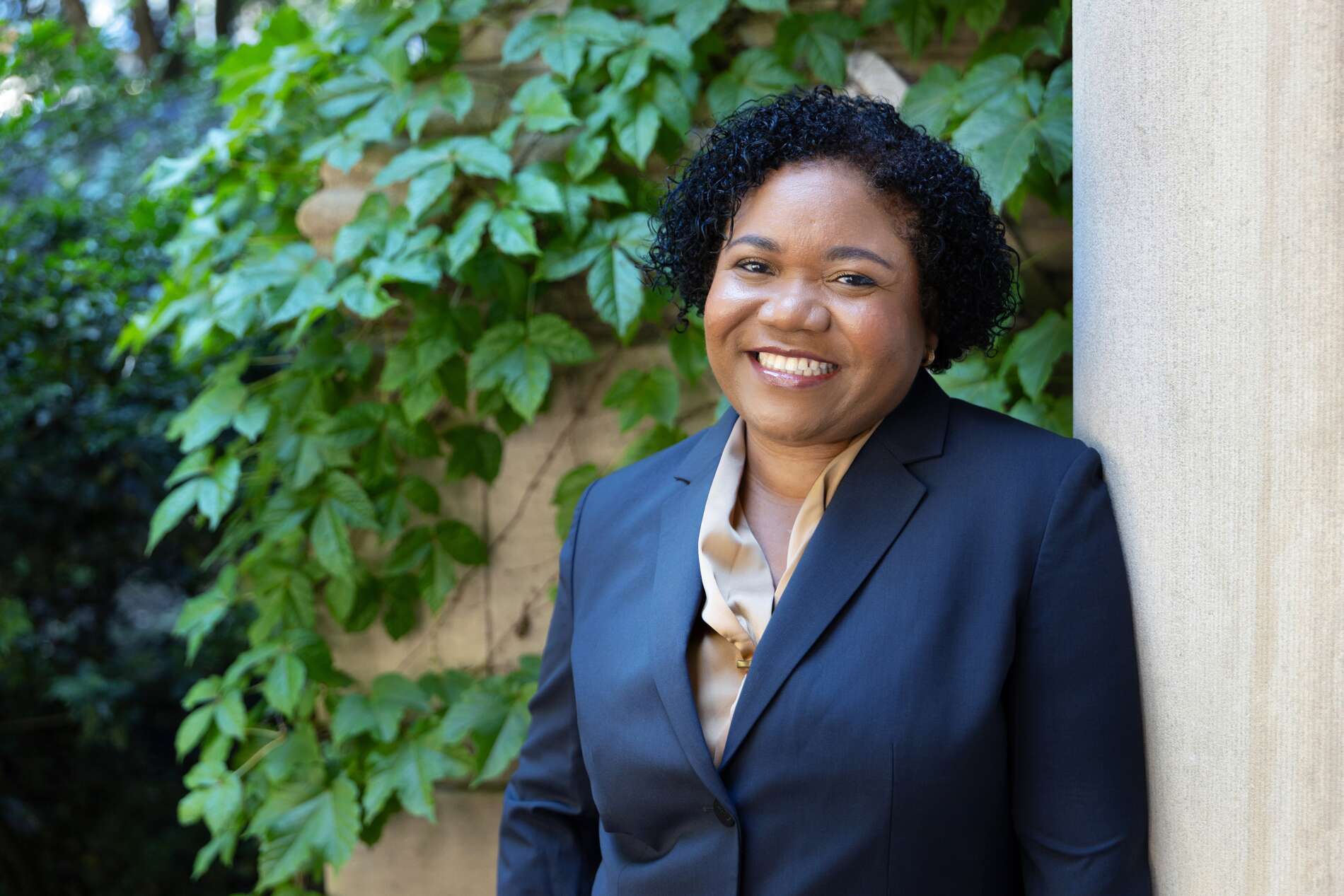
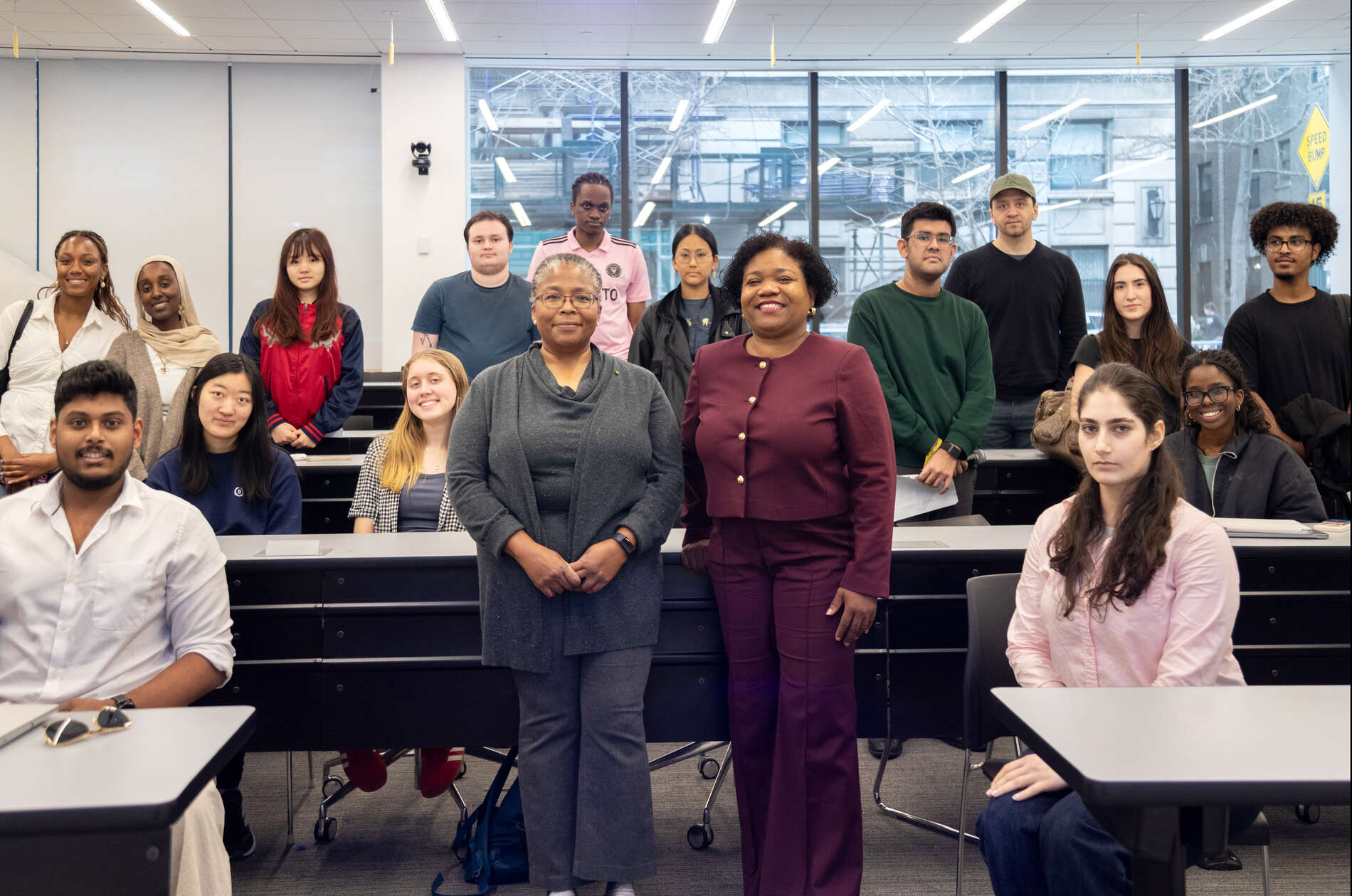
Despite being limited to juniors and seniors from Barnard and Columbia, admission was competitive. Students needed to come in with strong knowledge of advanced programming and linear algebra to engage with Toler-Franklin’s techniques — and there had to be genuine interest in the history. There was still more demand than she could accommodate.
Almost each topic — on transformer networks, neural scene representations, investigatory ethics, and more — was paired with a guest lecture from the investigation. This put students’ technical learnings into perspective, with insights from government officials, anthropologists, forensic scientists, cultural historians, and descendants of survivors. Stubblefield presented two lectures to the class in March, speaking to the project’s latest developments.
“This investigation is a lesson in ‘Don’t believe the narrative that Black people don’t show up well historically in the U.S.’,” said Stubblefield. “We have a historical presence. Some of these individuals have a historical presence starting in 1880. Sometimes, their parents show up, and we can trace how they got to Oklahoma.”
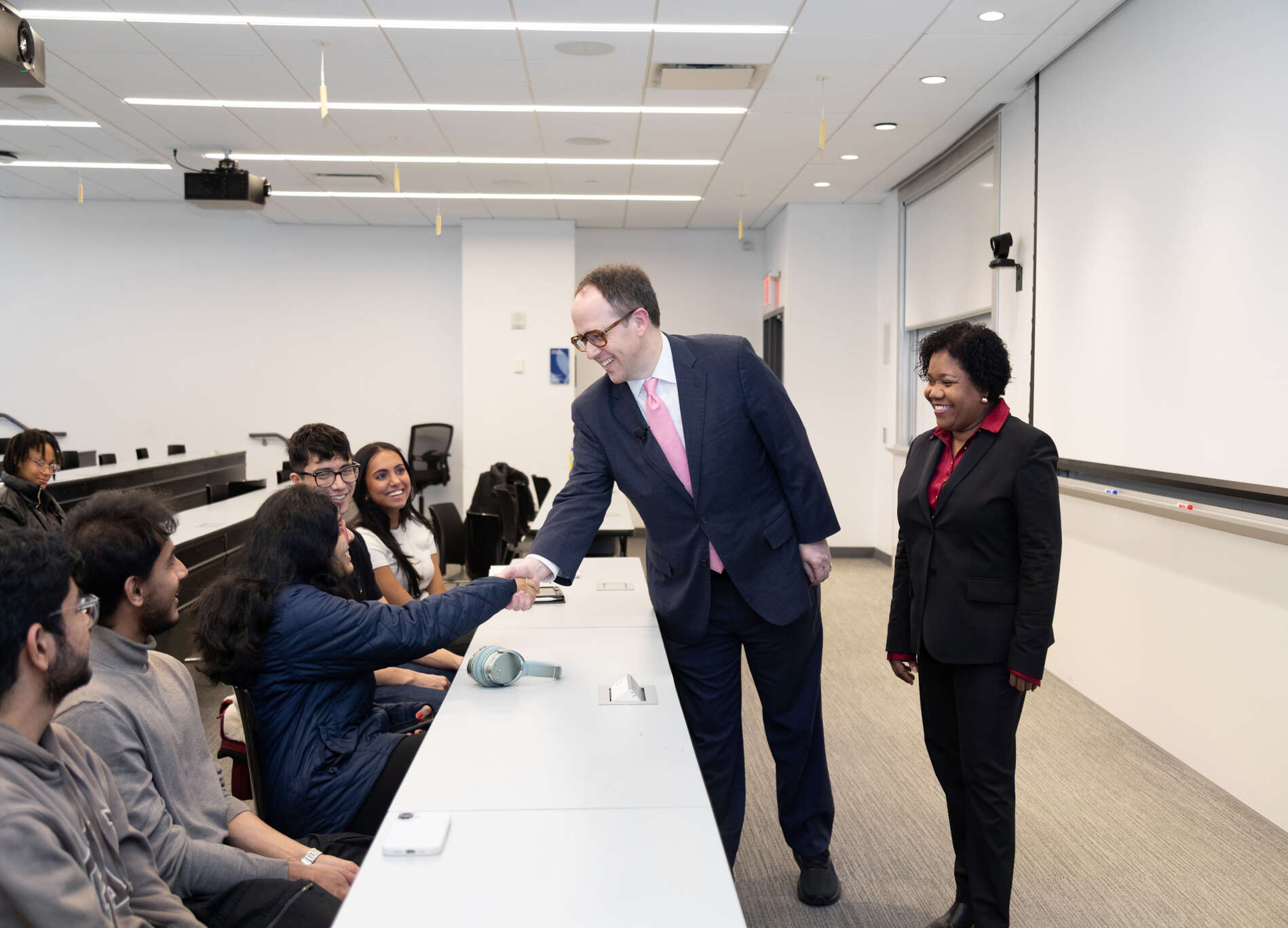
Bynum, the former mayor, spoke to students in February about the political, cultural, and bureaucratic challenges involved in keeping the search for victims moving over the last decade. A sixth-generation Tulsan, Bynum served two consecutive terms from 2016 to 2024 and initiated the 1921 Graves Investigation in 2018.
In 2024, the forensic team had a breakthrough. Through painstaking analyses, the team was able to extract DNA from one set of remains, building its first victim profile. His name was C.L. Daniel, a veteran who served in World War I. Members of the team wept, Bynum said.
Reflection and Remembrance
Brenda Nails-Alford was the final guest to speak to the class. She was conscious, she said, that the fact of her speaking was predicated on her family’s survival. Since learning about their past, she has gone to great lengths to broaden public knowledge of the event and preserve the legacy of Black Wall Street among younger generations. She represents descendants on the 1921 Graves Investigation, served on the 1921 Tulsa Race Riot (Massacre) Centennial Commission, and was a Founding Board Member of Greenwood Rising, an immersive, narrative-based museum that expands upon the history of Greenwood.
James Nails Sr. and Vasinora Nails-Green “wanted a piece of the American dream but found a nightmare,” Nails-Alford told the class. After she received notice of the lawsuit, certain childhood memories began to flood back. Driving by Oaklawn Cemetery, older folks would sometimes say, “You know they’re over there.” As a little girl, she heard stories about her grandmother hiding in a church. “I would come to understand what that all meant.”
In June, a handful of members from Toler-Franklin’s class traveled to Tulsa, many for the first time. It had been 105 years to the day since the massacre, and the city was in mourning. Together, the students paid a visit to Greenwood Rising and met with current Tulsa Mayor Monroe Nichols. At Oaklawn Cemetery, they laid flowers at the head of unmarked graves, lending a hand to a local descendent.
“This is a chance to reshape some of these conversations,” said Toler-Franklin. “With these new technologies, there is all of this potential for positive change. There is so much we can accomplish.”
Published in the Summer 2026 issue of Barnard Magazine with the headline "A Historic Injustice, A Modern Investigation."