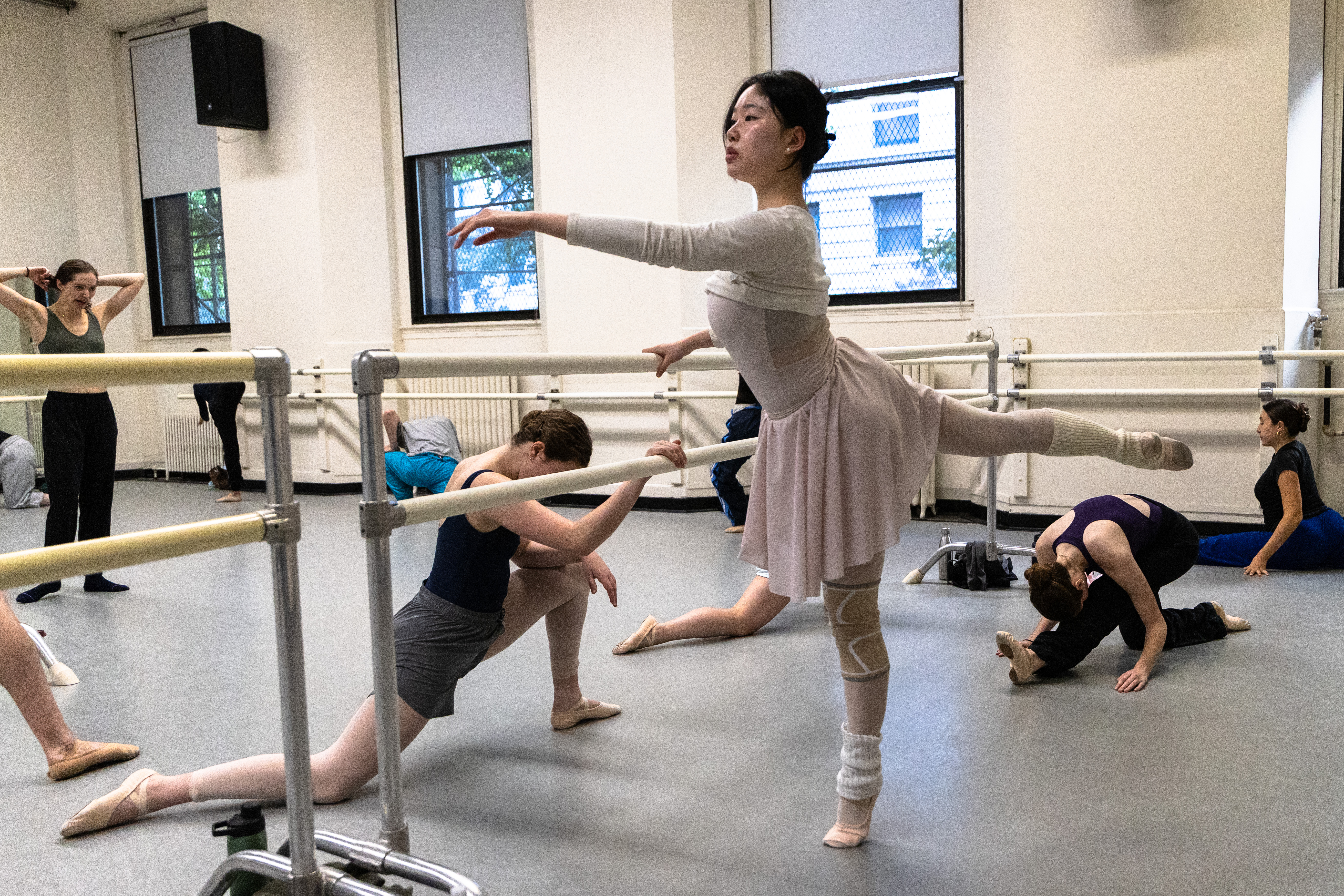
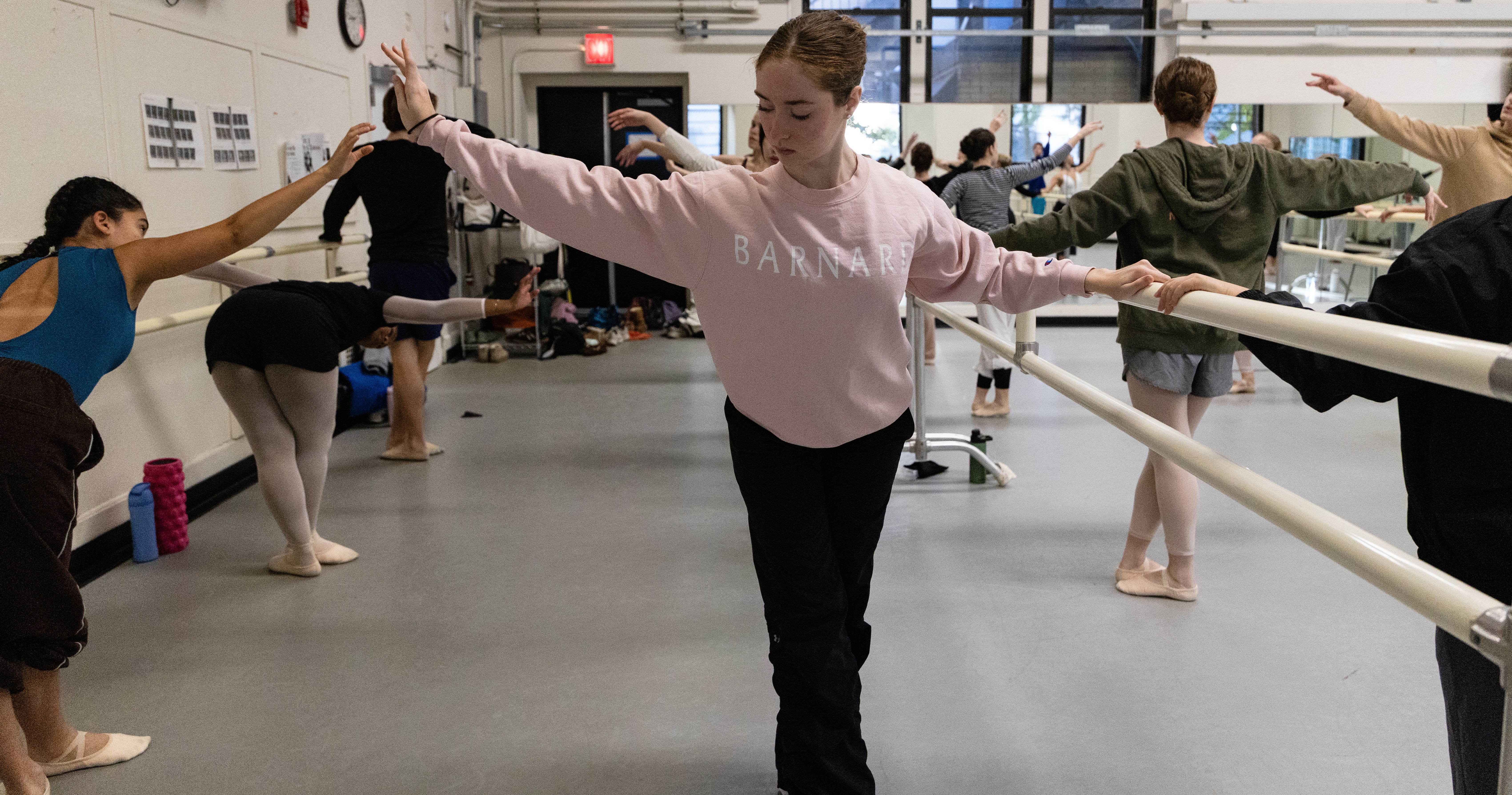
At 8:25 a.m., the first students begin to shuffle into Studio 1 in Barnard Hall, sweatshirts draped over leotards, sneakers traded for leg warmers and ballet slippers. Over the next 10 minutes, a class of around two dozen settles in for their Ballet V instruction. Their teacher, New York City Ballet (NYCB) principal dancer Unity Phelan, is soon to arrive.
The class is warming up with stretches on the barre when Phelan breezes into the room. “Good morning! How are we feeling? How are midterms?” There is little to suggest that, just one week ago, Phelan completed NYCB’s Fall 2026 Season with the largest number of featured roles in the company. For this one hour and fifteen minutes, twice a week, she is a teacher.
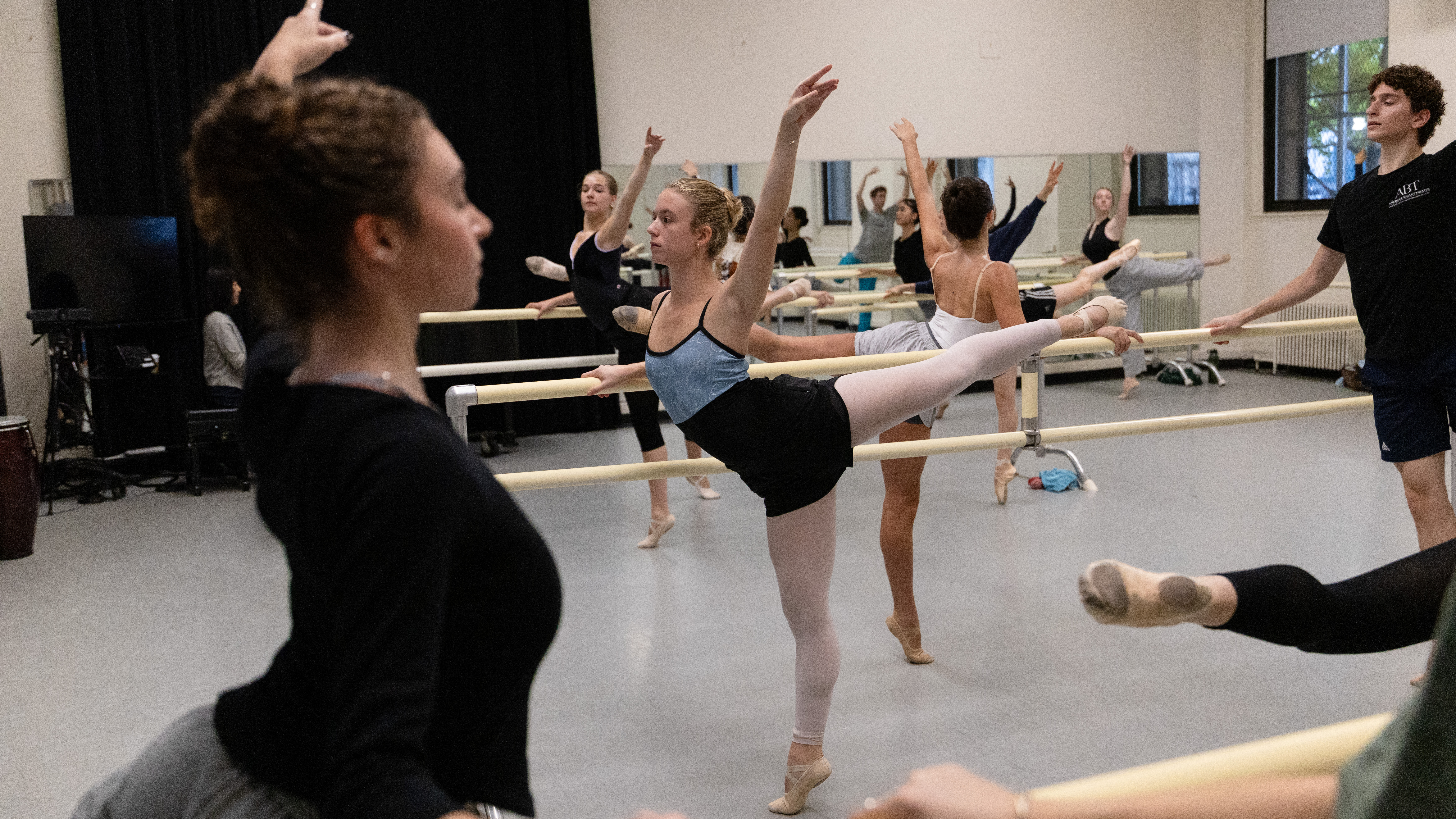
Class moves into a series of rond de jambe movements, the legs moving in perfect semi-circles, one-two-one-one-one-one-one, an exercise in balance and speed. “Ballet is always about keeping it together while simultaneously letting it go. So pick a place to let it go,” she says, effortlessly weaving in between students. “Maybe not on a turn.”
Phelan joined Barnard’s Department of Dance in fall 2025, teaching advanced ballet classes alongside her duties as an NYCB principal, the company she has belonged to since 2012. “My aunt went to Barnard, my grandmother went to Barnard, my dad went to Columbia,” she explains. “I went to reunions all growing up. So when I found out that Barnard had a dance department, I reached out to the chair, just to ask if they would ever need a sub.”
Those conversations picked back up in summer 2025 when Phelan became pregnant with her first child, realizing that there might be new room in her performance schedule with NYCB. As it turned out, the department was looking for someone to teach Ballet IV, an advanced-intermediate studio class for students with some prior knowledge of ballet. “I walked in that first day from rehearsals and still looked like a ballerina,” Phelan remembers.
Barnard Magazine met with Phelan on the grass-covered steps at Lincoln Center Plaza on a summerish October afternoon. It could be one of the last beautiful days of the season, and the neighborhood locals are out. In one direction is the David H. Koch Theater, where NYCB performs; in the other is the School of American Ballet, where Phelan trained full-time starting at 14 years old. “Oh, that’s our piano player,” she says, noting the gentleman quietly eating his lunch on another step.
This is a rare “off week” for Phelan. NYCB’s Fall 2026 Season closed the previous week, over which she performed leading roles in several ballets including George Balanchine’s Jewels and the much-discussed revival of Pithoprakta. Next is a one-week intensive for the premiere of Alexei Ratmansky’s Romeo & Juliet, the NYCB’s Artist in Residence. Then there are rehearsals for The Nutcracker. Phelan will perform as the Sugar Plum Fairy on opening weekend — a role she first danced in 2015 while, remarkably, still a member of the corps de ballet.
Phelan acknowledges that the past year has been intense. She continued to perform with NYCB until she was 18 weeks pregnant, returning to the studio shortly after giving birth. There was an incentive to get back onstage — her “ballet husband,” fellow principal Adrian Danchig-Waring, was planning to retire, and the two were desperate to perform Balanchine’s Agon together before his departure. “I think I needed to do it for myself. I had to prove to myself that I could do it,” Phelan says.
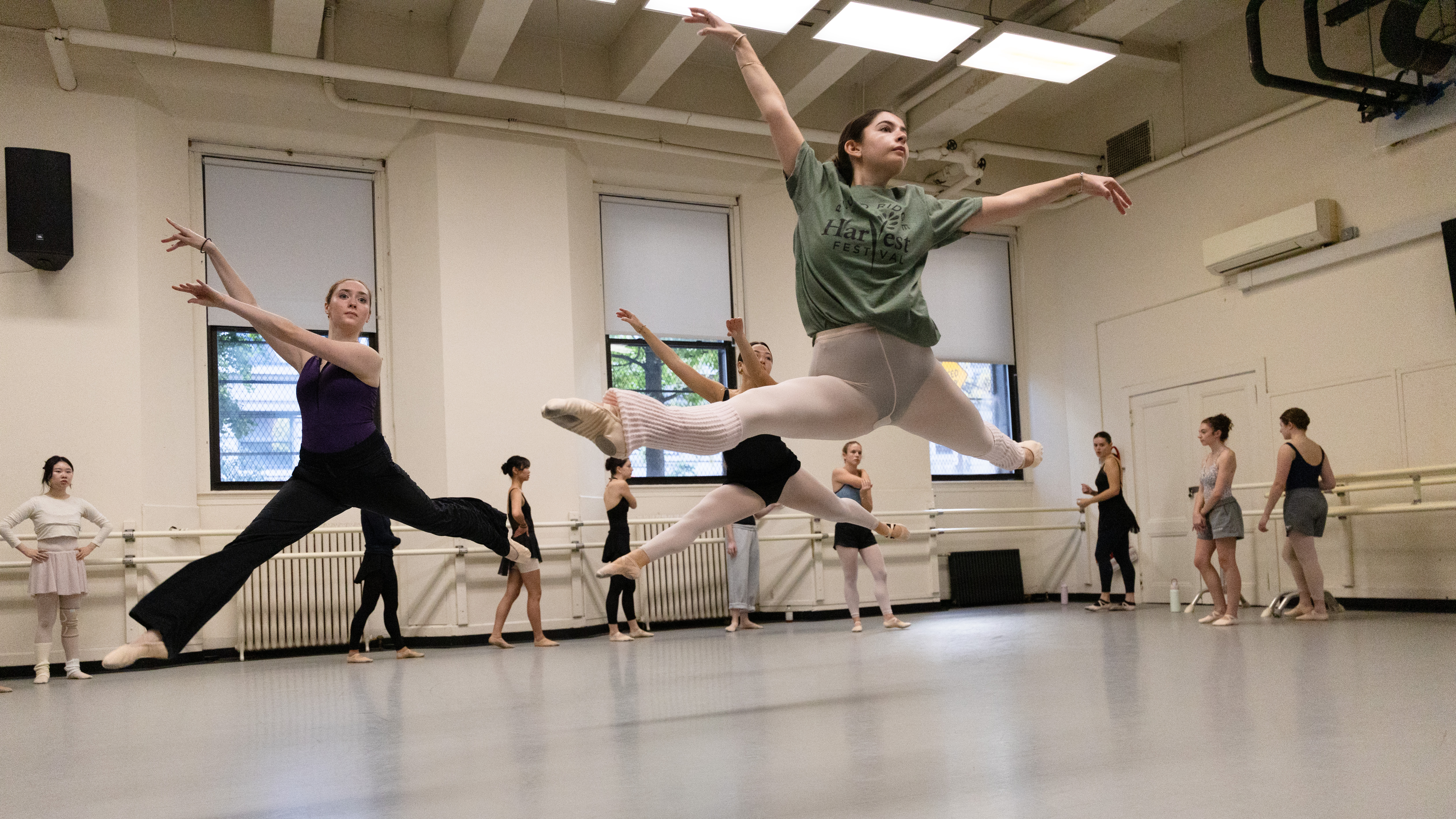
Being at Barnard has been grounding in this transformational period, and the hours she spends in Studio 1 are now among her favorites of the week. Phelan often teaches her students steps that she is learning in rehearsals — a combination from “Diamonds” (the third section in Balanchine’s Jewels), or a section from The Nutcracker. Since the department functions as the hub for dance across Barnard and Columbia, her instruction is tailored to a wide range of students. Some come into the course with serious ballet training, while others only began learning the form in college.
“I’m teaching them a class that I would take,” Phelan says. “It’s a professional-level class, and I’m not dumbing down anything, but I give them options. It’s so fun to watch the little lightbulbs go off. I try to make this a space for them to remember this part of themselves.”
Each semester, she sets aside time for students to spend one class asking her whatever questions come to mind about life as a professional ballerina, a tradition she picked up from her teachers at the School of American Ballet. She would like to teach a lecture at some point, “Balanchine in America, maybe, or a deep dive into the relationship between Balanchine and [the composer Igor Fyodorovich] Stravinsky.”
“It’s so refreshing to be in a dance department that’s solely there for students to build confidence in themselves, and to build this other side of their persona outside of academics,” Phelan says. “I do think that students leave class just a little bit taller, and maybe a little bit more joyful than when they came in.”
Published in the Fall 2026 issue of Barnard Magazine with the headline "The Prima Ballerina in Barnard Hall."