If you were a student at Barnard sometime in the last 50 years, odds are you took a class with one of the seven professors celebrating their first weeks of retirement this summer. Perhaps you were there when a quiet student from the Manhattan School of Music broke out into one of George Handel’s arias while auditing Deborah Valenze’s “Introduction to European History” course, revealing herself to be a dazzling soprano. Or maybe, one crisp September, you found yourself sitting around a campfire in the Black Rock Forest, strumming a guitar alongside Martin Stute at the annual environmental science retreat.
Through the decades, these instructors transformed the lives of thousands of students, both during their college years and well beyond. Some look back and think about the students who are now tenured professors themselves, making their own impact within the field. Others reflect on how students challenged the finer points of their research in the classroom, bringing new ideas and fresh thinking to complex scholarship. For each of them, it is certain that their tenure will endure — in the field, in the culture of the College, and in the lives of their students — long past their exit from Barnard’s gates.
Seven Professors Retire in Summer 2026
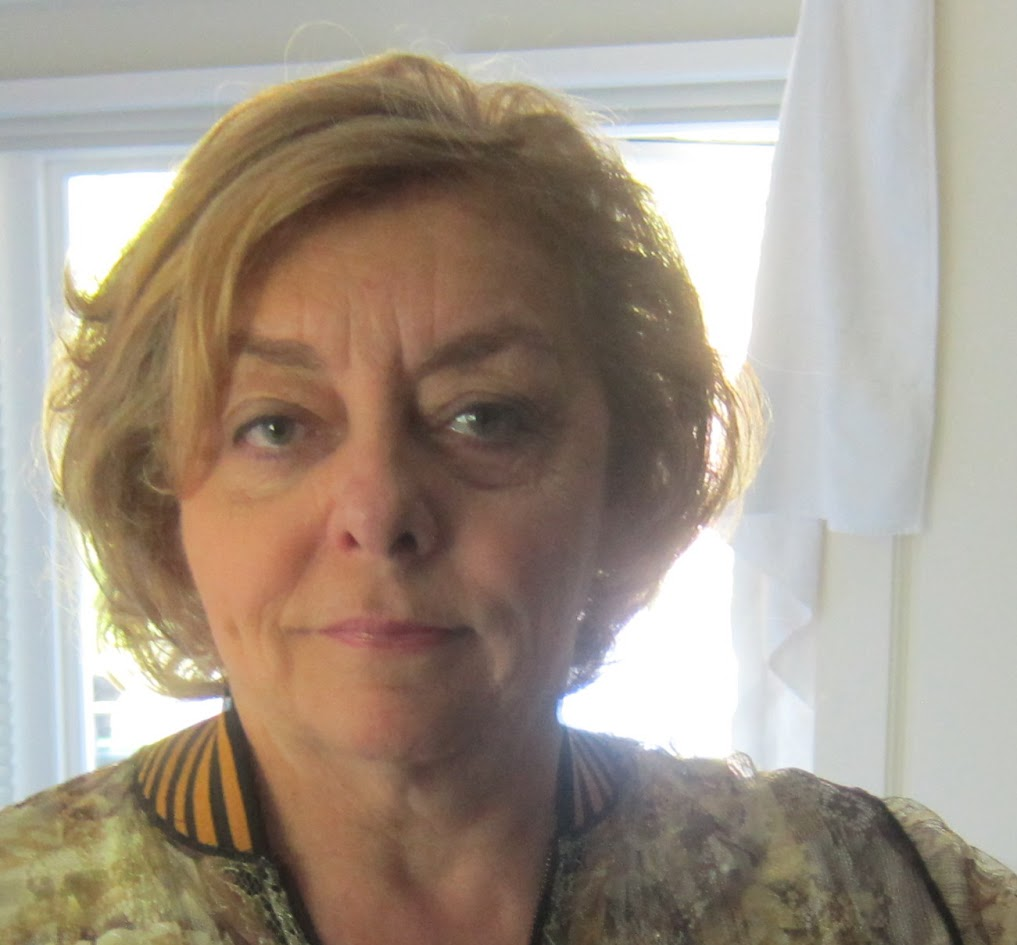
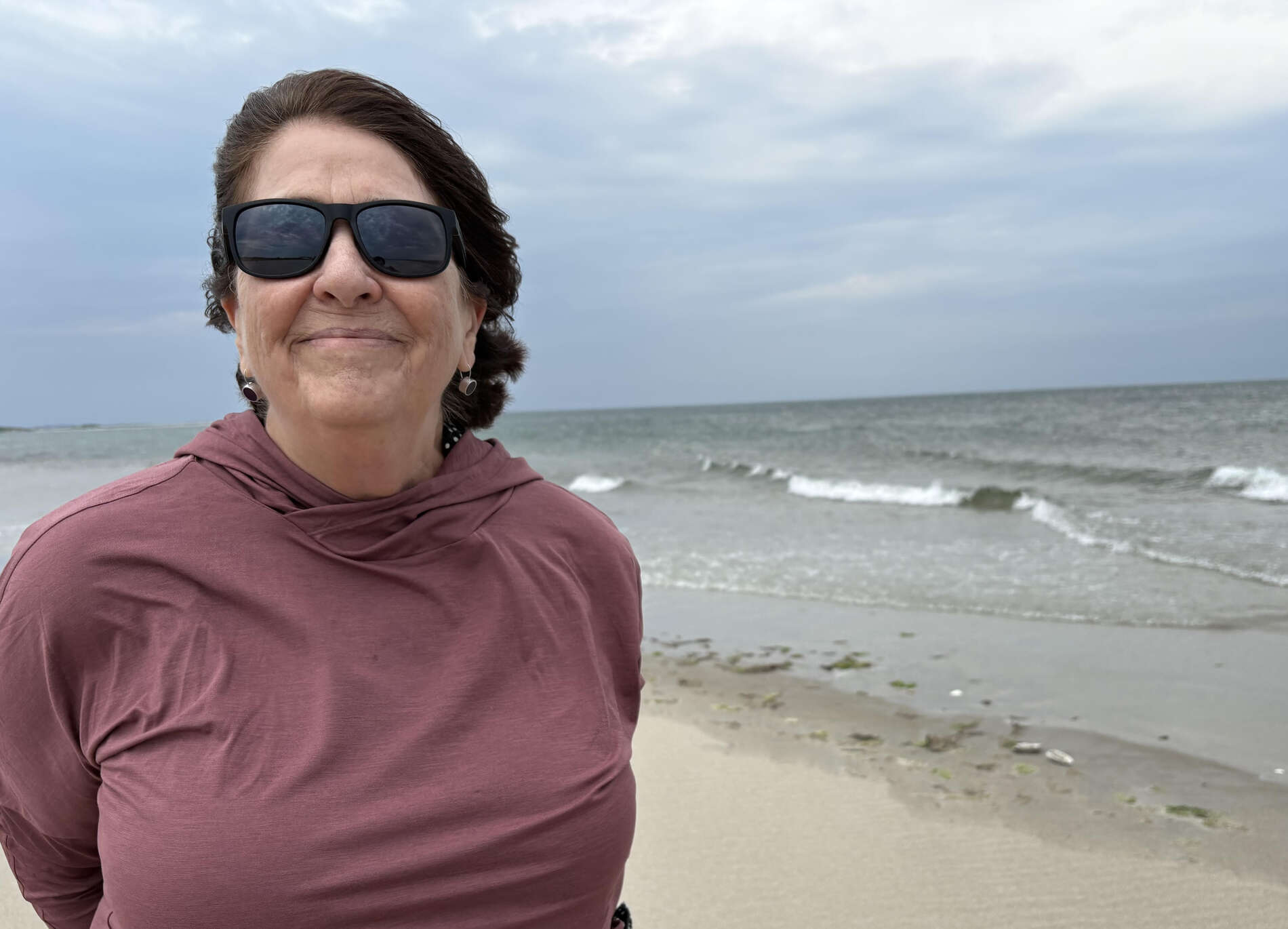
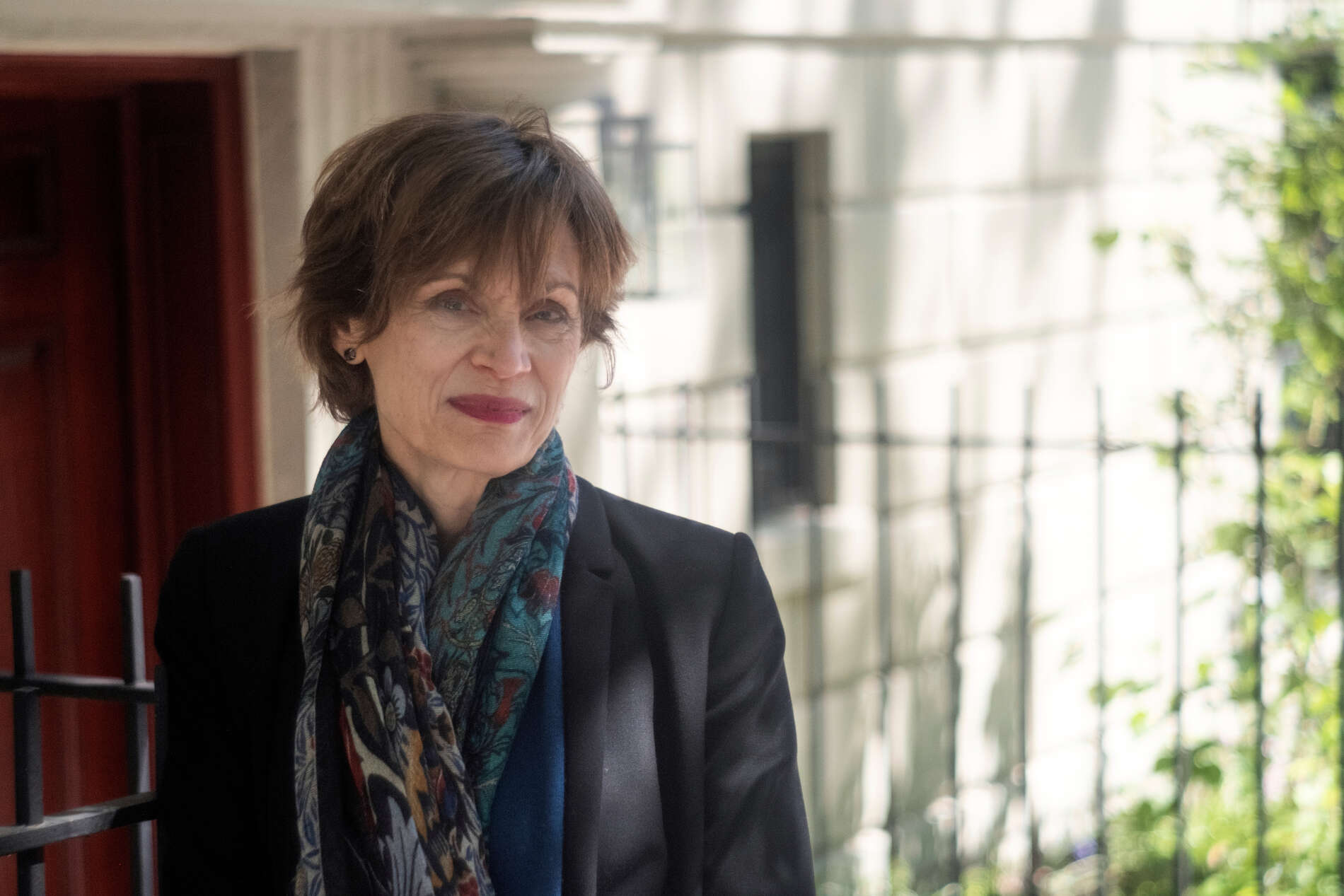
Jennifer Finney Boylan, Anna Quindlen Writer in Residence, Professor of English
The final course Jennifer Finney Boylan taught at Barnard felt almost serendipitous: “Desire and Metamorphosis,” which centered around instances of change and transition. It began with Ovid, then turned to Franz Kafka, then Walt Whitman, then James Joyce’s “The Dead” and Robert Louis Stevenson’s The Strange Case of Dr Jekyll and Mr Hyde.
In the last class of the semester, students requested that Boylan please come 10 minutes late. “I said, you’re up to something!,” she recalls. And those instincts were right — when she arrived, the class was standing at the lectern with a bottle of champagne and a box of chocolates, a gift certificate for the Rizzoli Bookstore downtown, a sundae bar in the corner of the room, and her favorite band, The Grateful Dead, playing through the speakers.
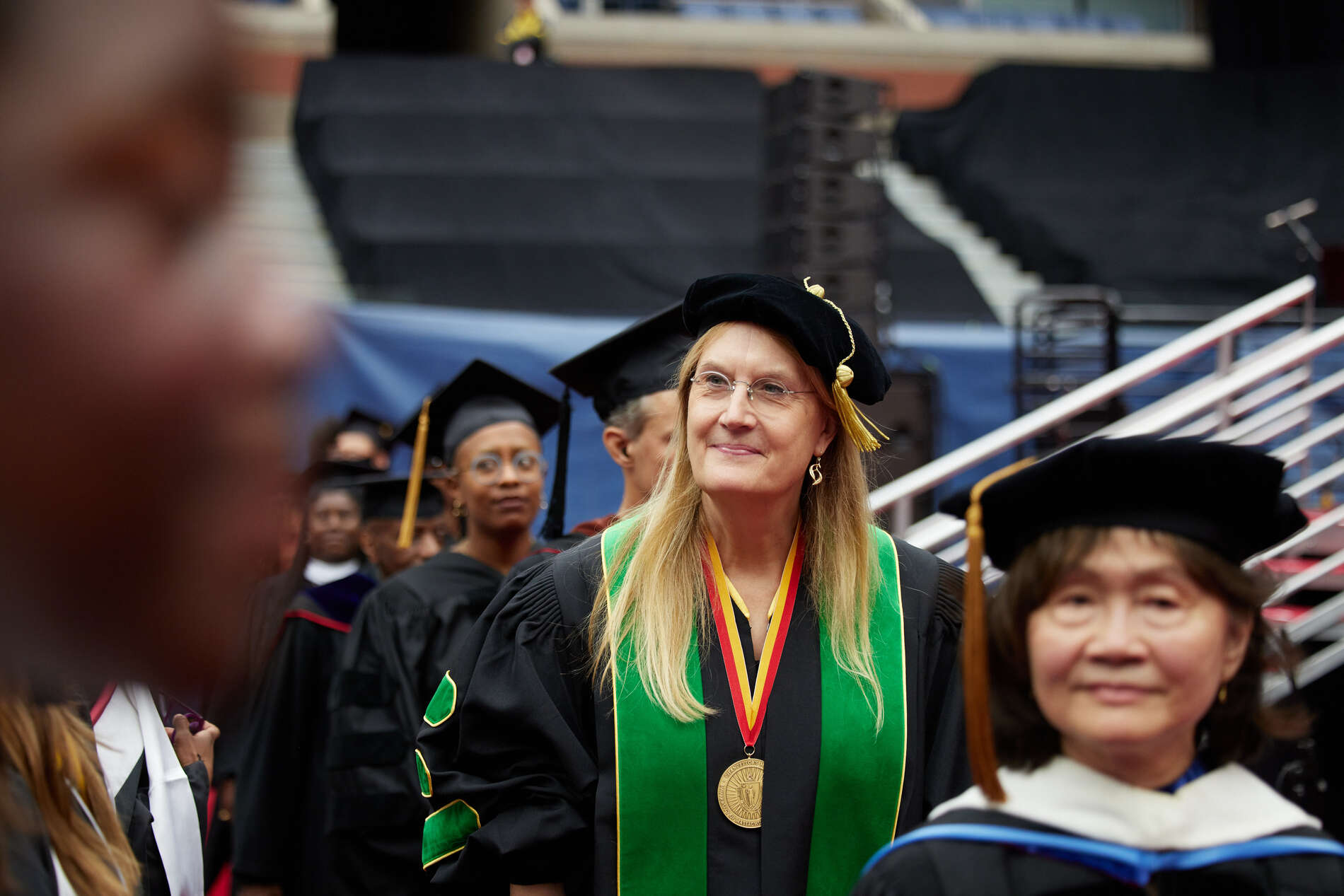
Since joining Barnard in 2014, Boylan, an acclaimed author and advocate for transgender rights, has become integral to the life of the College. At the 2026 Commencement ceremony, she earned Barnard’s highest honor, the Medal of Distinction, and delivered an unforgettable keynote address to the graduating class.
“It has been the gift of a lifetime,” she said. “There’s no place in the world like it. It is this postage stamp of a campus and part of one of the great research universities of the world. It’s big and small all at once. The students are brilliant. And above all, by and large, it’s a community of women. There’s a kind of trust that you can only find in the company of other women.”
Over the last decade, Boylan has nurtured a generation of young writers, teaching small, upper-level courses on fiction, nonfiction, revision, and criticism. “Stories and literature reach inside our souls. You’re able to live inside the skin of another human being and find compassion. I can't say I achieved that kind of illumination in every class, but on a good day, we got pretty close.”
In this moment of change, Boylan has much to look forward to. In August, she set sail with her wife on the Queen Mary 2, “seeing what other stories there are to hear and tell” in England and Ireland. She is working on her twentieth book, a memoir told in seven pizzas, which is also about seven different kinds of love. The gift certificate has already been put to use — she bought a series of cookbooks and Interpreter of Maladies by Jhumpa Lahiri ’89, her colleague and friend.
As it happened, Boylan had a surprise of her own planned for that final class. A professional bagpiper was en route to play the Irish folk song “Mo Ghile Mear,” a ballad that honors departing heroes. Before she knew it, the entire class was dancing, treating their final gathering like a rock and roll show. “What’s the old line from Vaudeville? Always leave ‘em wanting more.”
Dorothy Y. Ko, Professor of History
At the beginning of her academic career, Dorothy Y. Ko was accustomed to a certain kind of classroom — seas of faces in lecture halls, papers passed mostly through the hands of teaching assistants. In 2001, she accepted a teaching position in the History Department at Barnard. “I had no idea it would be such a resonant experience,” she said, smiling.
Ko, who grew up in Hong Kong, specializes in early modern and pre-modern Chinese women’s history, with extensive research into craftsmanship and traditional practices like footbinding, inkstone carving, and embroidery. “I’ve always just wondered, what did the women have to say?”
It has been transformative to teach Barnard students over the decades, Ko said. “The most important learning, I realized, doesn’t even happen in the classroom — it’s after class, among the students themselves. If I opened up the space for them not to be competitive with one another, but to see one another as friends and co-learners… that’s where the learning is.”
In this next chapter of life, Ko has some first-order plans — to catch up on sleep, and to create more mindful habits at home on Long Island. But she also intends to continue researching, first with a series of dual-language articles and books to introduce Chinese and English-speaking audiences to the stories of farmers and craftspeople she has met.
Ko will think about Barnard as a place where she grew alongside students and colleagues, working together toward a shared mission: to look at the past and think not about what we have lost, but where we can go.
Martin Stute, Alena Wels Hirschorn ’58 and Martin Hirschorn Professor in Environmental and Applied Sciences
When Martin Stute arrived at Barnard in 1993, the plan wasn’t to build a career in the U.S. He envisioned conducting a few years of research at Columbia University’s Lamont-Doherty Earth Observatory, getting some teaching experience under his belt, and then returning home to Germany. “Something changed, clearly.”
Indeed, much has changed in the last three decades. Barnard’s Environmental Science Department blossomed. The field experienced a “revolution,” shifting to approach issues with a more holistic lens. But some items remain from the nineties. The senior research seminar, which Stute helped found in 1995, continues to run. So does the first course he ever taught, “Hydrology.”
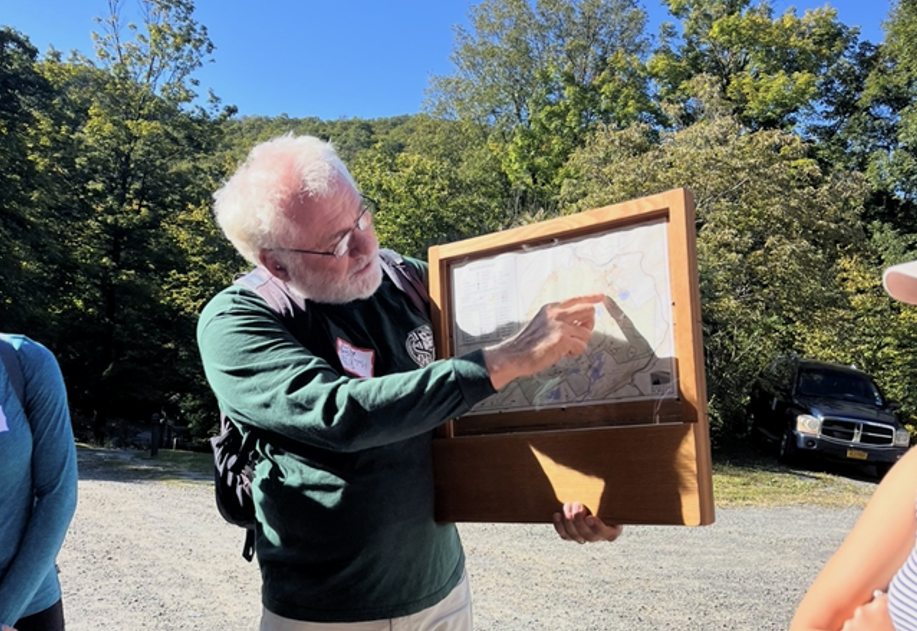
From the beginning, Stute’s time has been split between Morningside Heights and Lamont’s campus in the Palisades, just north of Manhattan, where students would venture in the summers to research. “I made the conscious decision to be a teacher, mentor, and researcher, all at the same time. That means, looking back, I was not the world-famous researcher. But I’m not unhappy about that. Research is important for a while, but then new stuff comes out and supersedes it. It doesn't have that long-lasting impact. Teaching does.”
Still, it would be unwise to minimize the influence of Stute’s scholarship. He is one of few scientists who can claim to have conducted research on all seven continents, including Antarctica, with a range of studies on water resources, carbon sequestration, and paleoclimate reconstruction. His longest project involved recreating past climates using information stored in groundwater, determining temperatures from the last glacial period 20,000 years ago.
In retirement, Stute will have more time for the people and projects he loves. As students know, he has a talent for string instruments. He might even try his hand at building his own. He will still be a visiting scientist at Technische Universität Berlin, and would like to remain a mentor to colleagues. It’s also on his list to visit Japan, a place he’s never been.
In the face of global environmental change, Stute has managed to stay hopeful. “I think by definition, you cannot be a professor if you’re not an optimist, right?” he said. “I can’t allow myself to be on the other side, to be pessimistic. I have to see the positive sides, and I’ll spend the rest of my life pushing things in that direction. That’s all I can do.”
Laura Kay, Professor of Physics & Astronomy
In 1991, Barnard was in need of an in-house astronomer — someone with a knack for teaching students who might enroll in a class on the cosmos to cross off a general education requirement, and leave with a new major.
It was a perfect fit for Laura Kay, who had recently earned her doctorate in “active galaxies” (read: galaxies where there’s a black hole at the center). As an undergraduate, she double majored in physics and feminist studies, and had a particular interest in issues that concerned women in the sciences. Being able to teach at a women’s college with a thriving Center for Research on Women was “one of the appeals of the job,” she said.
For the last 30 years, Kay has been cross-affiliated with the Women’s, Gender, and Sexuality Studies Department, teaching popular classes like “Women & Science” that include feminist critiques of biological research and the institution of science. For the First-Year Seminar, she taught a course on aliens — what can we know about life in the universe? — and twice, she co-taught a course on polar exploration, pulling from her six months of research over the winter season in Antarctica.
At times, it has been a challenge to be an astronomer in an urban epicenter. The research is where the telescopes are, places like Arizona and California where the altitude is high and the skies are dark. This means her career has involved numerous trips out west, as well as the occasional visit to other countries like Brazil and Chile.
Retirement is a loose term for Kay. Just a few weeks after leaving Barnard, she headed to the Kitt Peak National Observatory in Tucson, Arizona. A collection of galaxies with possible black hole signatures was waiting for her evaluation.
Rae Silver, Helene L. and Mark N. Kaplan Professor of Natural and Physical Sciences
To be successful in a class with Rae Silver, students needed to break a few bad habits. Quit saying ‘thank you’ all the time. Stop apologizing for ordinary things. And don’t resort to tears after receiving a piece of criticism — take it in stride, see if it makes sense, and make the necessary adjustments. This was often revelatory for the young women beginning their Barnard education. “I’ve tried to get people to have confidence in themselves. That’s where I’ve put my greatest effort.”
Silver is retiring after a remarkable 50 years within Barnard’s Neuroscience Department. She arrived at the College in 1976, when the first neuroscience courses were taught. At the time, she was living in Morningside Heights, just one block from campus. “The people were so nice, and the students were so good and interesting, and they all liked doing research,” she remembers.
In time, Silver became Neuroscience and Behavior's first department chair. Through joint appointments at Barnard and Columbia, she amassed over 250 publications to her name, with studies on the endocrine factors that regulate the timing of daily activities — why do we sleep and wake up when we do? — and circuit analysis of the brain’s clock in the suprachiasmatic nucleus — what is happening inside the brain that allows us to keep time?
She has been described as an “iconic figure” in circadian science, but to her children, her greatest achievement remains two appearances on The Daily Show with Jon Stewart. In 1999, Silver was brought on for her expert opinion on bringing mannequins to life — the nineties B-movie Mannequin Two: On the Move had just come out, telling the tale of a beautiful mannequin awoken by a department store clerk.
“It’s impossible,” she advised the correspondent.
“What if we took into account… a magic necklace?,” he pushed.
Silver fixed him with a confident stare: “No.”
Lesley A. Sharp, Barbara Chamberlain & Helen Chamberlain Josefsberg ’30 Professor of Anthropology
After 32 years of teaching at Barnard — and a longtime cross-appointment as a Senior Research Scientist at Columbia’s Mailman School of Public Health — Lesley Sharp is already basking in the glow of retirement. “It feels liberating,” she said. “I can’t imagine not continuing to research, but time becomes your own, and that’s a really lovely thing.”
Sharp joined the Anthropology Department at Barnard in 1994, which happened to be the same year that fellow Brandeis alumna Judith Shapiro took the helm as president of the College. “I would have given anything to be at a women’s college. From the start, it was a dream job.”
A medical anthropologist by training, Sharp built her career exploring complex questions of care. This began with sustained fieldwork in Madagascar, publishing two books on the island nation — one on religious healing in a migrant town, and another on the political consciousness and effective, peaceful activism of the country’s young people in the aftermath of colonial violence.
Sharp is perhaps best known for her work on organ transplantation and donation in the U.S., processes with serious and contested moral and ideological consequences. The throughline of her work, as she sees it, is attention paid to communities that are often erased, “talking to people that almost no one recognizes as significant.”
Now settled in Massachusetts, Sharp is at work on her next project, a book focused on end of life care in prisons. “I get excited thinking about the younger cohort of anthropologists at Barnard and Columbia,” she said. “They’re extraordinary people, and I can’t wait to see where they take the department.”
Deborah Valenze, Professor of History
When Deborah Valenze thinks about her introduction to Barnard, she recalls how her husband, Michael, interviewed for a chair in the English Department in the mid-1980s. His mother and sister were both alumnae — it seemed like a possible fit. But after returning home to Massachusetts, he came to a new conclusion: “Teaching at Barnard would be perfect for you.” In 1989, when a position opened up in the History Department, she felt fortunate to get the job.
Rather than relocating to New York, Valenze rearranged her life to make the position work, commuting once a week from Cambridge to Morningside Heights. “It sounds sentimental, but the job made it worth it. I wanted to get there. I wanted to be in the classroom.”
Much of Valenze’s time at Barnard has felt kismet. She earned her bachelor’s degree at Radcliffe College, one of Barnard’s “Seven Sisters.” (Radcliffe officially merged with Harvard University in 1999.) Her area of research has long centered around women — her doctoral dissertation focused on women preachers in the Industrial Revolution, and she went on to write books on women and work, the social history of money, the history of milk, and the economist Thomas Malthus.
Being a young professor at Barnard was like “lifting weights,” she said. The students came to class with a special kind of verve — she still jokes with Professor Lisa Tiersten about the time Tiersten, not long after being hired, came into her office to ask how long it would take for students to stop challenging her at every turn. That point never came, to their simultaneous exasperation and delight.
Now that she has retired, and is spending less time on the Acela, Valenze would like to write her next book, inspired by a course she taught on the history of the five senses. It was a fan favorite, attracting students with majors across music, philosophy, art, and history. On a personal level, she is excited to see more of her grandchild: “I think life will just be rich with people.”
“Barnard was the place for me,” Valenze said. “It’s kind of like a love story, isn’t it?”
Published in the Summer 2026 issue of Barnard Magazine with the headline "Longtime Faculty Members Teach Final Classes."