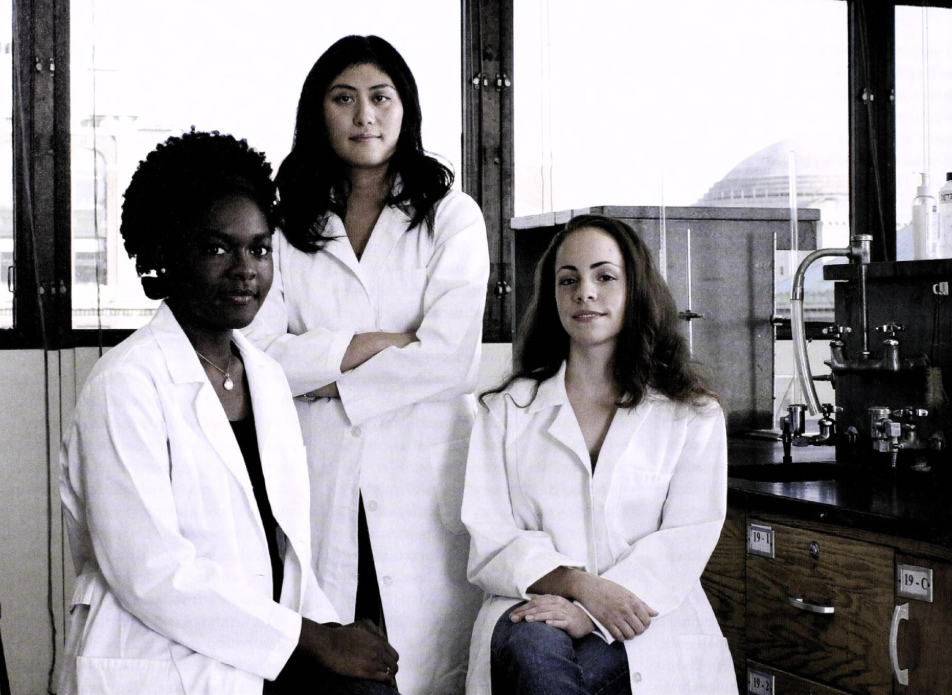
In Fall 2007, Barnard Magazine profiled three seniors who dreamed of bright careers in the sciences. Tamara Vital ’08, “The Doctor,” envisioned working in medicine and closing the gaps in public health outcomes affecting women. Denise Napolitano ’08, “The Chemist,” thought she might land in pharmaceuticals, or perhaps leverage her skills for a position in cosmetics or food. Maika Takita ’08, “The Physicist,” fell in love with quantum mechanics and pictured a life in the lab.
In 2026, we caught up with Vital, Napolitano, and Takita to learn how their careers have taken shape. Their paths weren’t destined at twenty-one-years-old — each experienced professional twists and turns, at times surprising themselves with new passions and areas of interest. But all feel grateful for their science education, and the significance of conducting research in rooms filled with women at a formative age. It meant that no career, even in fields dominated by men, felt impossible.
The Life Sciences Consultant
From childhood, Vital assumed she would end up in medical school. Her research experiences at Barnard drew the outline of a potential joint MD/Ph.D., despite the larger social pressures that discouraged women from entering careers in STEM.
“This idea that women aren’t scientists is pervasive enough in our culture that at times I catch myself thinking, ‘What am I doing? I am a girl. I should just be a sociology major,’” she told the Magazine in 2007. “But no one has ever said, ‘Tamara, you’re a girl, why are you trying to be a doctor?’”
After graduating with her degree in biology, she spent several years working at biotechnology companies and conducted graduate-level research at the Center for the Science of Therapeutics at the Broad Institute, a joint venture of Harvard and MIT. Then she returned to the idea of a terminal degree, newly interested more in doctoral research than medical practice.
Admitted to several programs, the best fit was the Biological & Biomedical Sciences Program at the University of North Carolina at Chapel Hill, where she earned a doctorate in genetics and molecular biology. Her research focused on Ewing sarcoma, a rare pediatric tumor, which allowed her to leverage the experience she gained in her master’s program while exploring a newer scientific field: cancer epigenetics. She loved the work, but still wasn’t sold on academia.
In academic research, she could provide valuable context for where treatment might be found but had no hand in the making or distribution of that treatment. Searching for other options, she decided to take part in a consulting bootcamp at UNC. In a matter of months, she was extended — and accepted — an offer at ClearView Healthcare Partners, a boutique life sciences firm with an office near her hometown, Boston.
At ClearView, she now works directly with biopharmaceutical clients on the strategic considerations involved in developing therapies, using her scientific expertise to help drugs move from ideation to commercialization. Some of her work concerns oncology, where she can pull from her doctoral knowledge. But her portfolio addresses a range of health concerns, from cardiovascular and metabolic conditions to rare diseases.
“It could be, ‘We have this molecule and we’re thinking of developing it in these diseases’,” she said, describing the questions she might consider in a given project. “How long is that going to take us? What are the studies that we’re going to need to do? How many patients do we need to enroll? What does the competitive landscape look like?”
For Vital, it matters that her first research experiences were in the company of other women. “At Barnard, those invisible barriers don’t exist. I gained so much confidence and had this feeling of ‘I do belong’ as a scientist. And I was able to take that feeling to other places — the belief that I am allowed to take up space.”
The Business Operations Leader
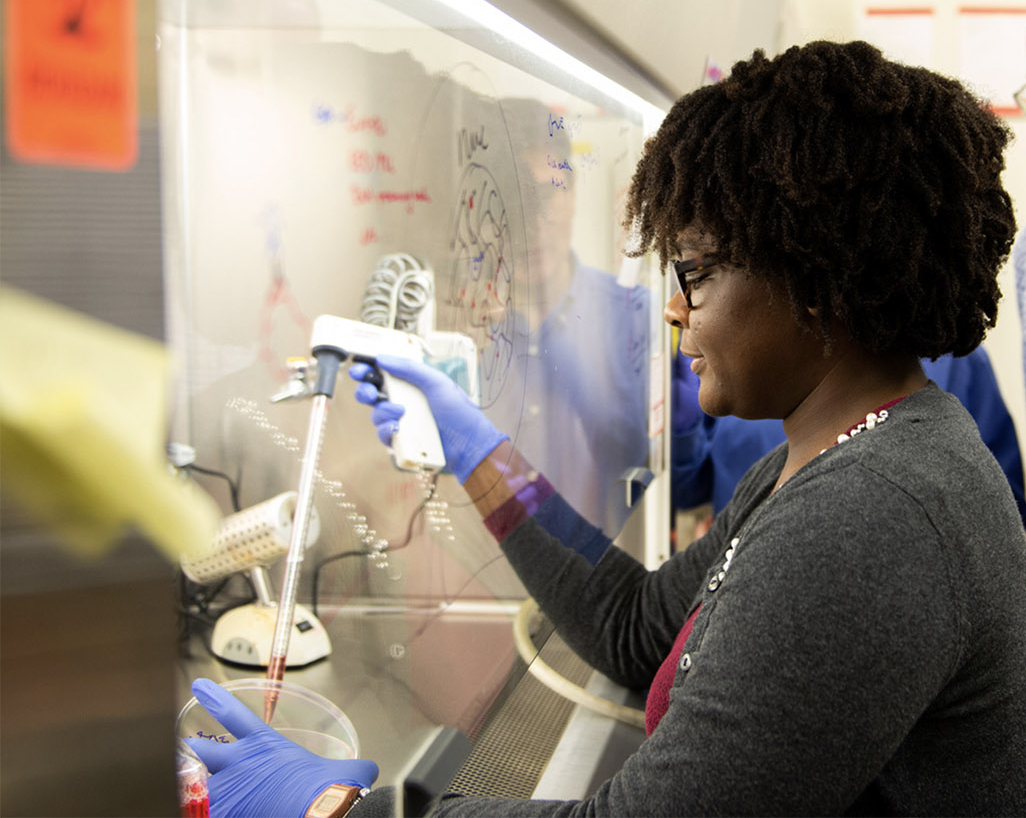
Recently, Napolitano was in a business meeting when a client brought up the concept of entropy — in chemistry terms, the disorder of a space at a given moment in time. “That’s something I’ve thought about as a scientist, and here was this person talking about it from a business perspective.” It reminded her that chemistry is all around us, all of the time.
Even as a student at Barnard, Napolitano predicted that she would take a break after graduation before considering graduate school. “I would like to be sure of my focus,” she told the Magazine at the time. While figuring out her next steps, she worked at the New York City Police Department’s forensic lab in Queens, where she used her knowledge of chemical principles to evaluate case evidence.
Eventually, graduate school came calling. After four years with the NYPD, Napolitano moved to Phoenix to begin a doctoral program at Arizona State University. It was a chance to research atmospheric chemistry — “a completely different field” — and further her interest in environmental science. Her dissertation focused on how particles in the atmosphere are processed in fog droplets, using stable isotopes to track changes over time.
As the end of the program neared, Napolitano realized that a career in the lab was no longer her dream. A few weeks after successfully defending her dissertation, she started classes at ASU’s W. P. Carey School of Business across the street.
“I came in at zero. It was a very steep learning curve. But I had a lot of skills from research that helped me adapt,” she said. Chief among them was resilience. In a lab, most experiments fail — scientists know how to fail fast and recover.
While earning her MBA, Napolitano discovered a passion for corporate finance. But she was also mindful about entering another male-dominated space, and was proud to be elected to serve as President of the Women's Leadership Association.
Her passion for women’s empowerment led to her first entrepreneurial venture after graduation, Empower Coffee Roasters, a local café that sourced beans from women-owned coffee farms around the world and donated a portion of revenue to nonprofits in Phoenix that support women and girls. While building Empower, she joined the finance department at Intel, later transitioning to positions in marketing, supply chain, and strategy and operations.
In 2026, Napolitano relocated to Alexandria, Virginia, where she now serves as a principal at the McChrystal Group, a small consulting firm that specializes in business optimization. Before she left Phoenix for the East Coast, she sold Empower to another local café that shared her mission.
Napolitano is still a chemist at heart, even if she no longer works at the bench. “When you’re choosing a major, it should be something that sparks wonder and excitement. It should bring you joy and help you grow as a person, even if it’s not something you stay in for the rest of your life.”
The Quantum Computing Expert
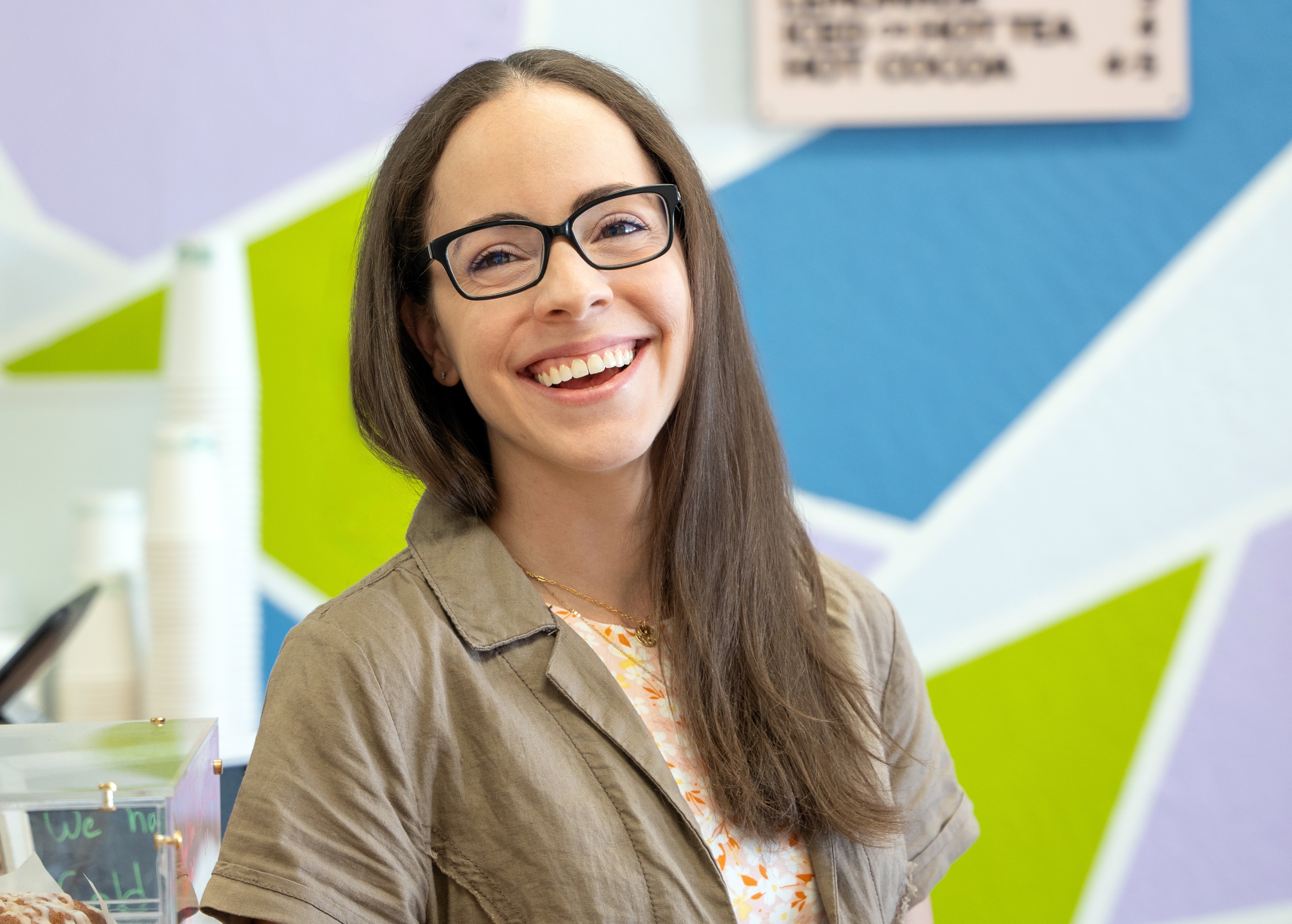
When Takita was a student at Barnard, she loved the “hands-on work.” Putting on the goggles, gloves, caps, and shoe covers. Searching for answers in the lab. Much of the curriculum in the Physics Department was theoretical, but research opportunities and supportive faculty enabled her to explore the applied side of the field.
“I’m still learning about semiconductors and how this applies to real life — I’m not too sure of the connection yet, but I like the process of making devices,” Takita said in 2007.
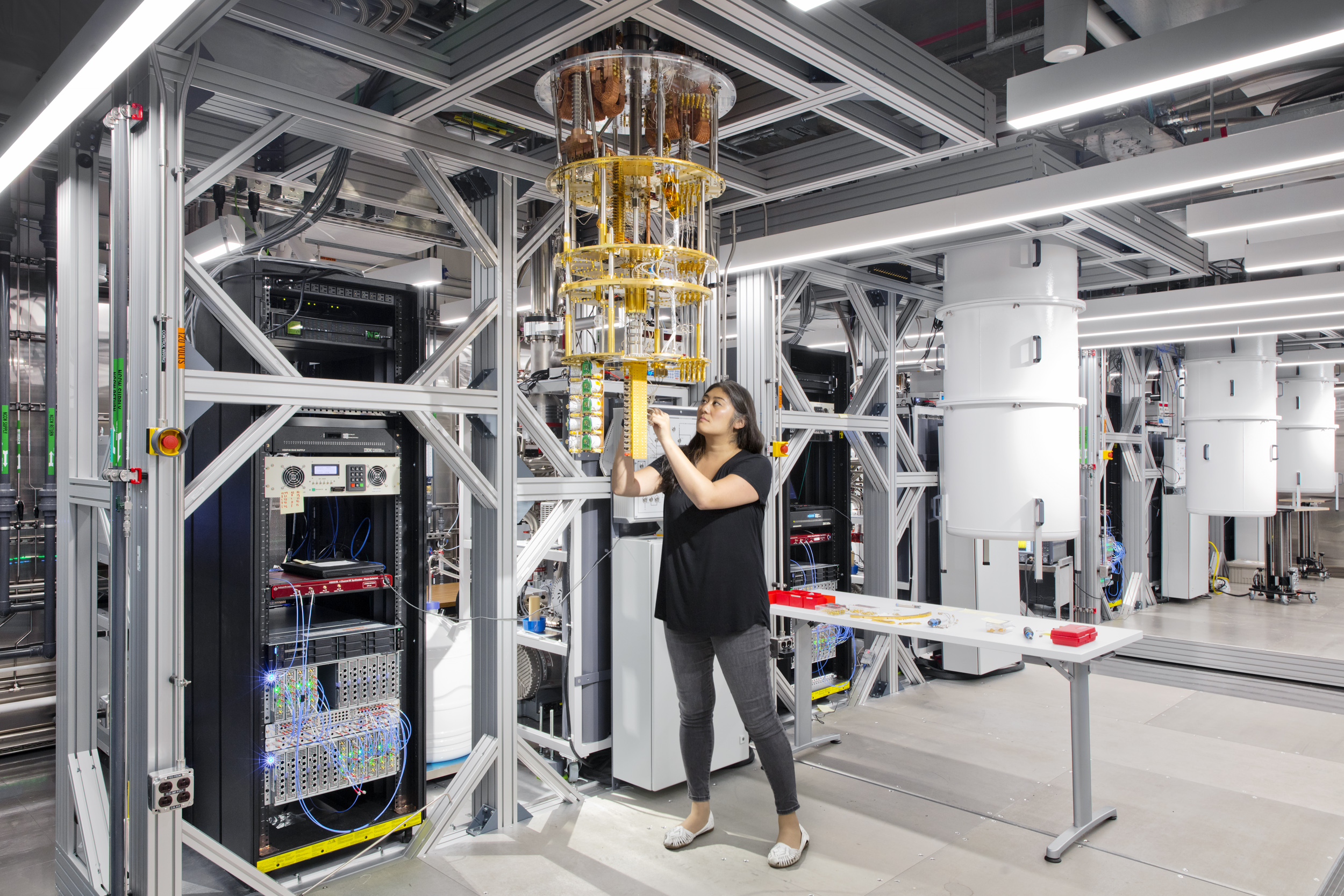
As it happened, she would go on to research devices for a living — and the devices became much more complex. After earning a doctorate from the Electrical and Computer Engineering program at Princeton University, Takita joined IBM — one of the oldest and largest tech companies in the world — as a postdoctoral researcher. In 2026, following more than a decade at the organization, she holds the rank of Principal Research Scientist.
Twenty years ago, quantum computing (using quantum bits, or qubits, as the unit of information in order to process vast amounts of data at once) was still in an early experimental stage. Her research in graduate school centered on electrons on helium, a quantum computing platform that explores how electrons floating on the surface of liquid helium can be controlled and transported in a scalable architecture.
“I was doing everything myself — experiment, theory, simulation, fabrication, changing the oil on the pump,” she said, reflecting on her time as a student researcher. “But that allowed me to learn the steps of building a device from start to finish.”
At IBM, Takita leads a team of researchers that serves as an early scientific user of the company’s latest quantum processors. Working closely with hardware teams, the researchers develop large-scale demonstrations that push the systems to their limits, enabling first-of-their-kind experiments and expanding the capabilities of quantum computing.
In 2007, Takita said that it never occurred to her that she was a woman in science. “I just feel comfortable,” she told the Magazine. In 2026, with nearly two decades of professional experience under her belt, her feelings are more complicated. In the lab, it is easy to focus on the work. Now that she's in a leadership role, she looks around, and women are scarce.
“I’m starting to feel it,” she said. “There are just fewer of us at this level. But I’m working to be a mentor to the next generation, because I remember the mentorship that I had. I would love it if all the women at Barnard stayed in research, stayed in science, and kept rising.”
Published in the Summer 2026 issue of Barnard Magazine with the headline "A Future in Science, Revisited."