Women’s, Gender and Sexuality Studies
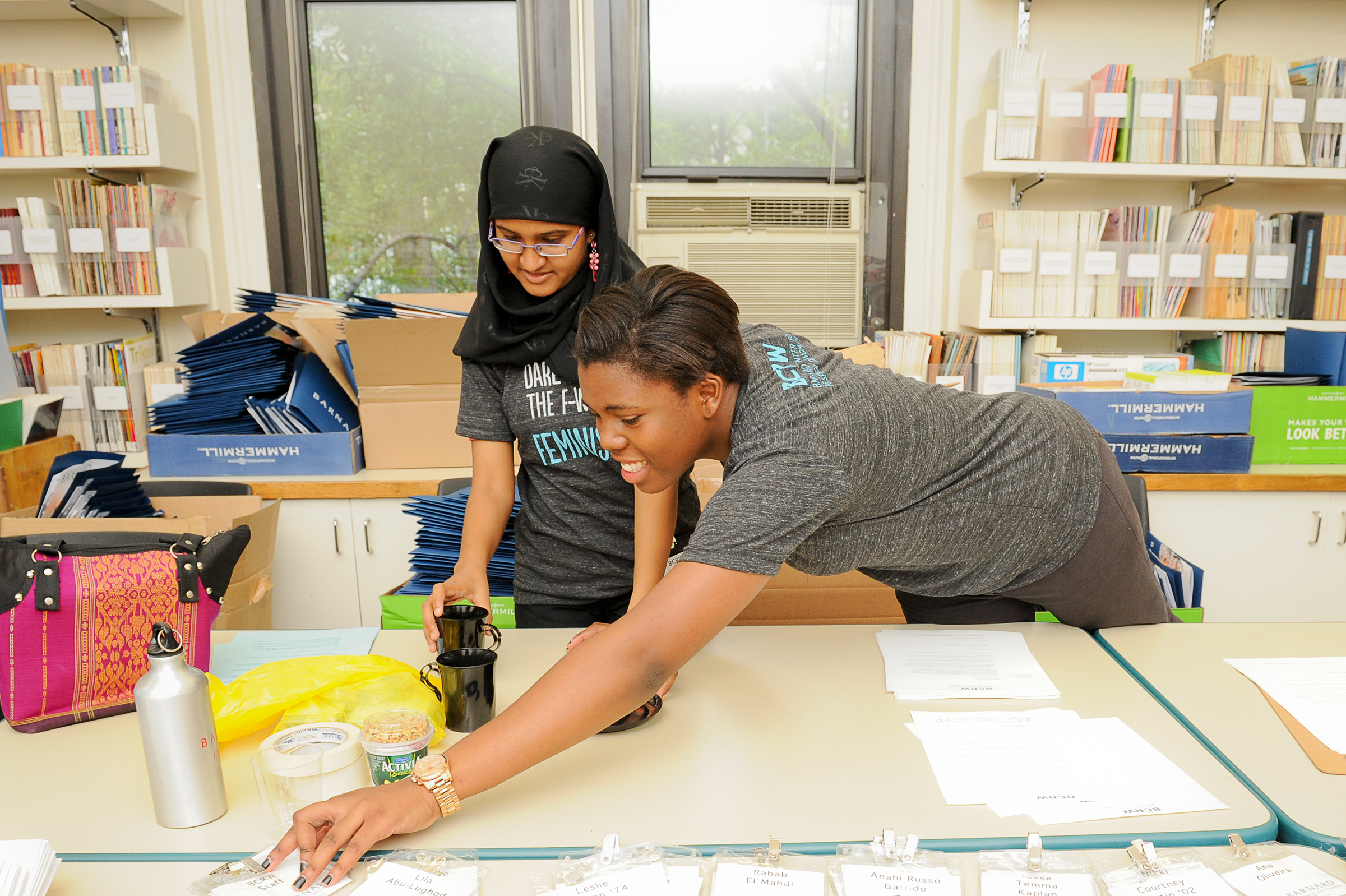
Women’s, Gender and Sexuality Studies is an interdisciplinary department for students who wish to explore gender and its relation to other axes of power: race, class, ethnicity, and sexuality. We use these concepts to analyze human experience in its bodily, political, economic and cultural dimensions. Women’s, Gender and Sexuality Studies covers a complex variety of theoretical and empirical scholarship both within traditional disciplines and in interdisciplinary frames in the humanities, in the social sciences and in the natural sciences as well as combinations of the three. The Department is committed to critical perspectives and bodies of knowledge that contribute to possibilities for transformation and change.
Fall 2026 Information for Current Students
Going forward, the Portal will be the primary place for schedule updates and announcements, so we recommend bookmarking it and checking in regularly.

The Women’s, Gender and Sexuality Studies Major and Minor
Major
Minor
History of Women's Studies at Barnard
Women's Studies at Barnard was established in 1977. An interdisciplinary program, it initially relied almost entirely on faculty from other departments. In 1988, Women's Studies became a department. An option of a combined major has been offered since 1982 83, and a minor was added in 1998.
In 1977, the Barnard program defined itself as "an interdisciplinary major for students who wish to explore the basic questions raised by the new scholarship on women [such as]: sex roles, sex differences, and the concepts of femininity and masculinity; the role of women in culture and society…; questions about the distribution of power, work, and resources in the public and private domains; and the symbolic and religious place of feminine and masculine imagery."
Jane S. Gould, first director of the Barnard Center for Research on Women, describes the founding of Women's Studies at Barnard as follows:
"Barnard had taken the lead in offering some of the first women's studies courses: ten courses, offered between 1971-72, were listed in the first Women's Center brochure, and, over the next few years, this number would grow.
But, even with the success of these early courses, gaining acceptance of a program with a full-fledged major proved to be incredibly difficult. It took an inordinate amount of time and commitment on the part of a very small and devoted, but also overextended, group of faculty. Over a period of four years-under the leadership of Domna Stanton, a faculty member of our executive committee-a program was developed that, by 1977, was approved by the Barnard faculty. It took until 1981 to gain approval for a full-time tenured faculty member to head the program. Nancy Miller, a Barnard alumna and former executive committee member who had been teaching at Columbia, was selected for the job.
Jane S. Gould. Juggling: A Memoir of Work, Family, and Feminism (The Feminist Press, 1997), pp. 180
1966:First WS course taught (Baxter's "History of Women in America")
1971-72:Ten courses listed in the first Women's Center brochure (JG 180)
1977:Proposal for a WS program approved
1981:Nancy Miller appointed as first full-time faculty member to head the program (JG 180)
1982-83:The option of a combined major established
1988:WS became a department
1998:The minor established
Courses that Make the Connections
Our Faculty
Elizabeth Bernstein
Casidy Campbell
Janet Jakobsen
Rebecca Jordan-Young
Manijeh Moradian
Marisa Solomon
Neferti Tadiar
Affiliated Teaching Faculty, 2026-27
Ashley Dawson
Lisa Duggan
Margot Kotler
Agnieszka Legutko
Sandra Moyano-Ariza
Alex Pittman
In the News

Professor Rebecca Jordan-Young Advocates for Embedding Social Sciences at the Core of Academic Medicine
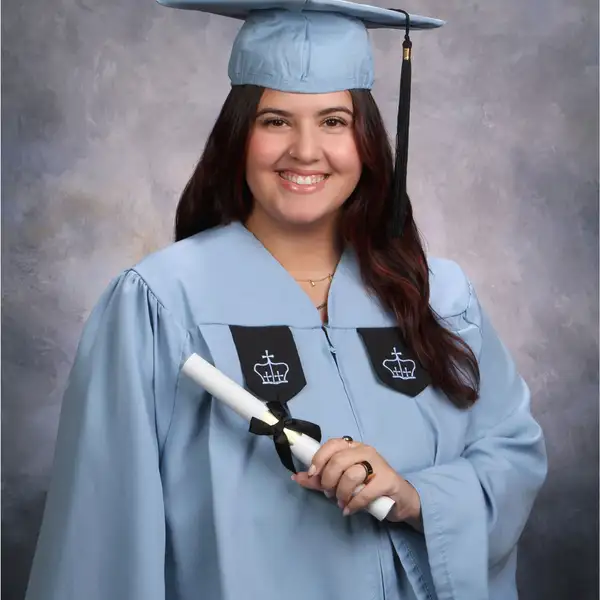
Countdown to Commencement | Angelic Estrella Molos ’25
Contact
3009 Broadway
10027 NY
United States