As the environment experiences drastic changes and the global population continues to rise, clean water has become an increasingly limited resource, and water research is more urgent than ever. At Barnard College, scholars across fields and disciplines are leveraging their expertise to improve our knowledge about the water that flows through rivers, lakes, oceans, and the tap. From deep water wells in Bangladesh to freshwater ponds in Central Park, Barnard professors are leading the charge to better understand this critical resource.
In April, the U.S. Patent and Trademark office placed its stamp of approval on Associate Professor of Chemistry Michael Campbell’s invention: a practical, non-toxic method for testing arsenic levels in water samples. The potential benefits will affect communities around the world — arsenic contamination remains a serious global health concern, affecting the drinking water of about 150 million people worldwide, including in the U.S.
Consequences from arsenic exposure can be both serious and long-term, with associations to liver, blood, skin, and lung cancers, developmental concerns among children, and cardiovascular disease. Despite its prevalence, methods for detection have been stuck in the 1800s. Much of the “innovation” of the last hundred years has used color-change test strips with mercury bromide, another powerful toxin. From his lab research, Campbell proposed something different. Using a silver coordination polymer was just as effective — and came without the associated health risks.
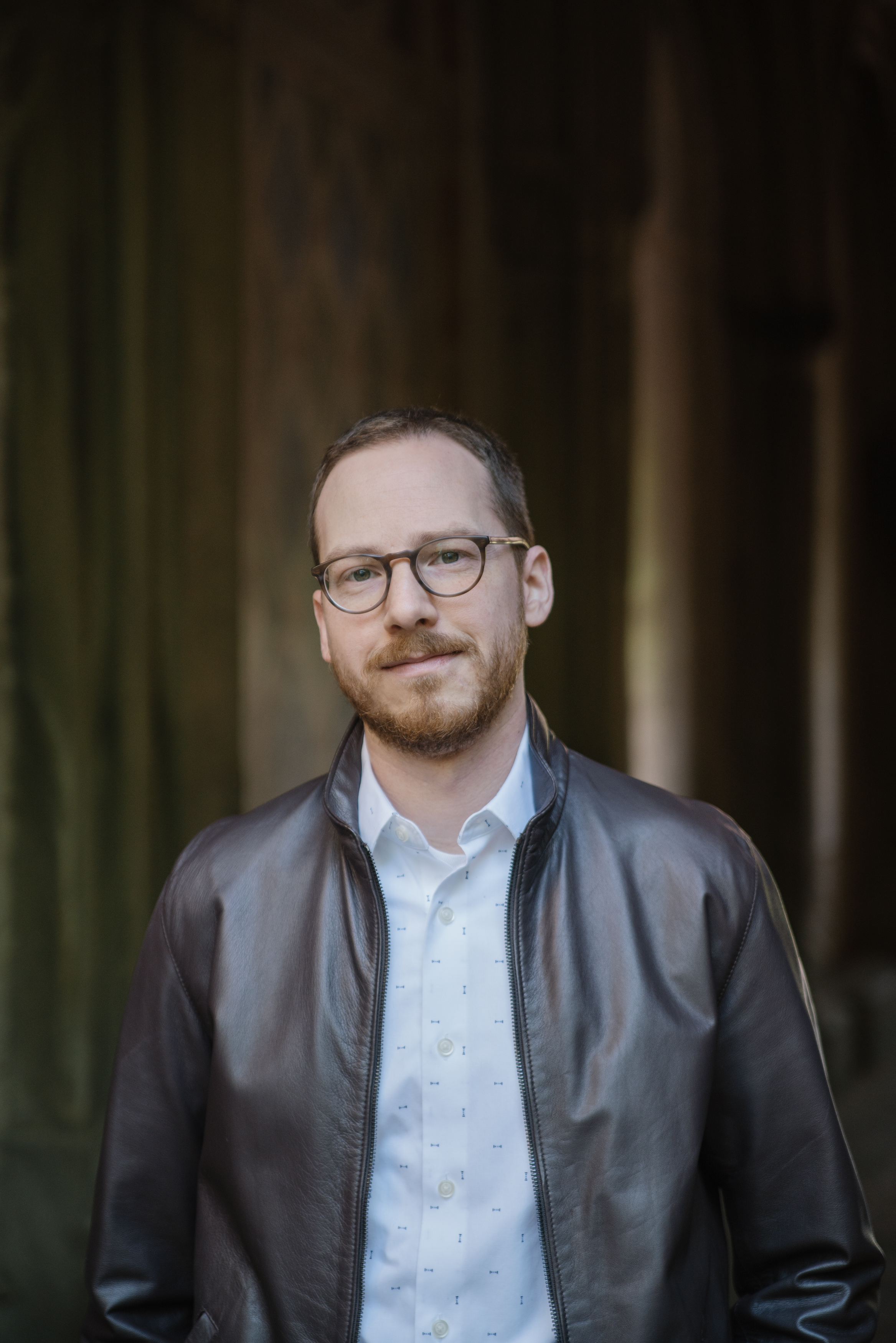
As the lead inventor, Campbell filed the patent with support from a Barnard Presidential Research Award and the collaboration of two colleagues: Benjamin C. Bostick, who conducts research at Columbia University’s Lamont-Doherty Earth Observatory, and Natasha Reich ’21, who served as Campbell’s research assistant during her undergraduate studies.
Long before the patent was issued, it received interest for commercial distribution. Lovibond — a leading manufacturer of water safety products — licensed the technology, and arsenic test kits based on the findings within the patent are now on the market. Dubbed the “EcoSafe Arsenic Test Kit,” consumers can detect 0.005 mg of arsenic per liter, which ensures that water meets the World Health Organization’s criteria for safe drinking, 10 μg per liter.
“Many important challenges for society remain, at their core, chemistry challenges,” said Campbell. “New fundamental developments in chemistry can help to drive technological advances, creating important opportunities for collaboration between chemists and other fields.”
When Assistant Professor of Biology Emlyn Resetarits conducts fieldwork, her team often rides the subway to the end of the line — the A to Rockaway Blvd in Queens, for instance, where someone can walk out of the station and into a salt marsh.
“These are little hidden oases that people don’t think about,” said Resetarits. “There are all sorts of things that people would never think are out there.” Horseshoe crabs scuttling around Jamaica Bay. Mussels on Randall’s Island. Pufferfish and seahorses in the Hudson.
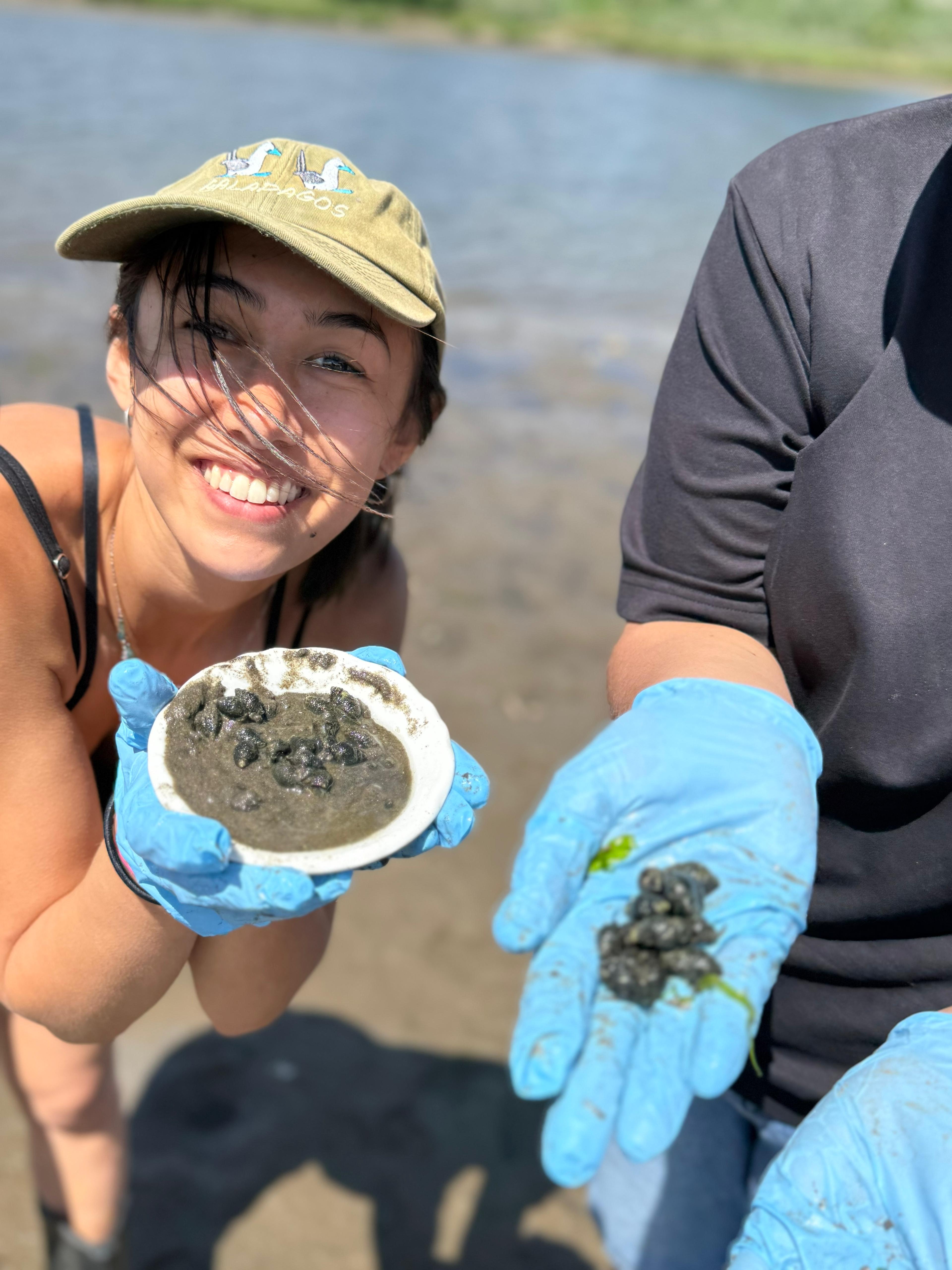
The Resetarits Lab, made up of six Barnard students and their lab manager, Nick James, is working to understand what drives host-parasite dynamics on the East Coast, looking at how populations of infected organisms and their parasites interact and evolve over time. One ongoing project focuses on a parasite that uses diamondback terrapins, an endangered turtle species, as its final host.
In recent months, the lab has begun to sample freshwater ponds in Central Park, where few have studied the presence of parasites. The team is working to determine whether parasitic organisms in the ponds are invasive, gauging their effect on human and wildlife health — information that can ultimately be brought to city park managers.
To address the bigger picture, Resetarits is spending the summer conducting fieldwork in estuaries across the East Coast, from Maine to Florida, where the Eastern Mudsnail (an intermediate host) is found. With support from the Summer Research Institute, students are running experiments with snails from Georgia, New York, and Massachusetts, looking into the reasons for higher rates of parasitism in northern states. In July, five lab members presented their findings at the Lida Orzeck ’68 Poster Session.
“People think that more parasites is a bad thing, but that’s not always true,” said Resetarits. “Parasites and pathogens are needed to keep everything in check so that no one species dominates. You need them to maintain a healthy, diverse ecosystem. Parasites get a bad rap, but through them, we learn lots of good stuff about the environment.”
For the last 25 years, Brian Mailloux, the Alena Wels Hirschorn ’58 and Martin Hirschorn Professor in Environmental & Applied Sciences and Ann Whitney Olin Professor of Environmental Science, has returned to a single project: understanding what’s driving the biogeochemical reactions that result in higher levels of arsenic in groundwater in Bangladesh.
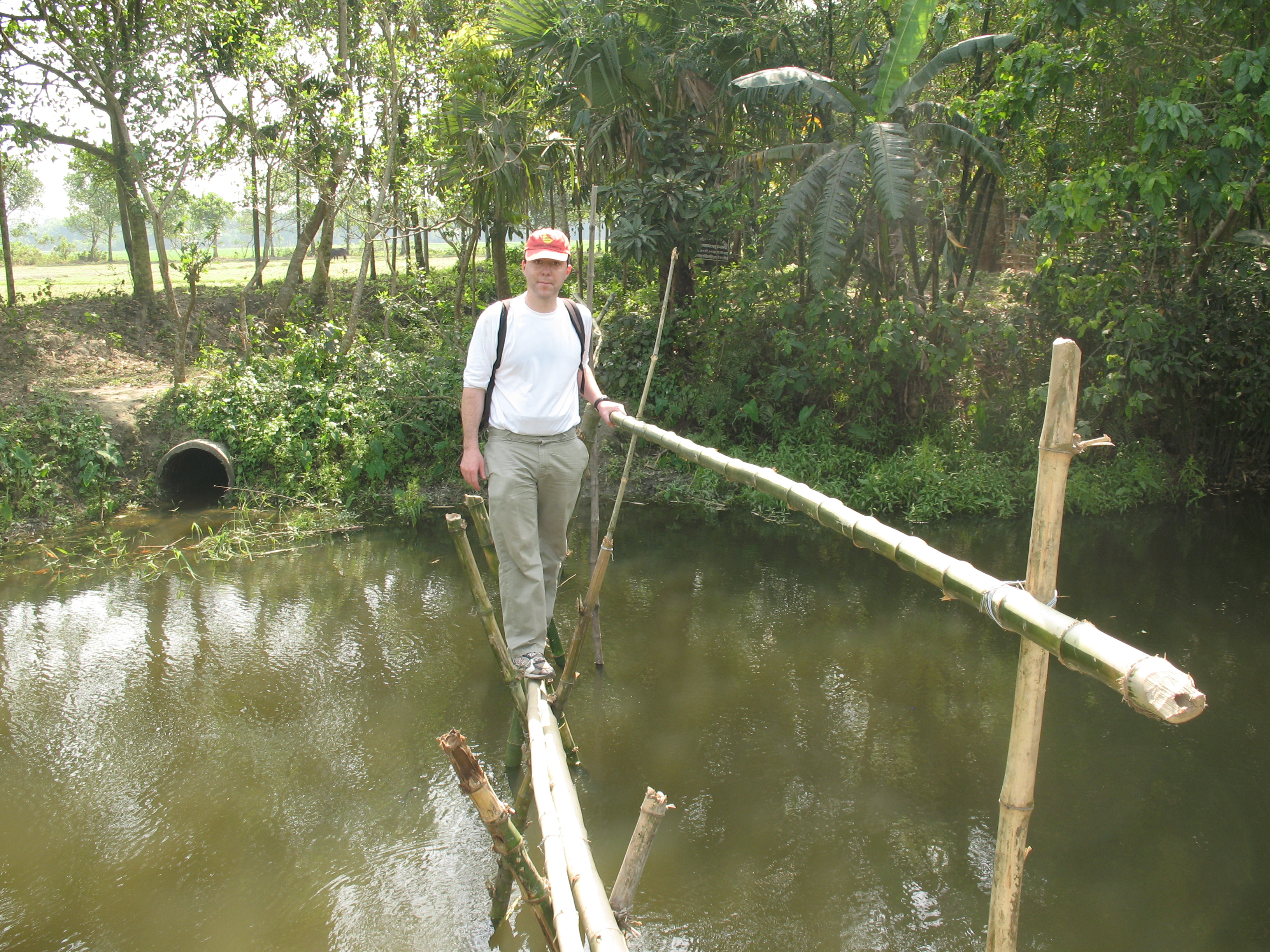
With an official start in 2003, Mailloux, along with colleagues in Barnard’s Environmental Science Department and the Columbia University Mailman School of Public Health, has worked to determine what he calls the “how” of arsenic contamination.
“There are problems with naturally occurring arsenic in the U.S. and in many parts of the world, but in Southeast Asia, we see the largest impact,” said Mailloux. “The trouble is, water still tastes and looks fine, but the level of arsenic causes widespread public health issues. It’s similar to air quality issues — these are gradual, long-term effects.”
Mailloux traveled to Bangladesh countless times throughout the early 2000s, working closely with scholars at the University of Dhaka, one of the top research institutions in the country. Together, the team studied the source of the carbon that was driving the reactions — was it coming from the sediment or the surface?
“We found that carbon comes from the surface and is getting there quicker than we thought,” said Mailloux, noting that even in places where wells are drilled deeper to get to safer water, issues will emerge over time.
After a final publication in Communications Earth & Environment in May 2026, Mailloux is moving onto other research interests. But his sustained focus on the region has laid the path for future researchers, both within and outside the field, to push the envelope further — asking new questions, and bringing forward new solutions.
Published in the Summer 2026 issue of Barnard Magazine with the headline "Quenching the Need for Water Research."