Symposium on Responsible AI and the Liberal Arts
Friday, February 6, 9:30am - 3:30pm | LeFrak Theater & James Room
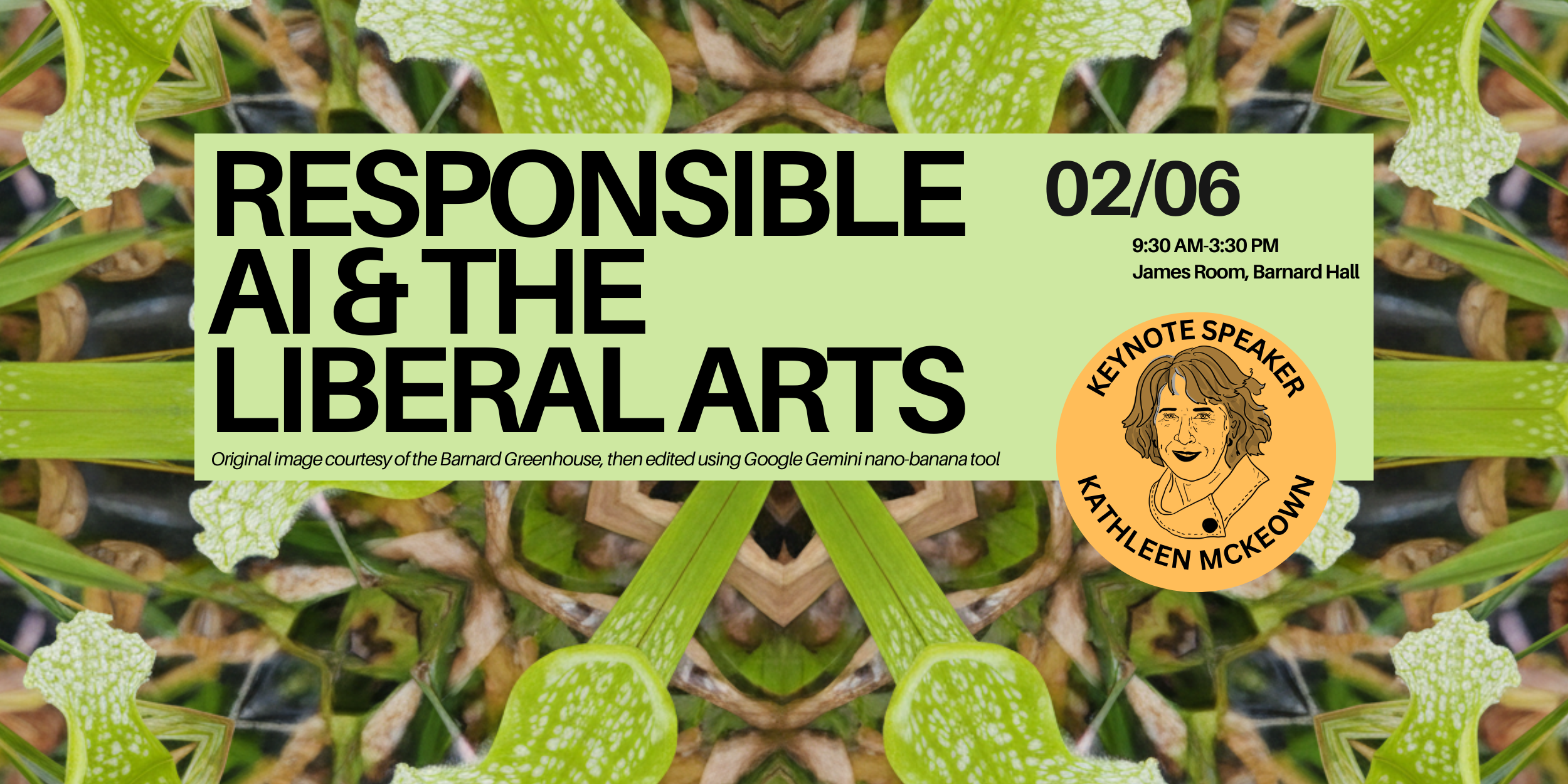
What would responsible AI mean for the liberal arts? Responsible AI is the practice of designing, developing, and deploying artificial intelligence systems in ways that are transparent, fair, accountable, safe and aligned with human values. At a liberal arts college committed to educating students as critical thinkers, creators, and citizens, responsible AI also means asking whether, why, and under what conditions such systems should be developed and deployed.
AI is already impacting classrooms, workplaces, media, and the environment in ways that bring both risks as well as new possibilities. Research and public debate have highlighted AI’s potential to accelerate scientific and medical discovery, increase accessibility to an array of content and materials, speed translation across languages, and process large amounts of archival data. At the same time, scholars and critics have raised concerns that uneven access to AI could widen inequality, that its use may undermine privacy, and that its reliance on energy-intensive data centers is contributing to environmental damage. Like other major technological and cultural shifts, these systems demand that educators and researchers ask hard questions about how they work, whose interests they serve, how they influence academic disciplines and career paths, and how they affect the world we share. What role ought Barnard and the liberal arts play in framing the conversation, contributing to research on AI, and educating the broader public?
This symposium builds on Barnard’s AI Literacy Framework, which has guided the College’s efforts to help faculty and students critically and creatively engage with AI in educational settings. Taking this framework as a starting point, this symposium looks ahead to what an expanded AI literacy might entail: investing in deeper understanding of AI and preparing students not only as learners, but also as researchers, professionals, and citizens who will encounter AI–and indeed shape the next generation of AI systems–across careers, disciplines, and civic life. We will explore how to engage with AI ethically and effectively, and examine what role the liberal arts and academic research ought to play in the development, deployment, and critical analysis of AI.
The day will feature a keynote lecture and moderated Q&A with Kathleen McKeown, Henry and Gertrude Rothschild Professor of Computer Science and Founding Director of Columbia's Data Science Institute, Columbia University; an alumnae panel highlighting the application of AI in diverse fields and research domains; and an interactive showcase featuring research and projects from across campus. Participants will have opportunities to engage in discussions, explore hands-on demonstrations, and contribute to envisioning the future of AI literacy in the liberal arts.
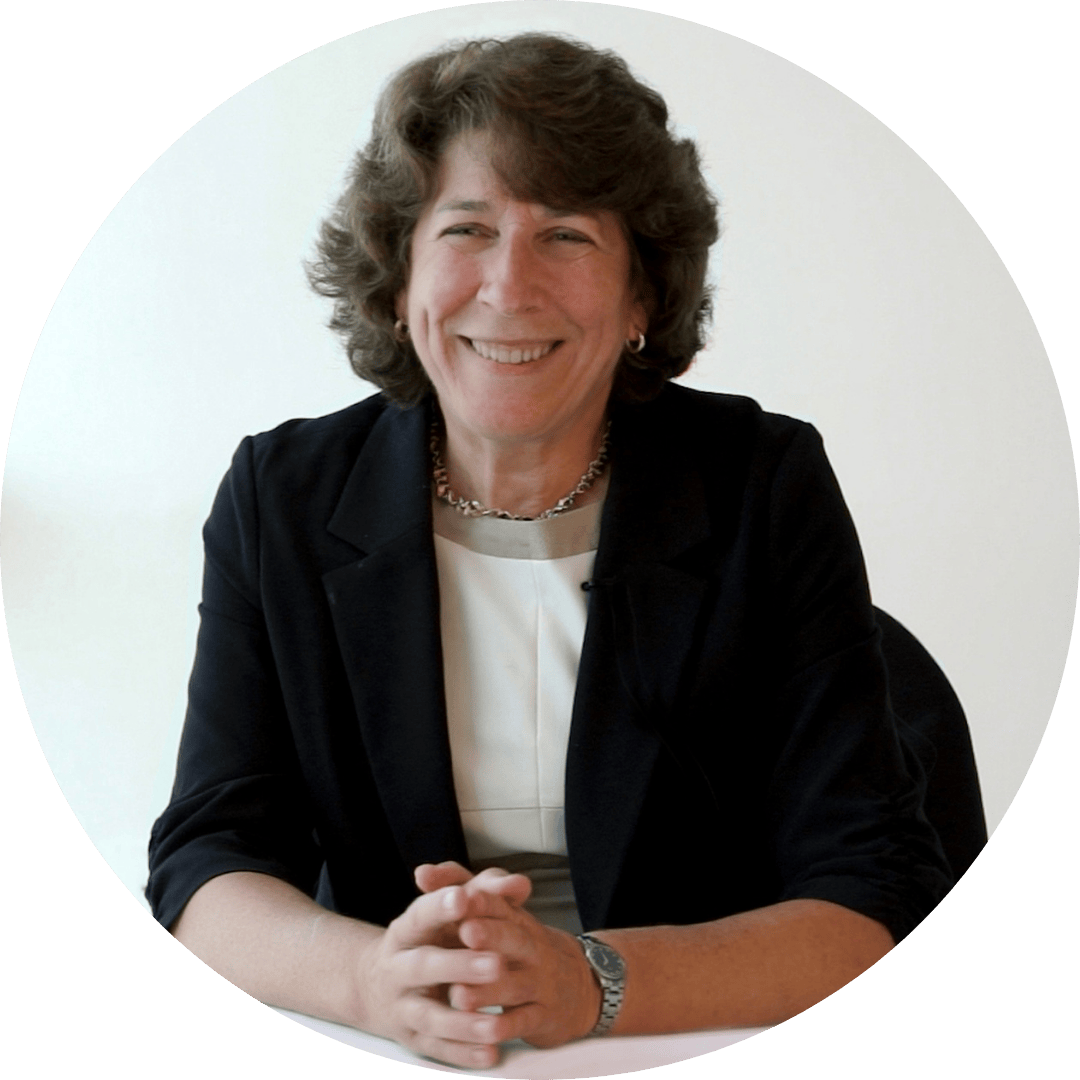
Keynote Speaker: Professor Kathleen McKeown
"Research Arcs in AI: From Literature to Art with a Few Stops in Between"
In this talk I look at the arc of research over the years within the natural language processing field, a major part of AI. I begin with views of research in the early 80s when inter-disciplinary research was in vogue. It was at that time I began my research on language generation, investigating the factors that influence our choice of expression such as the words we use. Remarkably today, making intentional choices to convey meaning is still an issue in the era of Large Language Models and one we continue to study. From there I turn to three other themes in our research. I discuss our research on summarization and analysis of narrative, especially as drawn from literature. Here, we focus on identifying errors in summarization, such as summaries that are not entirely faithful to the input text. In our analysis of social media, I show how bias is a big problem, particularly when studying different language varieties and when presenting the perspectives of vulnerable speakers. I close with some of our early work on multimodal generation and analysis related to artwork. While the disciplines we interact with may have changed over time, interdisciplinary interaction is still a critical component of our work.
Kathleen McKeown is the Henry and Gertrude Rothschild Professor of Computer Science at Columbia University and the Founding Director of the Data Science Institute, serving as Director from 2012 to 2017. In earlier years, she served as Department Chair (1998-2003) and as Vice Dean for Research for the School of Engineering and Applied Science (2010-2012). A leading scholar and researcher in the field of natural language processing, McKeown focuses her research on the use of data for societal problems; her interests include text summarization, question answering, natural language generation, social media analysis and multilingual applications. She has received numerous honors and awards, including 2025 ACL Lifetime Achievement Award, 2023 IEEE Innovation in Societal Infrastructure Award, American Philosophical Society Elected member, American Academy of Arts and Science elected member, American Association of Artificial Intelligence Fellow, a Founding Fellow of the Association for Computational Linguistics and an Association for Computing Machinery Fellow. Early on she received the National Science Foundation Presidential Young Investigator Award, and a National Science Foundation Faculty Award for Women. In 2010, she won both the Columbia Great Teacher Award—an honor bestowed by the students—and the Anita Borg Woman of Vision Award for Innovation.
Schedule at a Glance
| 9:30-9:45am | Gathering in the LeFrak Theater with coffee and light breakfast |
| 9:45-10:00am | Welcome and opening remarks |
| 10:00-11:00am | Keynote with Kathleen McKeown, Henry and Gertrude Rothschild Professor of Computer Science and Founding Director of Columbia's Data Science Institute, Columbia University |
| 11:00-11:30am | Moderated Q&A with Kathleen McKeown |
| 11:30-11:45am | Coffee break |
| 11:45am-1:00pm |
Barnard Alumnae Panel: Responsible AI across Fields
|
| 1:00-1:45pm | Catered lunch and discussion at tables in the James Room |
| 1:45-3:00pm | Community Showcase |
| 3:00-3:30pm | Closing remarks and discussion |
Call for Submissions: Community Showcase
The Symposium on Responsible AI and the Liberal Arts Planning Team invites proposals to participate in a Community Showcase of hands-on projects, creative works, and research from across campus. Formats may include posters, papers, presentations, works in progress, demonstrations, lightning talks, or another creative method that addresses responsible AI in the liberal arts and beyond. Contributions topics may be grounded in (but are not limited to) pedagogical approaches, professional and civic applications, critical explorations, or points of curiosity. The submission process has now closed.
Session Formats:
The Community Showcase will be formatted as a table lining the main room as a show-and-tell or poster, or as a panel or lightning talk. Formats will be dependent upon space and proposals. We’d like anyone interested in the showcase to be flexible and choose all formats that may be applicable to their proposal.
- Show-and-Tell (Table and Open Laptop)–Hands-on demonstration of tools, methods, or frameworks
- Poster (Standing Visualization)–Share an idea or series of ideas in a pre-formatted static poster.
- Lightning Talk–5-7 minutes lightning talk
Community Showcase Participants
| Presentation Title | Presenter Name | Department or Office |
|---|---|---|
|
Improper Conduct: A Human-AI Collaboration Framework for Identifying Prosecutorial Misconduct |
Amy Pu | Computer Science |
| Begum Gokmen | Computer Science | |
| Dina Blachman | Computer Science | |
| Larkin Smith | Computer Science | |
|
Conversations With The Library About AI |
Barnard Librarians | Barnard Library |
|
Using artificial intelligence in overdose mortality surveillance: findings and ethical considerations |
Cecilia Yang | Computer Science |
| Anubhav Jangra | Computer Science | |
|
Doomerism, Degradation and Data Centers |
Charlie Bloomer | Data Science |
|
From Ideation to Impact: A Roadmap to Encourage Generative AI Experimentation |
Elana Altman | Academic Technologies and Learning Innovation Services |
| Tristan Shippen | Academic Technologies and Learning Innovation Services | |
|
Who Built It Better?: Comparing Deep Learning and AI Tools for Building Detection |
Ines Perez | Empirical Reasoning Center |
| Fatima Koli | Empirical Reasoning Center | |
|
Proposing an ORBIT (Open Research & Building in Intelligent Technologies) Lab at Barnard College |
Iqra Waheed | Religion |
|
Who Falls Off the New Frontier? Considering Environmental Justice in AI Usage |
Maïa Berthier | Environmental Science, Urban Studies |
|
Exploring “Teaching and Learning in the Age of AI”: A Resource Hub for Faculty |
Marty Samuels | Center for Teaching and Learning |
| Lauren Close | Center for Teaching and Learning | |
|
Lived Experiences with AI: An interview-based, longitudinal project in Vermont |
Melanie Hibbert | Academic Technologies and Learning Innovation Services |
|
Remix & Play with AI in the Visual Arts |
Melanie Hibbert | Academic Technologies and Learning Innovation Services |
| Jozefina Chetko | Art History | |
|
Is It AI? |
Rachel James | Sloate Media Center |
| Deja Cobb | Sloate Media Center | |
| Melanie Hibbert | Academic Technologies and Learning Innovation Services | |
|
Algorithmic UDAP |
Riley Stacy | Computer Science, Math, Human Rights |
|
Intersectional Feminist Approaches to AI - A Year of Programming at BCRW 26-27 |
Sandra Moyano-Ariza | Barnard Center for Research on Women |
| Beck Jordan-Young | Barnard Center for Research on Women | |
|
Seeing Isn’t Believing: Cognitive Heuristics and the Responsible Interpretation of AI-Analyzed Public Discourse |
Shaunette T. Ferguson | Psychology, Africana Studies |
|
AI Readiness Transformation: Aligning People, Processes, and Technology for Sustainable AI Success |
Takshika Jambhule | School of Professional Studies |
| Karina Castolo Rodriguez | School of Professional Studies | |
| Anastasya Dwi Tantya | School of Professional Studies | |
|
FlowCode: Supporting Novices Understanding and Iterating on Creative Code using AI Assistance |
Tiffany Tseng | Computer Science |
| Meitalia Factor | Computer Science | |
| Tiffany Lin Fu | Computer Science | |
| Rona Darabi | Computer Science | |
|
Shifting Perspectives: An initial exploration of technosocial relations from 2013 to 2025 as analyzed through the release of smart glasses |
Yuk Yi Wong | Cognitive Science |
Symposium Planning Team
Co-Chair, Smaranda Muresan, Associate Professor, Computer Science
Co-Chair, Melissa Wright, Executive Director, CEP
Saima Akhtar, Sr. Associate Director, CSC
Elana Altman, Sr. Associate Director, ATLIS
Melanie Hibbert, Director of ATLIS and the Sloate Media Center
Ahmed Ibrahim, Associate Director of STEM Pedagogy, CEP
Fatima Koli, Sr. Associate Director, Empirical Reasoning Center
Shawn(ta) Smith-Cruz, Dean of Barnard Library and Archives