What drew you to studying plants, and what led you to teach about them here at Barnard?
I earned my doctorate at the University of Wisconsin in Madison, and in the Midwest, college students are more aware of agriculture and forestry as major sectors of the economy. But even there, many students grew up in cities or suburbs where the utter necessity of plants is overlooked.
Even for me, plants were not the initial draw. It was inspired more by nature and hiking and field trips. And curiosity. I was drawn to professors who knew how to make ecology and evolution and botany fascinating, which mattered just as much if not more than how those topics might be relevant pragmatically.
I was interviewing for my faculty job at Barnard at the same time that the current Barnard greenhouse was being built, in 1998. When I arrived my first year, I knew I wanted to use the greenhouse to teach my classes and for my research. When I was doing my PhD at Wisconsin, I had always been at the greenhouse and arboretum there. There are also important regional herbaria at both UW-Madison and at the University of Tennessee, where I did my postdoc. So when I interviewed here, I felt very much at home, and really loved the job, in part because of these fabulous botanical resources.
What research have you done here at Barnard?
I serve Barnard by being faculty director of the greenhouse, and I also use it in my teaching. As for research, I’ve done many research experiments in the greenhouse where we would set up experimental lighting or soil conditions on Arabidopsis, which is a model organism known as the “fruit fly of botany.” I’ve also grown tree seedlings in the greenhouse, which is more connected to my interest in forest ecology and plant-soil interactions. I’ve had students who have worked on projects on endangered or threatened plants from the New York area. Nick [Gershberg, greenhouse director] helps with all of this, too. I also have some tundra seeds in the greenhouse freezer that I’ve preserved for my own research in Alaska, which is just starting.
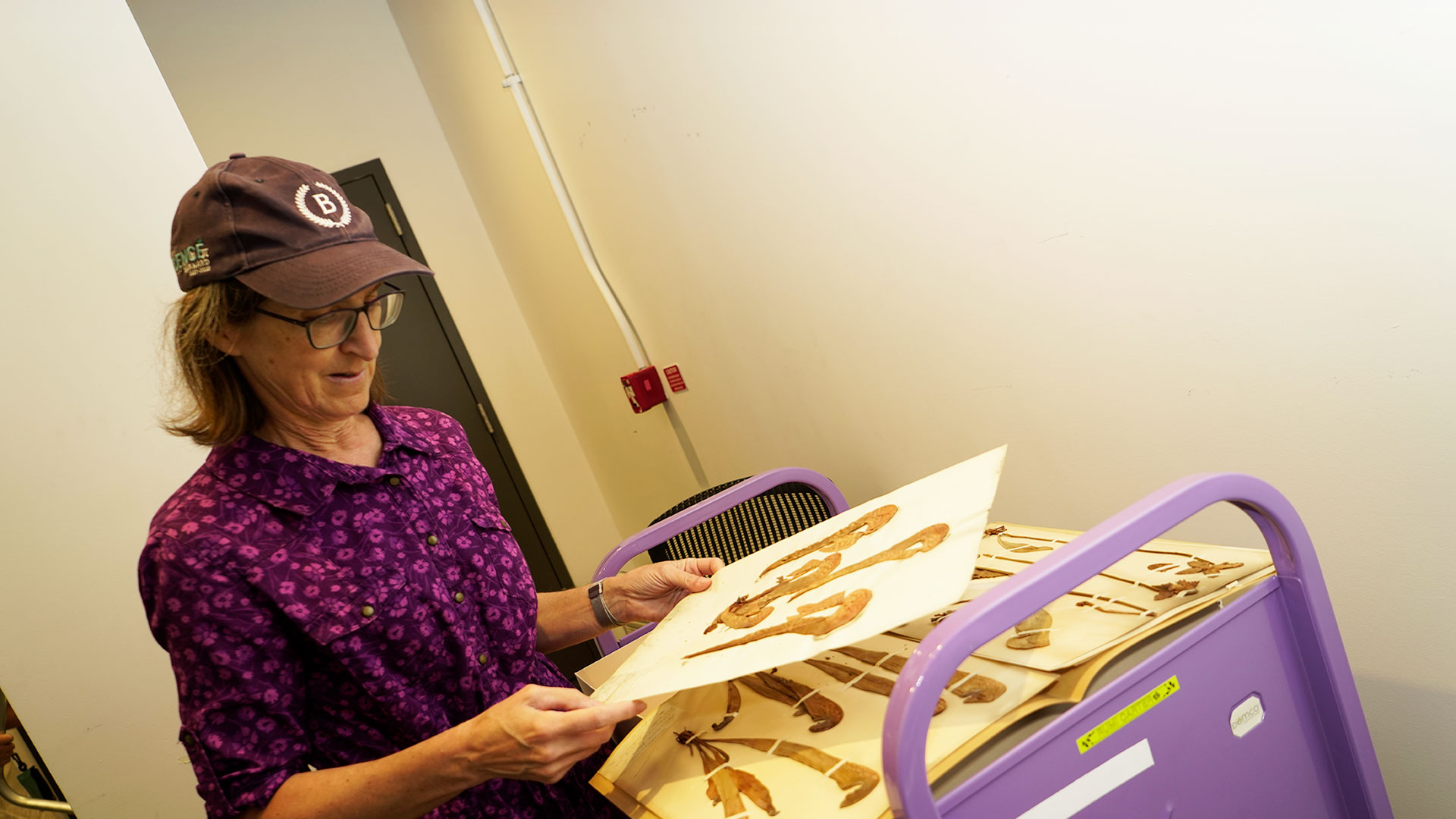
A herbarium is basically a counterpart to greenhouses with living collections, and to seed banks. It’s a museum collection of plants collected in the past and then dried and handled in a way that they basically keep forever. It’s a very ancient practice; there have been herbaria for four or five hundred years.
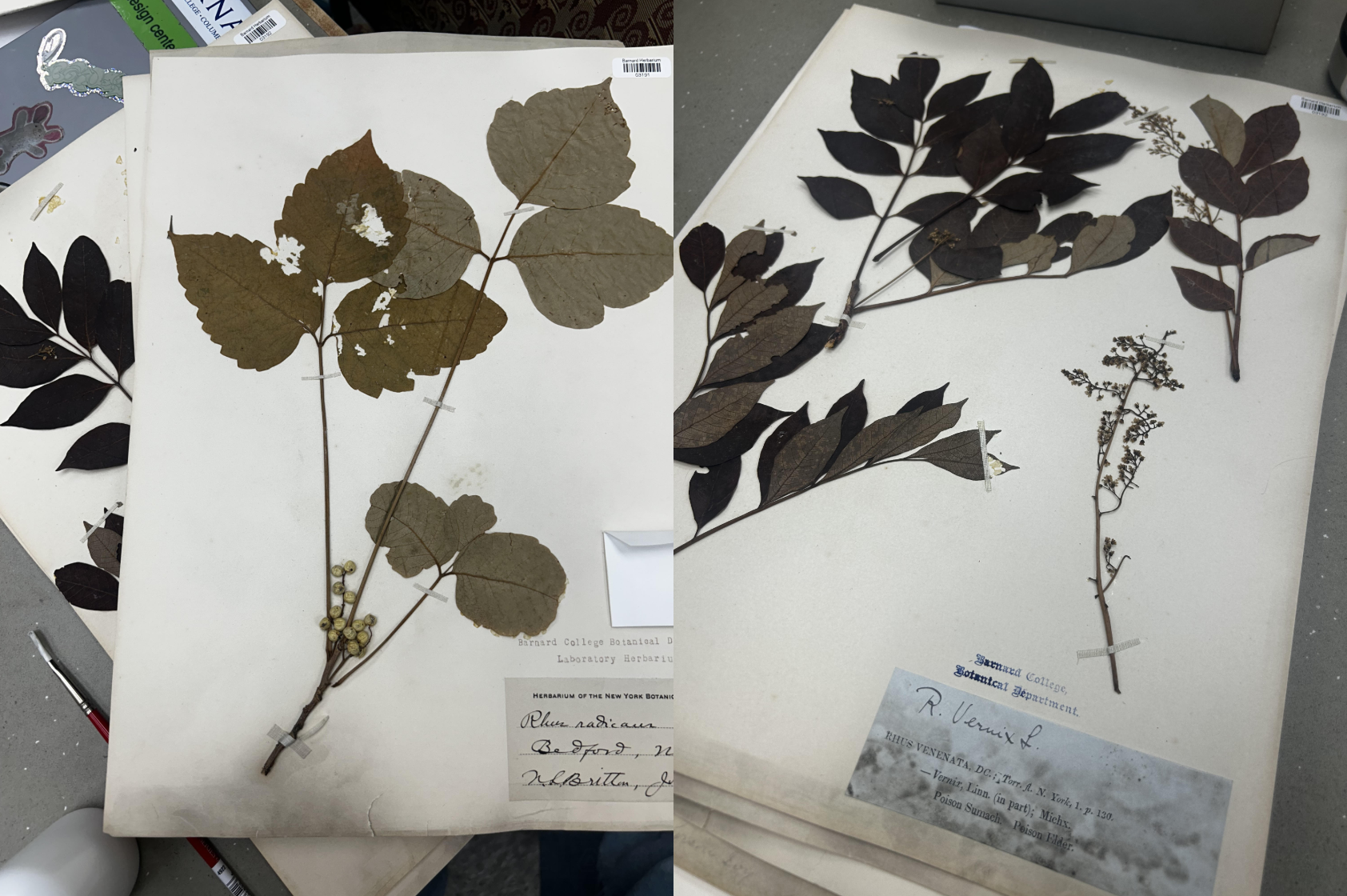
It was one of the earliest parts of Western science to study plants throughout time, and herbaria also influenced the development of medicine.
How did Barnard come to have a herbarium?
It goes back to Emily Gregory. She was the first person that Barnard was allowed to appoint as their own professor, because before, Barnard had been relying on Columbia's faculty, including Columbia’s botanist, Nathaniel Britton, but he was too busy founding the New York Botanical Garden. Emily Gregory was working on the cutting edge of plant science at the time, which was plant anatomy. She had interests in bacteria, algae, fungi, cells, and especially woody plant development. She made sure that Barnard set up a herbarium and a greenhouse, and she wanted students to learn to do research. She hired other botanists for the Barnard staff, and they would teach some of the lab classes. I just thank god nobody ever got ornery enough to throw the herbarium away.
How did you discover the herbarium? What can it tell us about the natural history of both plants and humans?
Professor Ammirato, who’s emeritus, used to teach plant physiology, and told me about the herbarium. When I looked at it, it was obviously very historical, meaning nobody had collected new specimens for many decades. But it was wonderful, and just sitting there unused. So I began using it right away in my classes. I can pull out a huge folder about any plant we’re discussing and looking at the collection as a whole informs any discussion about biodiversity among species or among different regions, and especially through time. Barnard’s not there yet, but most herbaria are both historical and future-looking; they’re constantly collecting plants, doing surveys and conservation studies and going out and recollecting things. If a plant was rare even in 1890, the only way to know whether it still exists or not is to go out and look for it. If we can still collect it, we can prove to people that it still exists in 2025.
You can also look at the DNA of plants from 150 years ago versus today and study how plant populations might be conserved or changed genetically. You can also use some biochemical techniques to compare environmental stressors using isotopes. There are several major experiments waiting to be done with this herbarium.
If you go back to the 1870s and 1890s you can actually see that many botanists were always going to the same places to collect plants. What we want to do is go back to those places now, and even though they’re obviously super developed, they’re not sterile. There are still parks and little patches of vegetation, so we want to see if we can go back and find the plants that they collected back then. Part of herbarium practice is collecting the same plant more than once, because then there are all of these dimensions of who collected it? When? We’re actually trying to do timelines of what was collected and where, and then we want to superimpose on that. When did the subway open? When did bridges or tunnels or highways or other landmarks open? When did New York City become a five borough city? So it gives you an idea of the urban ecology through time.
We discovered that many of the localities were along recently opened train lines. Even in the 1880s, stops were quite well established in Queens and Long Island's Nassau County on the Long Island Railway and in The Bronx and Westchester County on what is now the Metro-North line. People couldn't drive because there were no cars!
In part, people just wanted to explore places near the city and, while there, collect plants conveniently, to learn more, and to practice their hobby or avocation. They preserved the information by pressing, labeling and meticulously filing what they collected.
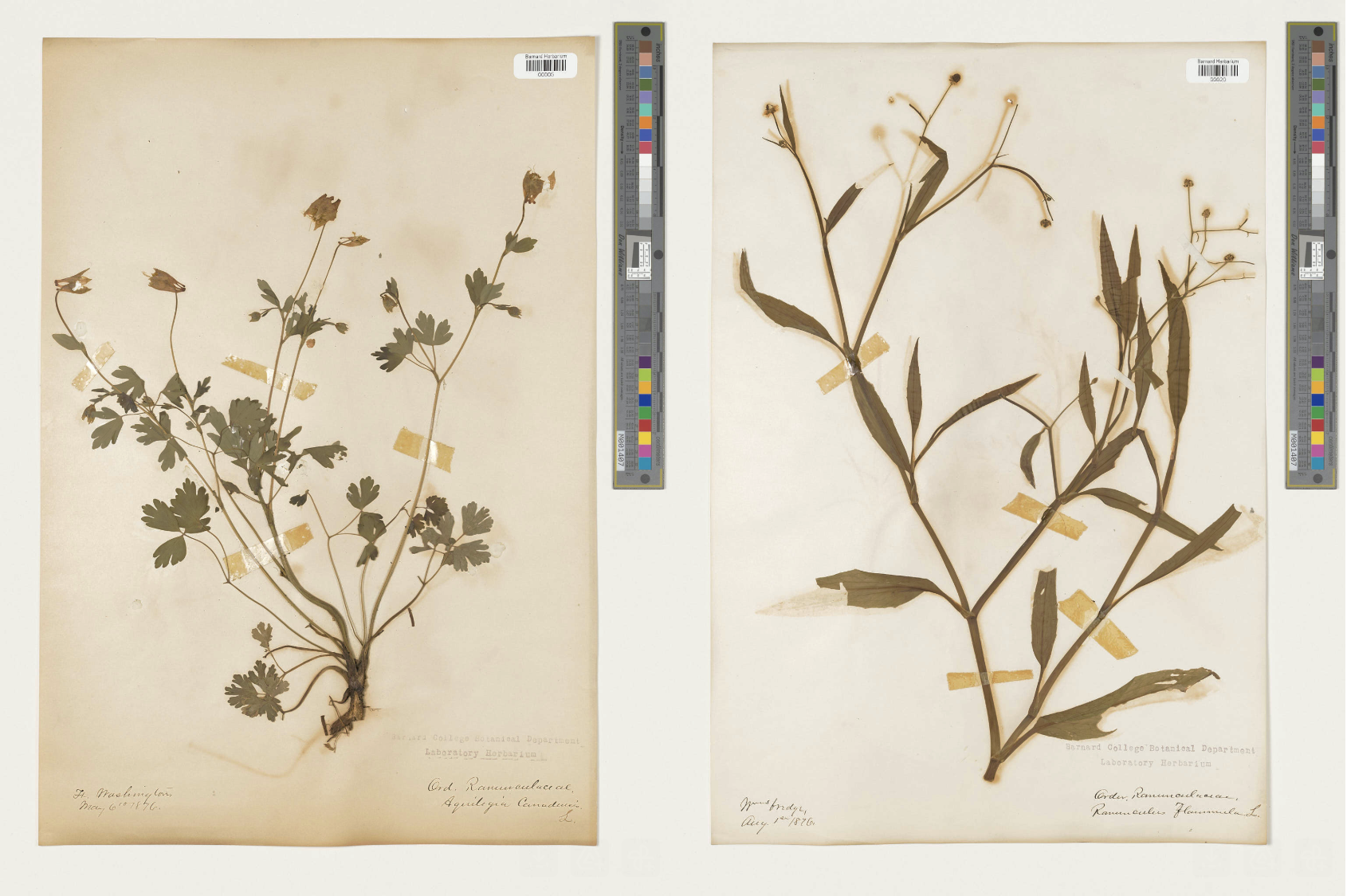
We have the herbarium, a collection of historical plants, but we also have a research greenhouse full of present-day specimens. How are you working to catalog the plants in the greenhouse?
In 2017, Barnard had money to have faculty teach a class in partnership with a New York City museum. I set up a class that I taught with the New York Botanical Garden, and we went up there five or six times during the semester and other times we were using the greenhouse and herbarium here. I became an expert on digital natural history, and I got money from the college to support what are basically electronic card catalogs, referencing the living library of the whole greenhouse and, more recently, the whole herbarium.
How do you put together all of the information about these plants digitally?
Basically, every plant is data and attached to that plant is metadata: where did it come from? What season? What year? Biodiversity databases are counterparts to gene or genome databases, for whole plants and other organisms. As with genome data, our biodiversity data about the greenhouse and herbarium collections aggregates with global data so anybody anywhere will be able to look up what we have recorded. If they’re interested in just one species, they’ll get what we have as well as other places that might also be holding that species. It allows Barnard to join this global enterprise, often called biodiversity informatics or digital natural history. There’s a lot of coding, so that’s why one of my classes counts for the computational biology track. Keeping track of these metadata and how you aggregate the data are really important skills for biologists.
What is special about studying plants? Why should we study them?
Plants affect everyone, every day, in so many direct ways. But it's the norm to take that for granted.
The groceries and other stuff arriving on your doorstep depend on farming and forestry, but the full supply chain is hard to interrogate and comprehend. It is, indeed, long and large and far away and complex, and well hidden.
It is not easy to get people to study plants. I argue that not just ecologists but everybody should be studying plants more. It makes you a better cook, a better shopper, and you're better informed when you vote or join an environmental organization. It’s a good liberal arts part of science even if you are super pre-health or pre-professional. I do get a lot of people who are pre-med who take my plant biology class, figuring that it will make them more well-rounded scientists. It definitely does that, and it also makes them more well-rounded people. And it’s weird—when you start studying the history of botanists and these people who died a long time ago, they’re sort of alive because the herbarium allows you to have the plants that they collected in your hand. I feel like I’m friends with them almost as much as I am friends with so many awesome living botanists around New York City and around the world.
Learn more about Dr. Callahan:
- hcallahan@barnard.edu
- The Barnard College Botanical Laboratory is live on the Mid-Atlantic Herbaria Consortium Portal!
- Take BIOL2841BC - Lab in Plant Evolution & Diversity next semester to contribute to the continued digitization of the Barnard Herbarium!
- ANN DAI '28