On February 29, 1928, Zora Neale Hurston graduated from Barnard College, becoming the first known African American woman to earn an undergraduate degree from the College. Nearly a century later, Hurston’s ubiquitous impact continues to reverberate across literature, anthropology, folklore, and Black cultural studies, both on and beyond Barnard’s campus.
In 2025, Barnard launched a multiyear initiative commemorating the centennial of Hurston's historic enrollment and graduation while honoring 100 years of Black students at the College. Through 2028, the project will celebrate and examine the legacies of Hurston and Black culture.
“Zora Neale Hurston's centennial is more than a commemoration — it is an opportunity for Barnard to invest in the scholarship, creative practice, and community-building her legacy continues to generate,” said Akilah Rosado, interim Dean of the College & Vice President for Inclusion and Belonging. “In partnership with Professor Monica Miller and the Africana Studies Department, the Office of Inclusion and Belonging is proud to support the students, faculty, staff, and alumnae whose ZNH grant-funded programming is shaping how the College marks the centennial of her graduation in 1928.”
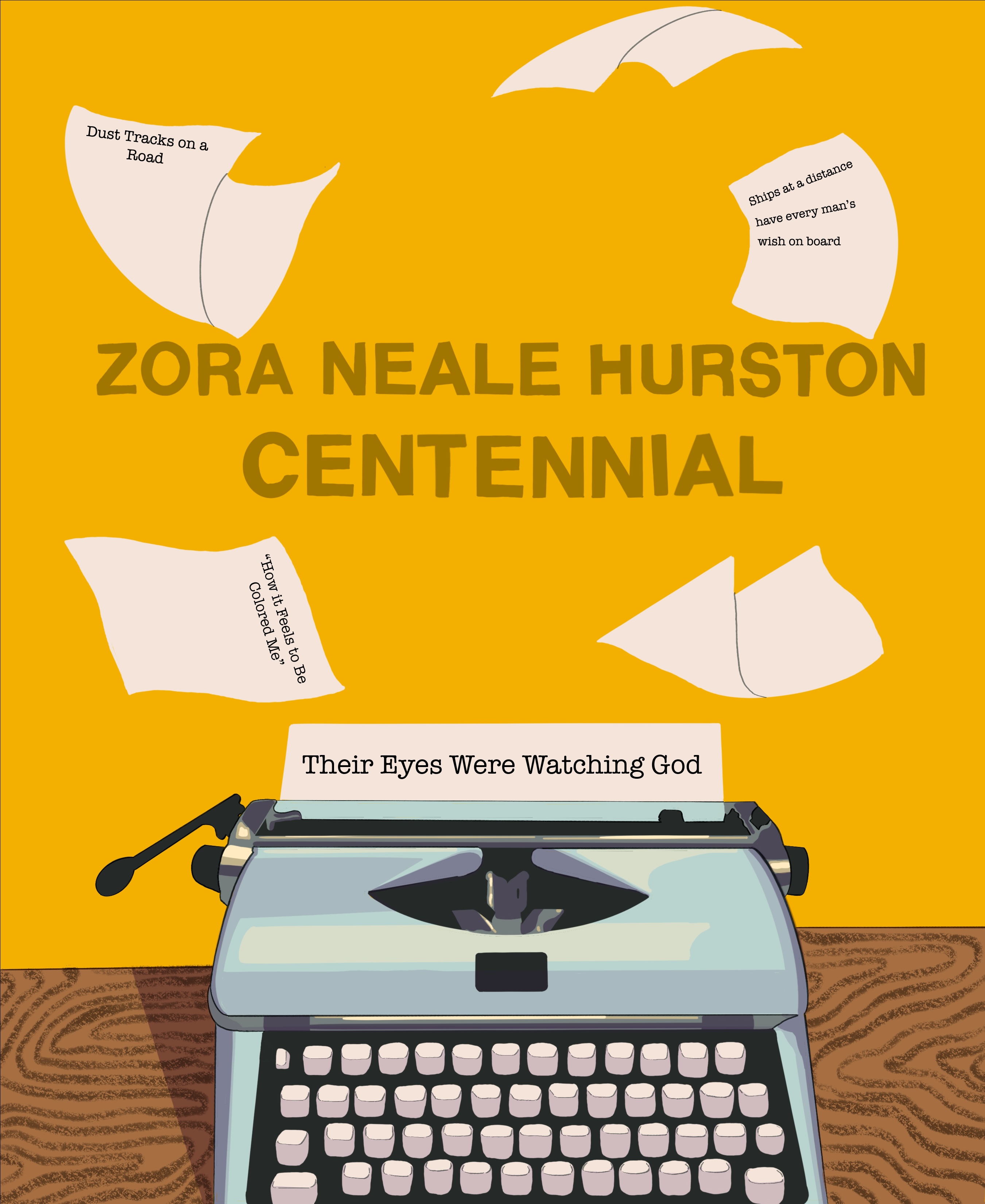 In fall 2025, the Zora Neale Hurston Committee invited proposals from students, alumnae, faculty, and staff that celebrate, uplift, and sustain Hurston’s legacy. Eleven projects ultimately received funding through the ZNH Grant program. Four of these projects were student-led, two were faculty-led, two were faculty and alumnae-led, one was alumnae-led, and two were staff-led.
“This work is possible because of the sustained dedication of the full centennial committee, whose vision and labor are bringing Hurston's enduring influence into conversation with Barnard today,” Rosado said.
The selected projects reflect the breadth of Hurston’s influence and the ways her work continues to inspire new forms of expression.
“When we sent out the call for projects, we weren't sure what would come back — the proposals were all amazing, really diverse, and creative. I'm excited for each of the grantees to show out,” said Monia Miller, Claire Tow Professor of Africana Studies. “As Hurston said, ‘If you haven't got it, you can't show it. If you have got it, you can't hide it!’”
The awarded projects are as follows:
-
BLACK GIRL: Linguistic Play: This past January, Professor Alice Reagan took students on a field trip to see the dance performance BLACK GIRL: Linguistic Play, by choreographer Camille A. Brown. Much like Hurston, Brown uses creative expression to celebrate Black life, most particularly in the bodies and voices of Black girls and women.
-
Listening to Zora: First-year student Isabella Deng ’29 will produce a self-guided audio walk around Morningside Heights and Harlem which will include student-narrated recordings of Hurston’s writings, jazz interludes, and more. Listeners will take in Hurston’s words as they explore the neighborhoods she once traversed herself as a Barnard student.
-
The Will to Adorn: Fashioning Solidarity from Harlem to Chiapas: Curated by Bria Dominici ’26 and Sekna Bazz ’27, this project traces the intertwined legacies of Black and Hispanic and Latino American resistance through fashion, style, and storytelling.
-
Dumb Mud: A documentary by Nura Ali ’28 and Aliaya Nesru ’26 which profiles up to seven Black Barnard students across disciplines: artists, filmmakers, athletes, scientists, activists, first-generation students, performers, and writers by way of "day in the life" segments, intimate interviews, and archival materials.
-
The Zora Audio Project and a Revision of the Black, Brilliant, and Free Library Installation: The project comprises two components along with two platforms for engagement — The Zora Audio Project and a revision of the Black, Brilliant, and Free Library installation. The community will be invited to engage with both, via an interactive game that can be iteratively used and reused for student orientations, library instructional sessions, and in particular, with courses that center Hurston’s work itself, or related topics.
-
Writing Against Silence: Zora Neale Hurston, Thulani Davis, and the Story of Ruby McCollum: By Penelope Usher ’11, the project centers Hurston’s writings on the trial of Ruby McCollum, in part, by showcasing how Hurston’s articles are brought to life in Thulani Davis’s play. The project will explore McCollum’s story and the ways both writers — Hurston and Davis — worked to grant McCollum’s voice after she was rendered voiceless.
-
A Way Out of No Way: Exhibition on the History of Black Students at Barnard: The exhibition by Nia Ashley ’16 will detail Black Barnard history from 1925 to 2025, celebrating 100 years of Black students, faculty, staff, and scholarship.
-
Summer Book Festival Celebrating 100 Years of Black Students at Barnard: Proposed for summer 2027, this three-day literary festival will honor Hurston’s legacy while centering publishing, scholarship, cultural memory, and storytelling on campus.
-
The Cosmic Zora: A Sonic Experience: The centerpiece of this one-time project will be “Echoes of Eatonville: A Spatial Sound Journey.” A collaboration between faculty member Shirley Taylor and LaFrae Sci (Executive Director of Willie Mae Rock Camp), this immersive experience will engage the audience in a sonic experience inspired by Hurston’s Works Project Association fieldwork and the rich musical traditions of her Florida roots.
-
A Side Of The World For A Canvas: A dance-theater work by Sydnie L. Mosley ’07 is slated to premiere at Barnard in Spring 2028. Inspired by Hurston’s Harlem Renaissance classic Their Eyes Were Watching God, the performance will showcase six women accompanied by live jazz music.
-
Tracing the Transnational Continuities of African-Descended Spiritual Practices and Situating Barnard’s Intellectual Community Within These Deeper Diasporic Currents: This multimedia exhibition by Mimia Ousilas ’27, Nubia Gooding ’27 and Nyla Pruitt ’27 will include Hurston’s ethnographic writings, audio and video recordings of oral narratives and spiritual storytelling, student or alumnae contributions engaging African diasporic oral practices (ie. Sharon D. Johnson ’85), and archival material that highlights how Black Barnard students have historically participated in or preserved these traditions.
The Zora Neale Hurston Grant ensures that Hurston’s legacy is not only remembered, but actively expanded by generations of students, artists, and scholars who continue to follow in her footsteps across Morningside Heights, Harlem, and beyond.