Shalini Sharma ’95 received her first “break” in media the old-fashioned way: hand-writing a letter of interest to an executive producer who worked in evening programming at ABC News.
Internship application methods — and the media landscape itself — might have changed since Sharma was an undergraduate at Barnard, but the desire for human stories has not. For over 30 years, she has helped produce content from small towns in the U.S. to conflict zones overseas, on topics like the cultural footprint of fashion in hip-hop and adolescent transgender rights.
In December 2025, shortly after her appointment as Senior Vice President of Content at NBC News, Sharma’s team released “Filmed in Gaza,” a documentary that follows the lives of two NBC News journalists trapped in the Gaza Strip after the outbreak of war in October 2023.
The program generated instant acclaim for its intimate, on-the-ground reporting, and has since won two News & Documentary Emmy Awards for Outstanding Video Journalism: News and Outstanding Editing: News. The documentary was nominated for a third Emmy (Outstanding War or Violent Conflict Coverage), as well as a Peabody Award for News.
Barnard College spoke with Sharma about her multi-pronged career path, evolving appetites in media consumption, and how “Filmed in Gaza” came together under extraordinary circumstances.
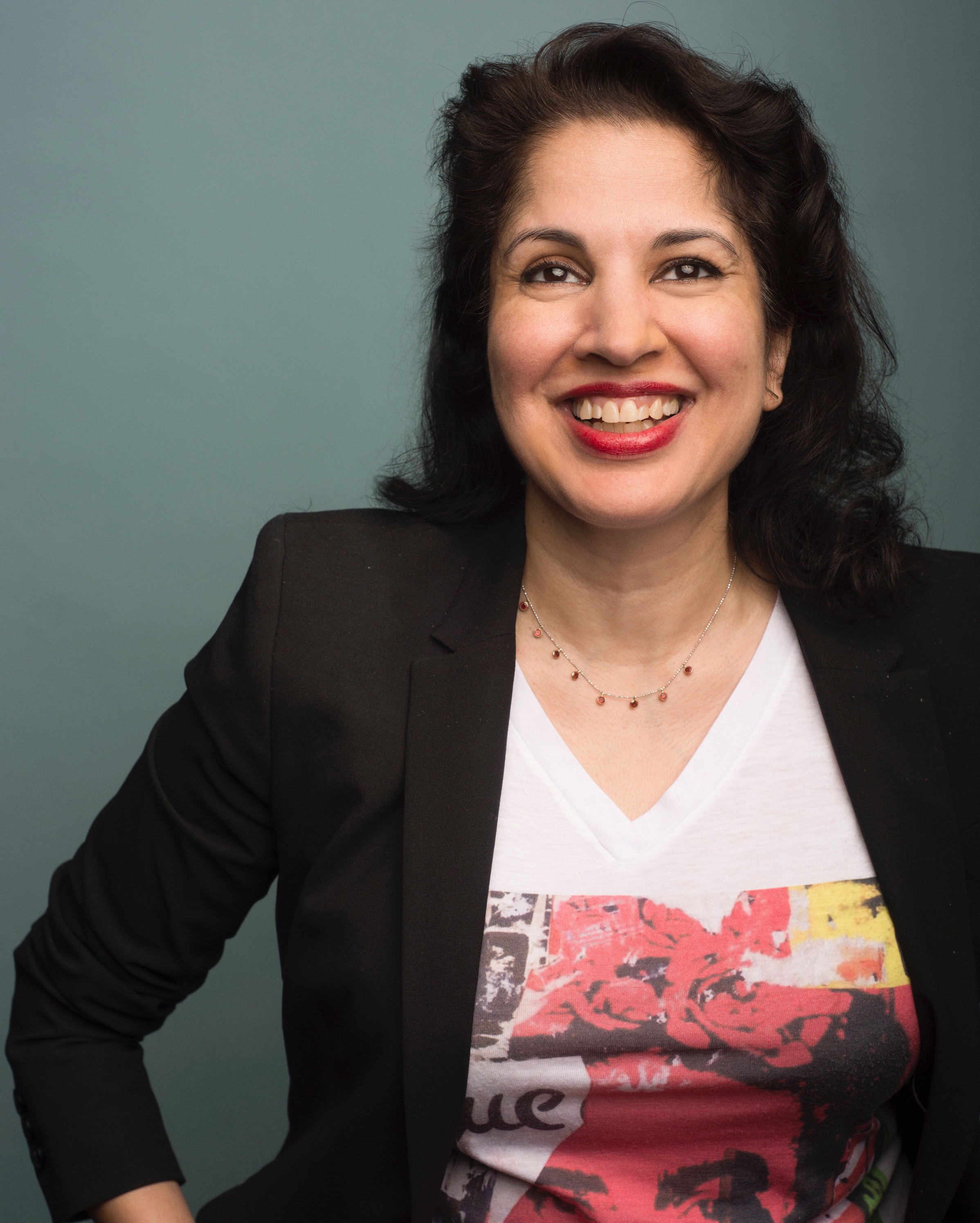
How did you decide to pursue a career in video production and content development?
I remember watching a lot of both national and international news with my parents, who are from India. In school, my strengths were English and political science, which I majored in and minored in at Barnard. Journalism seemed like a natural fit.
After graduation, I went straight to law school, and then was offered a job as a news associate at CNBC. That’s where I really learned about TV production and live news. From there, I went on to other TV roles at NBC’s TODAY and ABC’s 20/20. After years in production, I moved into a role in partnerships with ABC News, where I oversaw a joint venture with a news network in India.
I made the move into digital media in 2010, first for a startup called “The Daily” — the first interactive daily newspaper designed for the first-generation iPad. That was the starting point of my transition to digital video. Then, I went on to lead digital video at Fast Company and Arianna Huffington’s healthcare startup “Thrive Global,” and consulted for Joanna Coles, Chief Creative and Content Officer at The Daily Beast.
When did you make the return to NBC News?
I returned to NBC in 2020, first as Editorial Director of Digital Video and now as Senior Vice President of Content Development. This means I oversee seven teams, including the video desk, social newsgathering, short-form video, digital docs, digital post-production, our daily podcast “Here’s the Scoop,” and, most recently, our content offerings for subscribers. Essentially, I’m working to harness the best of NBC News reporting and thinking about the ways we can elevate and amplify it for subscribers.
The media landscape has seen tremendous change since your career began. What feels compelling about short- and long-form video as a medium for storytelling at this moment?
Video has always been a great vehicle for storytelling and showing people what’s happening on the ground when news breaks. That has not changed. What has changed are the many platforms on which people consume this content, and we are optimizing content for those platforms. This is about meeting people where they are, from streaming to podcasts and vertical video content. We are evolving as consumer taste and preferences evolve.
Tell us about "Filmed in Gaza" — these were extraordinary circumstances to produce a documentary. How did the project take shape?
NBC News was one of the only networks to have journalists on the ground in Gaza from the beginning of the war. When the journalists, Samed Abu Zarifa and Samir Al Boji, expressed their readiness to leave and reunite with their families, we saw it as not only an opportunity to document what it was like to cover the war through their eyes — and use more of the nearly two years of footage they amassed — but also to document their journey to leave.
Most of the video was shot on phones, and sometimes it was difficult to receive the footage with inconsistent internet access, but the team did a great job in capturing some of the compelling moments that would work in a documentary format.
There is a rich pipeline of Barnard graduates to media production and documentary filmmaking. When you reflect on your time at Barnard, what feels significant about the education you received?
At Barnard, I was exposed to lots of great people and subjects, and I was able to broaden my thinking. That’s key as a journalist. It deepened my curiosity, which is something I still leverage, even at this stage of my career. And in the practical sense, living in New York City allowed me to do all sorts of video internships during the semesters. That helped me figure out not only what I enjoyed, but that at which I could excel.