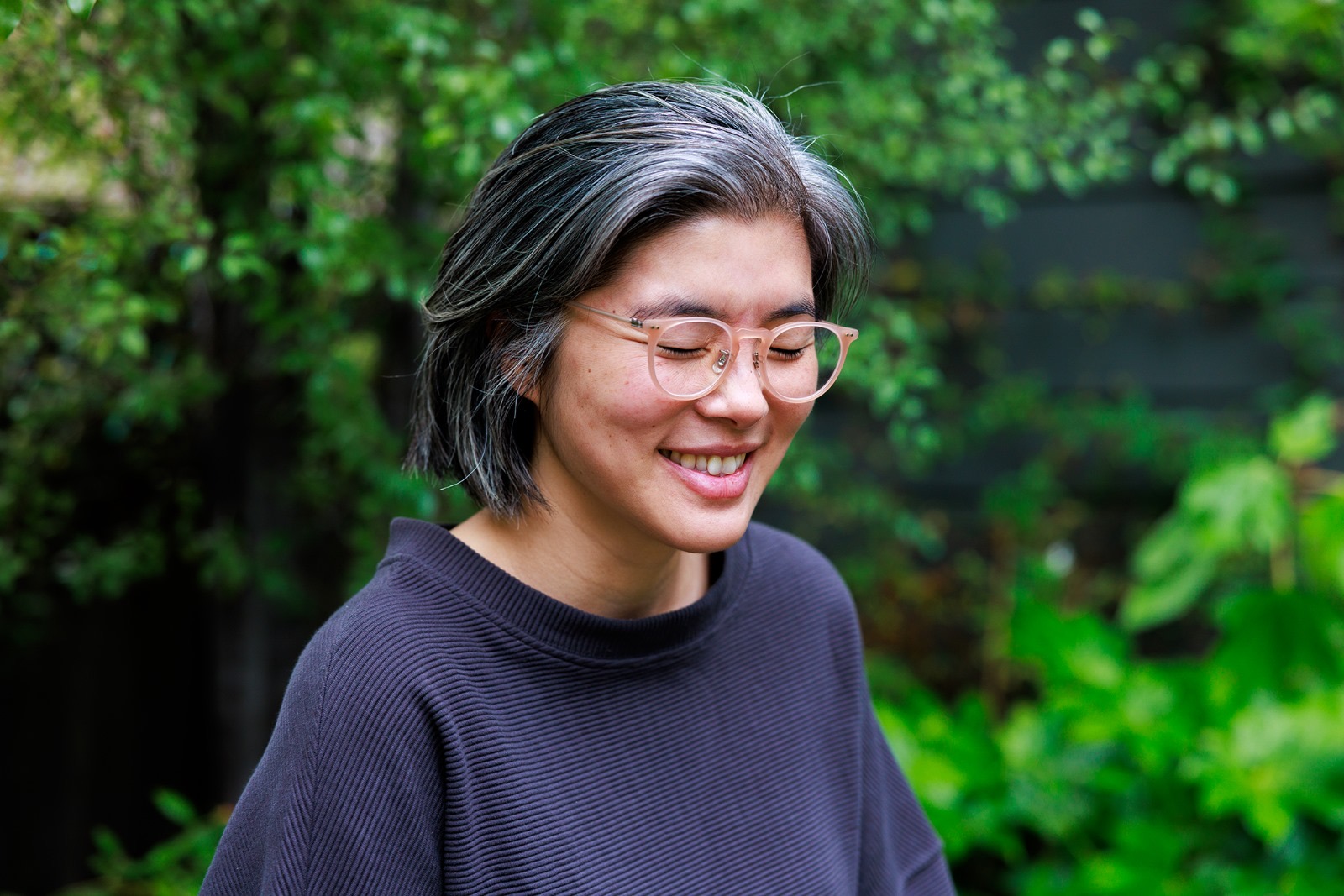
By Audrey Liu
I just spent a few days with students at ArtCenter College of Design in Pasadena, California. In conversation after conversation, they asked some version of the same question: how did you get to where you are?
The answer, at least for me, actually starts with what I learned at Barnard, though it didn’t look like a path at the time.
I think about a studio class I took there with Lisa Yuskavage. We were painting with ink, and the rule was simple: once the brush touched the paper, you couldn’t go back. No undoing, no overthinking. You made a mark, and then you built from it, even if it started as a mistake.
At the time, it felt like a lesson about painting. It wasn’t.
Let me try to explain.
I didn’t set out to work in product design, lead product teams, or end up in technology at all. For a long time, I was simply following what caught my attention, even when it didn’t seem to connect to anything larger. That instinct—to pay attention to what pulls you in—was something that started to take shape at Barnard, even if I couldn’t name it at the time.
After college, I took a job at Artforum as an advertising production assistant. It was my first real exposure to graphic design. I found myself drawn to how ideas became something visual and tangible, and I wanted to get closer to that work.
So I signed up for a night class at The Fashion Institute of Technology, just across the street. The class was in packaging design. I liked it, but I kept coming back to the same thought: I was more interested in what was inside the package. My teacher noticed and suggested I look into product design.
So I followed that thread.
I found a night class taught by two designers from Smart Design. In the first session, they told us about a peeler that a husband wanted to design for his wife, who loved to cook but suffered from severe arthritis. It was simple, thoughtful, and became iconic.
When I heard that story, something clicked. It was the first time I understood design as more than aesthetics. It was about paying attention to people and building something that made their lives better. That was enough for me. I applied to ArtCenter, in Pasadena I got in and then I had to figure out how to actually put my new dream in motion.
I took out loans, moved across the country, and walked into studio classes surrounded by students who could sketch with confidence. I couldn’t. It was humbling.
But I had ideas, and I was willing to work. Over time, the gap closed. Confidence followed.
That pattern showed up again later in my career.
Years after ArtCenter, I was preparing to move to New York for a larger role at a consulting firm when I felt pulled toward something I hadn’t tried yet. I had spent nearly a decade around the tech industry without ever working inside a tech company.
I took a role at a startup called Thumbtack. It was a step back in title and salary, and it came a week before the move. Six weeks in, the head of design left, and I was handed the team. I had to learn quickly how to build a team, define a culture, and ship products. I made mistakes, figured things out, and eventually grew into the role.
That experience led me to Lyft, where I led the design and research team, moved into a general manager role, and eventually to Adobe, where I now lead the Pro Design Tools category overseeing teams building products used by millions of creatives every month.
It would be easy to tell this story as if it were a series of deliberate decisions. In reality, though, it feels more like a series of things I chose to follow. Interests, questions, small moments of curiosity that turned into something bigger over time.
That way of moving through the world really began at Barnard.
I arrived intending to be an economics major and graduated with a degree in Art History and Visual Arts. At the time, it felt like a deviation. In retrospect, it was the beginning of learning how to trust what interested me, even when it didn’t fit a clear path.
On the last day of my Freshman Seminar, the late Natalie Kampen handed each of us a handwritten letter, not about the course, but about life. Mine was an invitation to take more risks, to be louder, to open myself up to exploration, and to treat growth as something essential, not optional. I didn’t fully understand it then, but I’ve spent the years since trying to live up to it.
Barnard didn’t give me a map. It taught me how to move without one. To pay attention to what pulls me in, to question what’s in front of me, and to keep going even when the full picture isn’t clear.
It also gave me a community of women who were each finding their own way. Many of those friendships have endured through career changes, moves, raising families, and all the stretches where the path felt uncertain. Watching those lives unfold in different directions has been a constant reminder that there isn’t one version of a meaningful life.
When I think back to those recent conversations I had at ArtCenter, I understand what the students were really asking for. I just don’t think there’s a clean answer.
Looking back, the moments that mattered most were often the ones that didn’t seem especially strategic at the time. A night class across the street. A conversation with a teacher. A decision that didn’t quite make sense on paper.
They only became meaningful later, once there was enough distance to connect them.
And even now, it doesn’t feel like a finished story. Just one that’s still unfolding.