“I don’t view you as a passive audience. I view you as a living, breathing part of history right now.”
Logan Brenner, assistant professor of environmental science, addressed her Barnard colleagues, sharing the remarkable story of her zayde, meaning grandfather in Yiddish.
In recognition of International Holocaust Remembrance Day, Brenner led a faculty chat entitled, “My Zayde’s Holocaust Survival Story,” recounting her zayde's extraordinary story of resilience and survival during the Holocaust.
Professor Colin Wayne Leach, dean of the Faculty Diversity and Development Committee (FDD) and professor of psychology and Africana studies, introduced Brenner.
“We’re not going to hear about environmental science,” said Leach. “We’re here for something different today, which is part of our initiative to broaden these lunchtime chats, to cover everything that’s relevant to us as faculty and as people of the world right now.”
The weekly lunchtime faculty chats provide an opportunity for colleagues to learn from one another and explore a range of topics, both academic and beyond.
“Dr. Logan Brenner’s presentation on her grandfather’s amazing story of survival is part of the Faculty Diversity and Development Committee’s more holistic approach this year to engage faculty as whole people and not just as teachers and scholars,” said Leach.
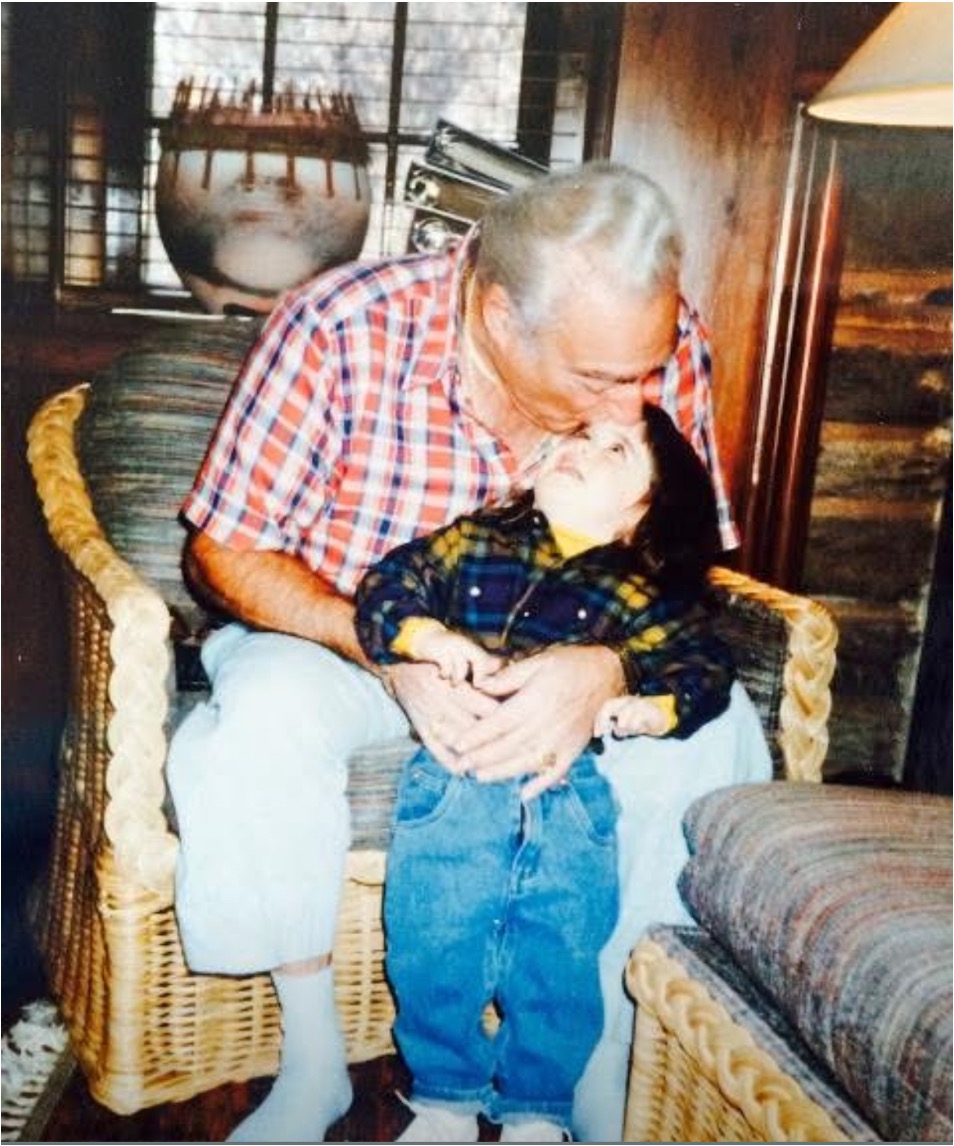
Brenner’s zayde, Leo, grew up in an observant Jewish household in Berlin, Germany, connected deeply to his Jewish heritage as well as the greater Berlin community. In 1933, when he was about twelve years old, Adolf Hitler rose to power. Leo’s rights were stripped away — at first incrementally, and then all at once. He could no longer attend school or work. The community he once called his own began turning its back on him and his family. Around this time, Leo celebrated his bar mitzvah in the basement of his family’s apartment, a secret act of defiance against the Nazi regime.
On November 9, 1938, Leo’s father’s store and the family home were ransacked and destroyed on Kristallnacht or, the "Night of Broken Glass."
In September of 1939, the Nazis forced their way into the family’s apartment, and Leo was taken to a concentration camp where prisoners were stripped of their clothes and shaved.
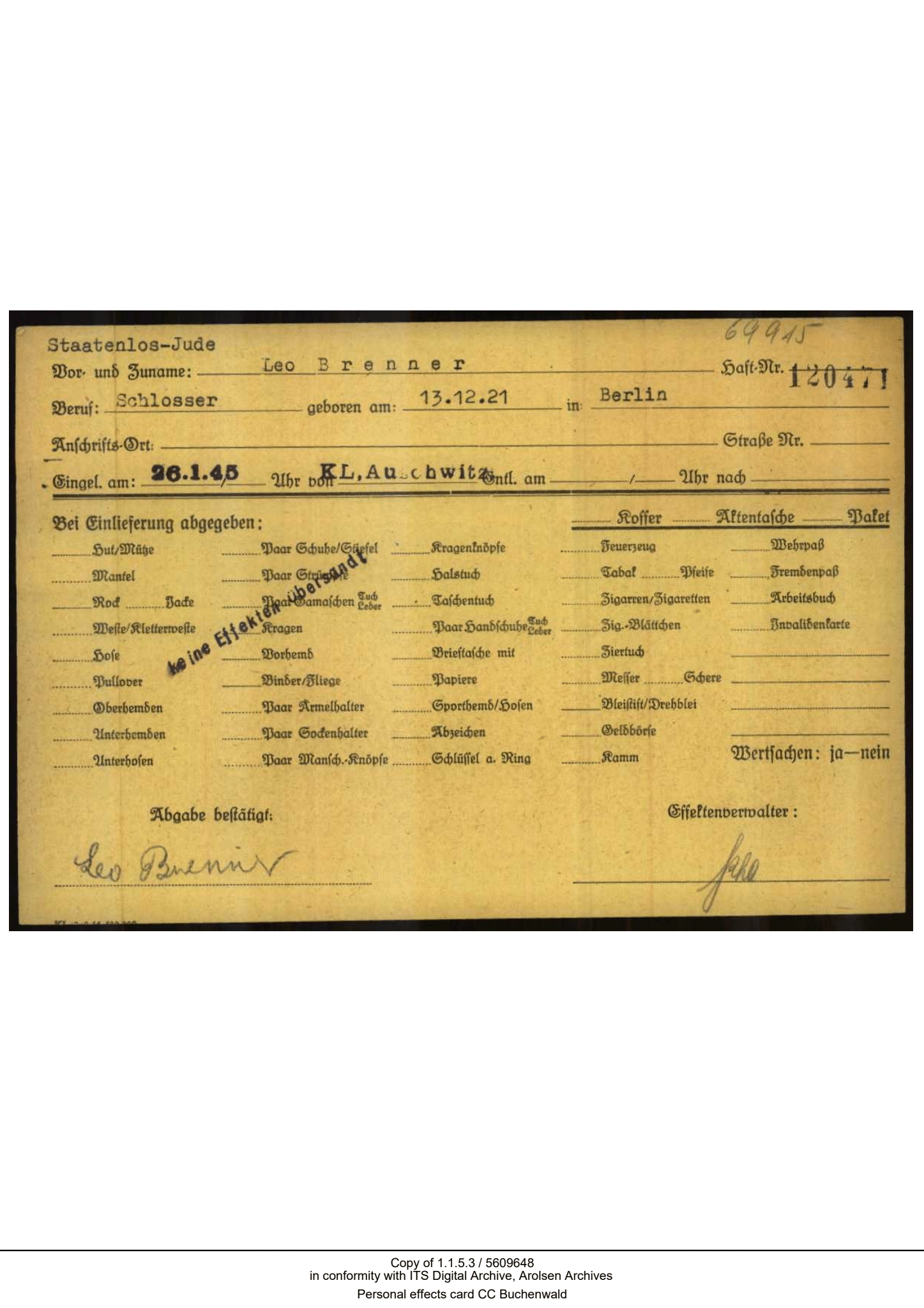
Leo was first sent to Sachsenhausen, where he endured both physical and psychological abuse while working in a Brickworks and quarry. After approximately three years, he was transported to Auschwitz.
The Auschwitz concentration camp complex consisted of three main camps — Auschwitz I (Stammlager), Auschwitz II (Birkenau), and Auschwitz III (Monowitz). After being tattooed with a prisoner number on his forearm, Leo was imprisoned in Auschwitz III, a forced labor camp, to construct a factory for a large local conglomerate called IG Farben. Monowitz was bombed, and having narrowly escaped being buried alive, Leo was evacuated to another concentration camp called Buchenwald.
Throughout his imprisonment, Leo engaged in quiet, calculated acts of resistance. After finding a screw on the ground, Leo jammed it into the gears of the bullet casing machine he was assigned to operate, feigning ignorance when the Nazi guards demanded to know why it had stopped working.
After six years in the camps, American troops stormed Buchenwald. At the time of his liberation, Leo weighed less than ninety pounds. He would go on to reunite with his mother, brother, and one of his sisters — all of whom had endured their own forms of terror, concealing their identities and living in hiding.
Leo and his family left for the United States, eventually settling in Wilmington, Delaware, where he forged a life for himself. Even then, he lived a dual existence — one rooted in his new life and another haunted by the Holocaust.
“That dual existence filtered down to my father. It's also within me, and the second generation of survivors,” said Brenner. “And I think it's a great example of how there's so much that influences our lives and our daily decisions now we may or may not be aware of.”
Leo’s story lives on through Brenner and future generations. Attendees of the presentation also became stewards of his memory, entrusted with carrying forward the lessons of one of history’s darkest chapters.
“While he was plagued with claustrophobia, heart disease, diabetes, and numerous emotional traumas, he still had a loving and fulfilling life,” Brenner said of her zayde. “He died at 76 with many miles on his body and soul.”
Barnard faculty members were given time after the presentation to ask any questions of their own. President Laura Ann Rosenbury, one of the attendees, asked about Brenner’s experience sourcing historical documents and photographs, many of which were passed around the room for observation.
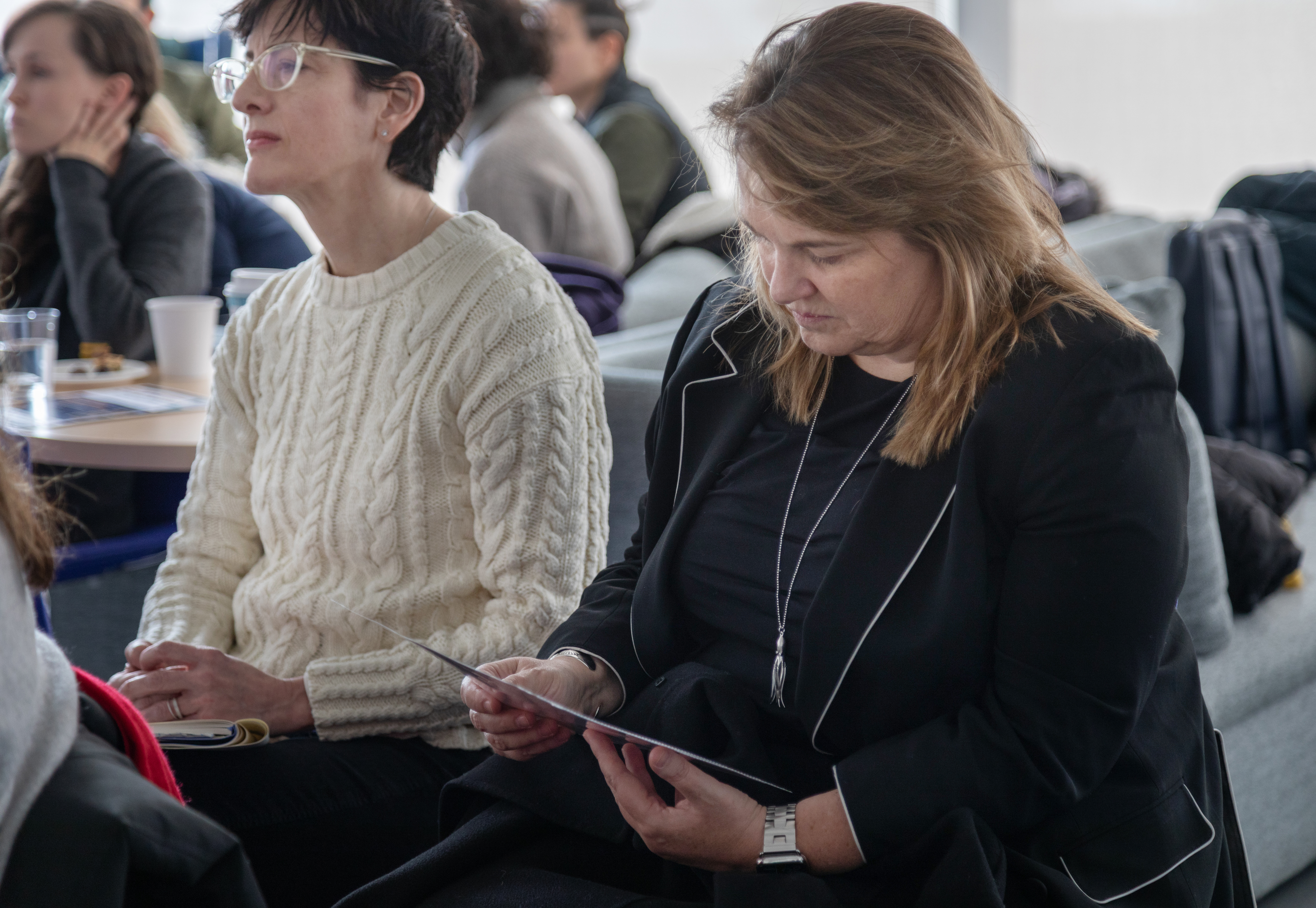
“My question is about the documentation that you found,” said Rosenbury. “What was an unexpected obstacle for a family member's confirmation?”
Brenner explained that the documents were publicly available through the Arolsen Archives, and that she was able to print them with funding from the Academic Engagement Network. She also received logistical support from 3GNY and 3GNJ, educational non-profit organizations devoted to preserving the legacies of Holocaust survivors in New York and New Jersey, respectively.
“Dr. Logan Brenner’s presentation on her grandfather’s amazing story of survival is part of the FDD committee’s more holistic approach this year to engage faculty as whole people and not just as teachers and scholars,” said Leach.
The event concluded with attendees reflecting on both grief and gratitude.
“It means a lot to me,” said Brenner of her presentation. “And I hope you feel, though it’s sad and challenging material, also empowered that you are now part of his legacy and you can also bring that forward with you.”