The Roy and Diana Vagelos Science Center stands as a symbol of expansion for the future of STEM, both at Barnard and within the greater Morningside Heights community.
The RDSC, which will house all of Barnard’s bench science programs beginning fall 2026, is poised to be New York City’s first net-zero carbon, all-electric academic science building, integrating sustainability into every detail — from air conditioning to whiteboards.
It’s the largest gift in Barnard’s history, made possible by the generosity of Diana T. Vagelos ’55 and Dr. P. Roy Vagelos.
RDSC Sustainability Features
The RDSC’s sustainability highlights include:
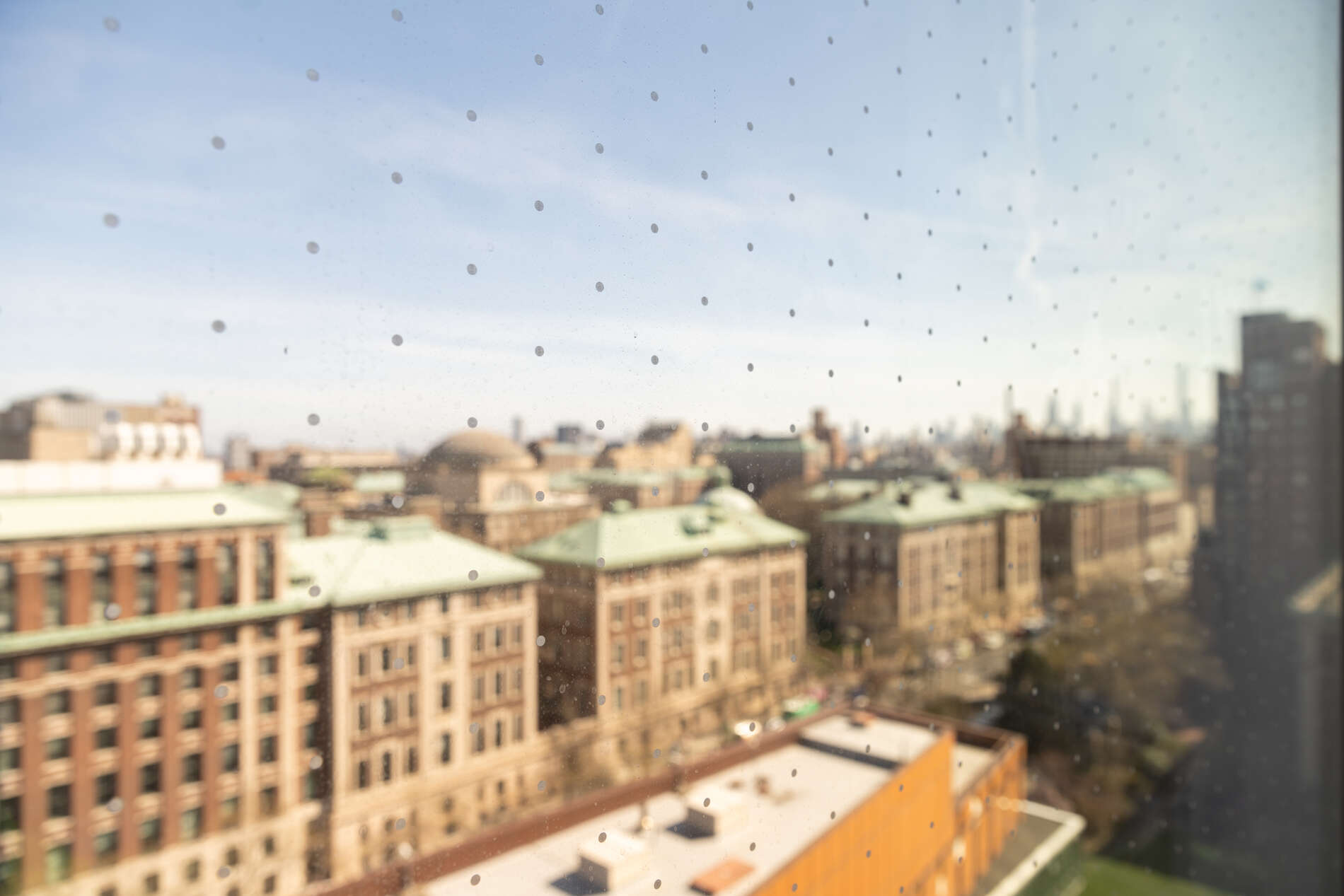
Bird-safe windows:
Every window of the RDSC features bird frit, a glass treatment containing little dots. While this may appear to be a design preference, these small dots serve a much larger purpose than merely aesthetic: they save birds by preventing collisions.
Structural reuse:
The new RDSC building maintains much of the original structure of the former Altschul Hall building, including waffle slabs at the lower level and two staircases, emphasizing reuse and long-term sustainability. Structural reuse preserves existing building materials, avoiding the carbon emissions associated with new production and construction.
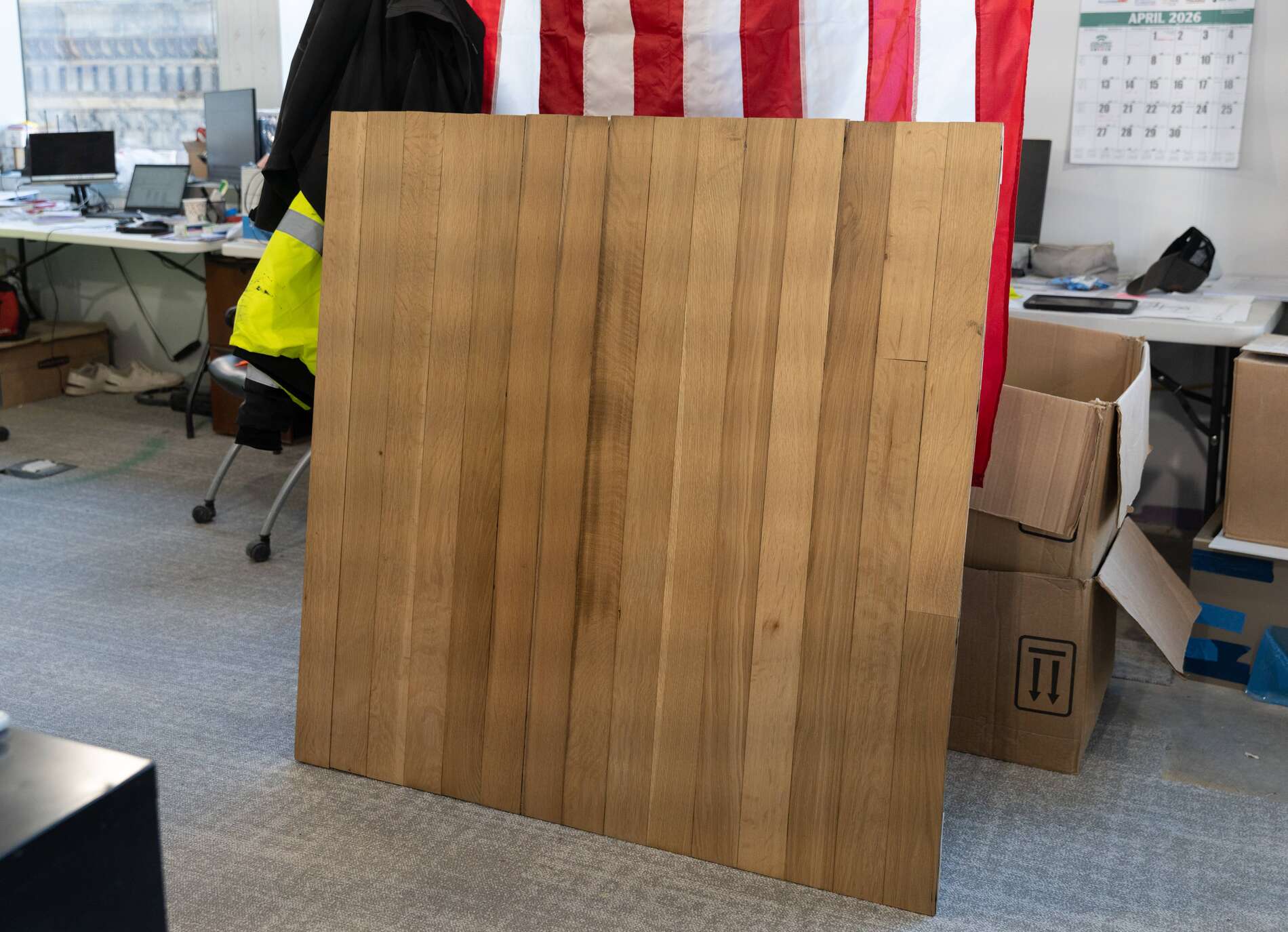
The physics and astronomy departments on the eighth floor incorporate various original elements from Altschul such as chalkboards, cherry wood cabinets, wood lab benches, and more.
Roof:
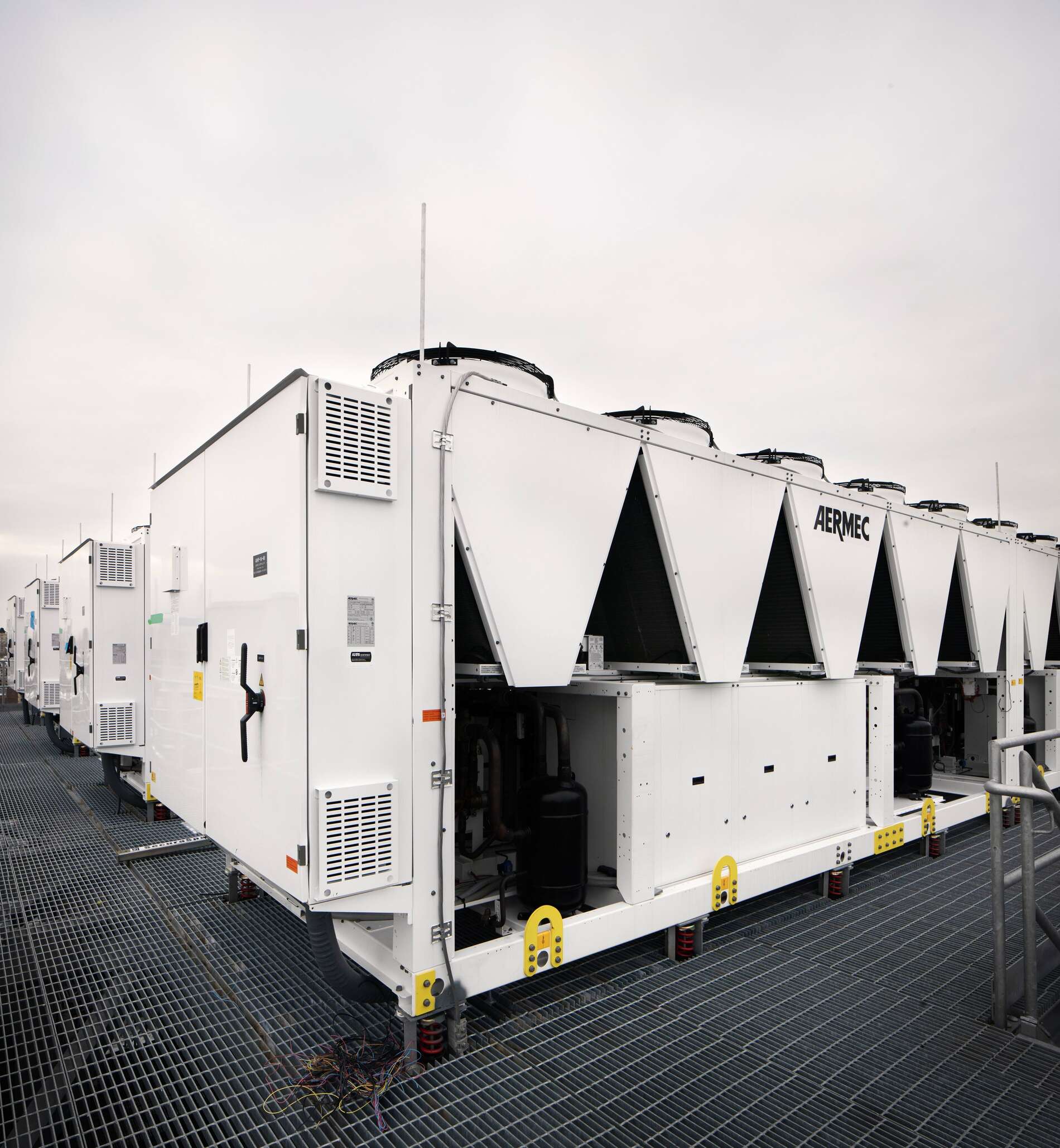
Atop the building, air-source heat pumps support full electrification. A green roof further contributes to the building’s environmental performance.
Biophilia:
The RDSC prioritizes “biophilia,” which is the human tendency to be associated with other forms of life in nature. Students will be able to easily see outside of the building with views east to the Macintosh terrace and west to the Hudson River, and enjoy natural light shining through.
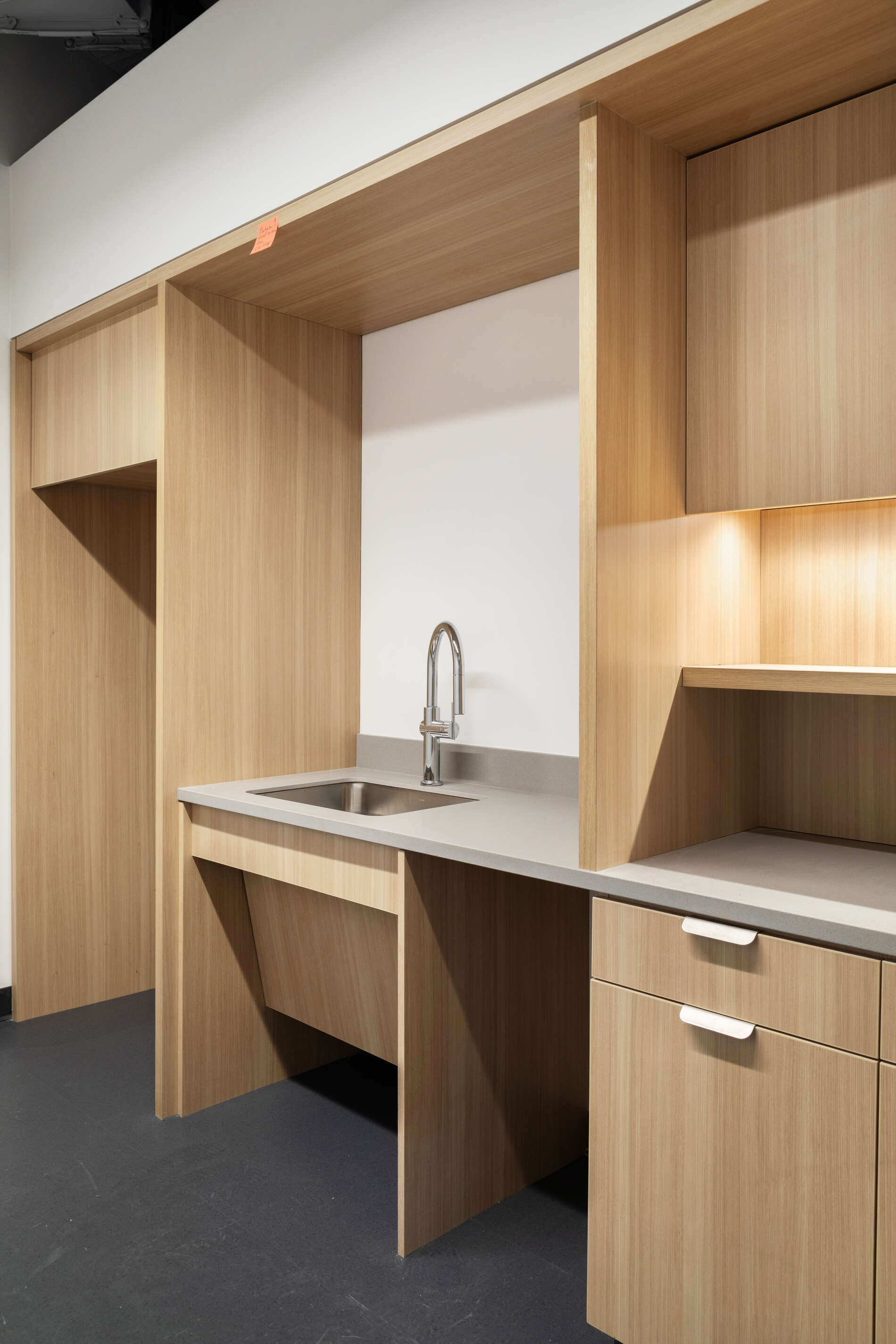
Wooden elements are incorporated into the covers for electrical panels, drink storage shelving at the lab entrances, and cabinet fronts for under bench storage inside the labs.
Chemistry teaching labs:
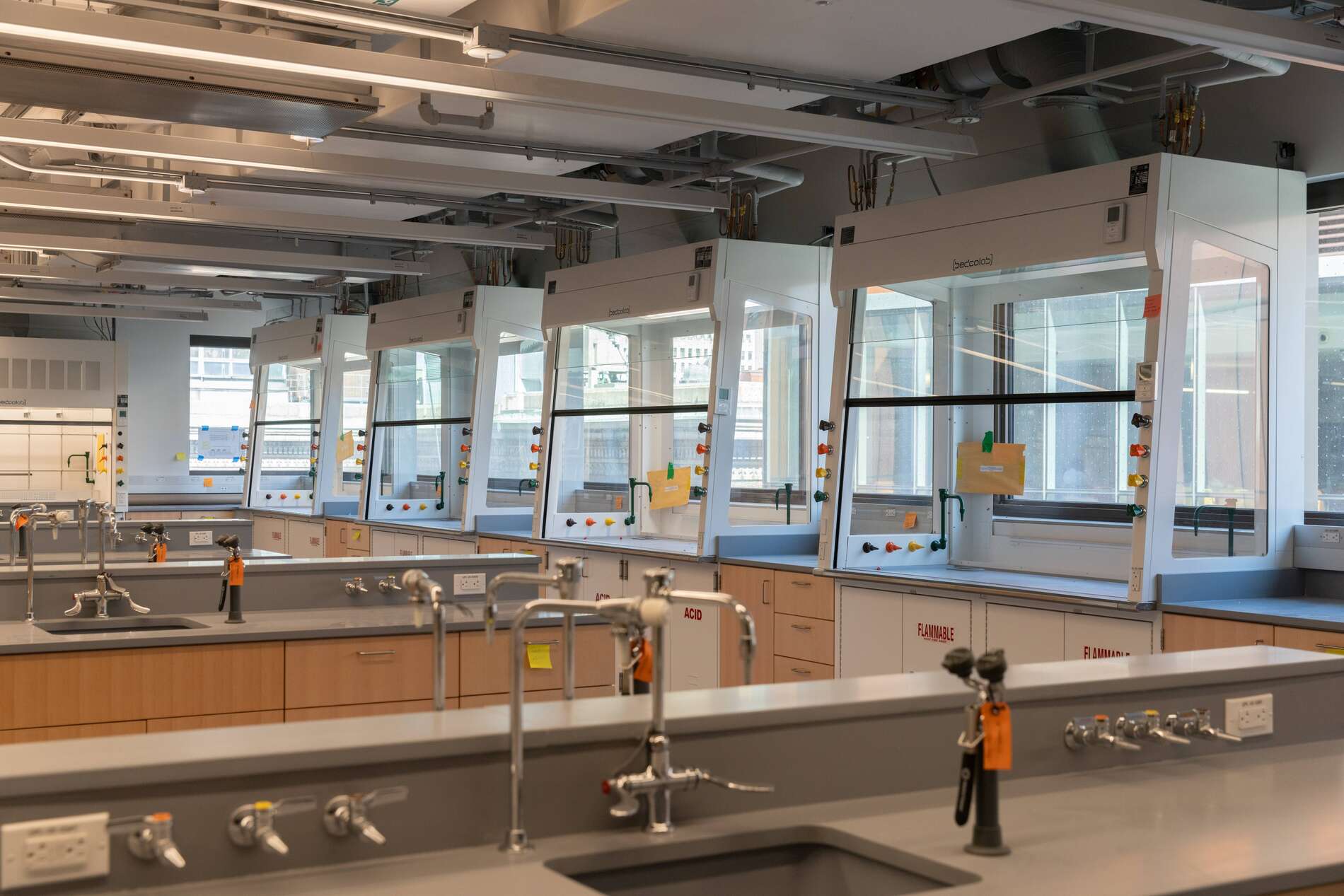
The fifth, sixth, and seventh floors are devoted to chemistry. Glass-backed fume hoods introduce natural light into the teaching labs which reduces the need for electricity, while preserved Altschul structural beams create open, uninterrupted spaces.
Biology labs:
The biology labs on the first, second, and third floor incorporate recycled and sustainable materials for flooring, lighting, and baffle ceilings, which reduce noise and improve acoustic performance.
Departmental/student support space:
All five departments feature a student support area, where students will have access to a kitchenette and dishwasher, helping minimize waste while encouraging them to bring their own food and reusable containers.
Cooling / heating:
Science buildings tend to be energy intensive, but the RDSC incorporates efficient heating, cooling, and control systems to reduce energy consumption.
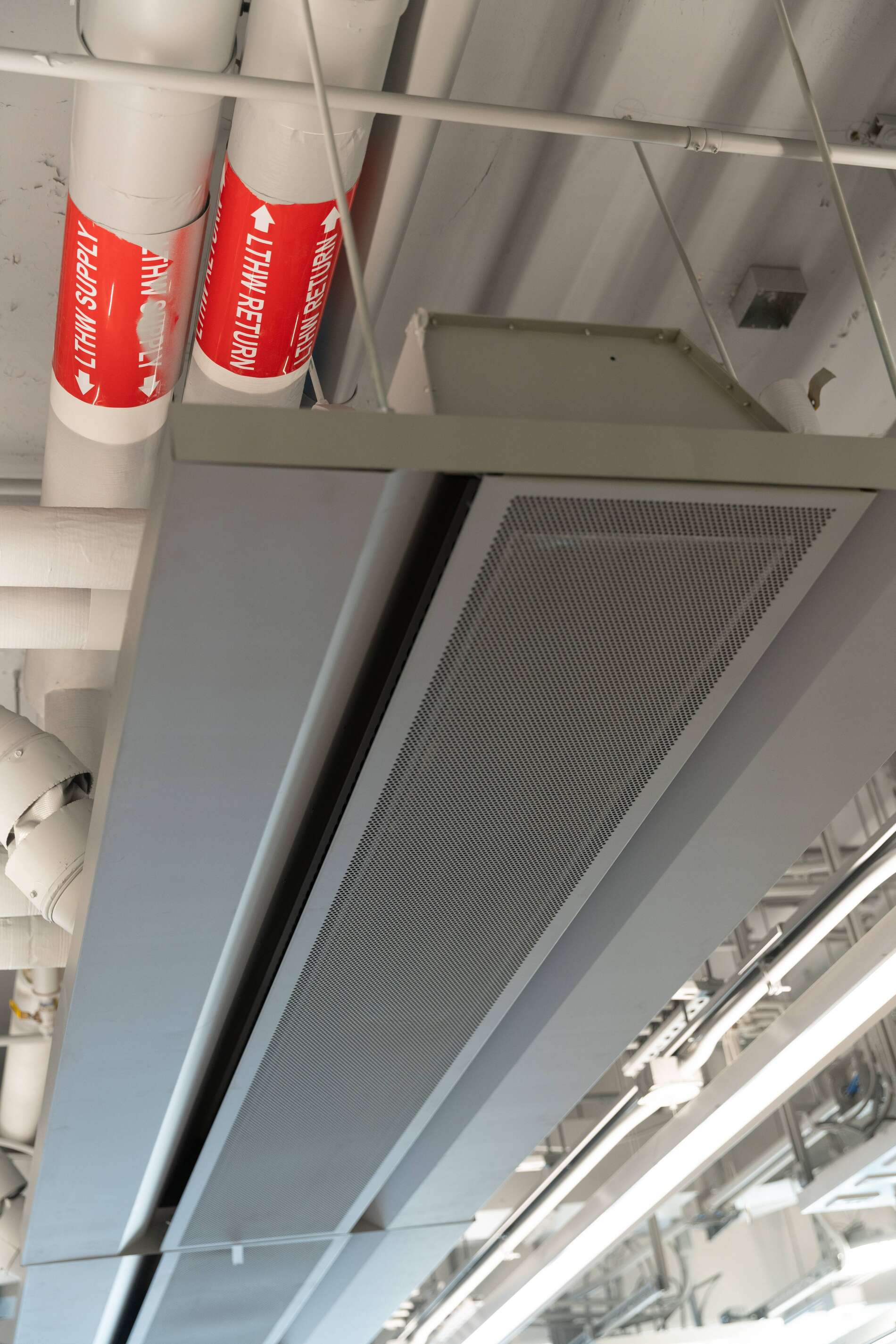
The project integrates a building management system (BMS), which monitors and adjusts settings based on real time occupancy and conditions. The dual system using air-source heat pumps and heat recovery ventilation adapts to unexpected weather by switching between heating and cooling as needed. It also captures and reuses energy from outgoing air, reducing the need for additional heating or cooling. This keeps the building comfortable while minimizing energy waste in any season.
Environmental science lab:
Located on the ninth and tenth floor, the environmental science lab highlights integrated, everyday sustainable design, including cabinets that double as whiteboards.
Campus-level entry:
A staircase connects the terrace to the lower level, where a 100-person classroom and a 50-person classroom are located, encouraging movement throughout the building. The campus-level seminar room also features reused wood flooring from Altschul.
The RDSC integrates a range of sustainable features and design elements, from flexible, modular benches in the neuroscience department to the use of energy recovery units that capture and reuse heat from the laboratory exhaust system, reducing overall energy demand. The building sets a new standard for modern research environments, welcoming its first classes in fall 2026.