In November, New Yorkers from the Bronx to Brighton Beach assembled to vote in the general election. The pundit class watched and waited for the results, with most focused on the outcome of a competitive mayoral race. But further down the ballot in Kings County, another footnote in the city’s history was quietly being made.
In two elections, Juliet “JP” Howard ’86 and Norma Jennings CLS ’90 were named to the benches of state courts, possibly becoming the first same-sex married couple to win judicial elections in New York at the same time.
The successful election to the 6th Municipal District of Brooklyn’s Civil Court, which covers much of Flatbush, Midwood, and Prospect Heights, marked Howard’s first time on a ballot. Jennings’s election to the 2nd Judicial District of the New York Supreme Court, covering all of Brooklyn, was her third.
Jennings had already crossed off an important judicial “first” — in 2025, with her induction into Civil Court, she became the first elected Black LGBTQ+ judge in the borough. Attorney General Letitia James spoke at her ceremony, reminding the crowd of spectators that this was a historic moment.
Marriage to fellow judges might not be a measure of representation most courts keep, but it is meaningful to Howard and Jennings nonetheless, signaling something bright and hopeful for those who seldom see themselves reflected in the legal profession.
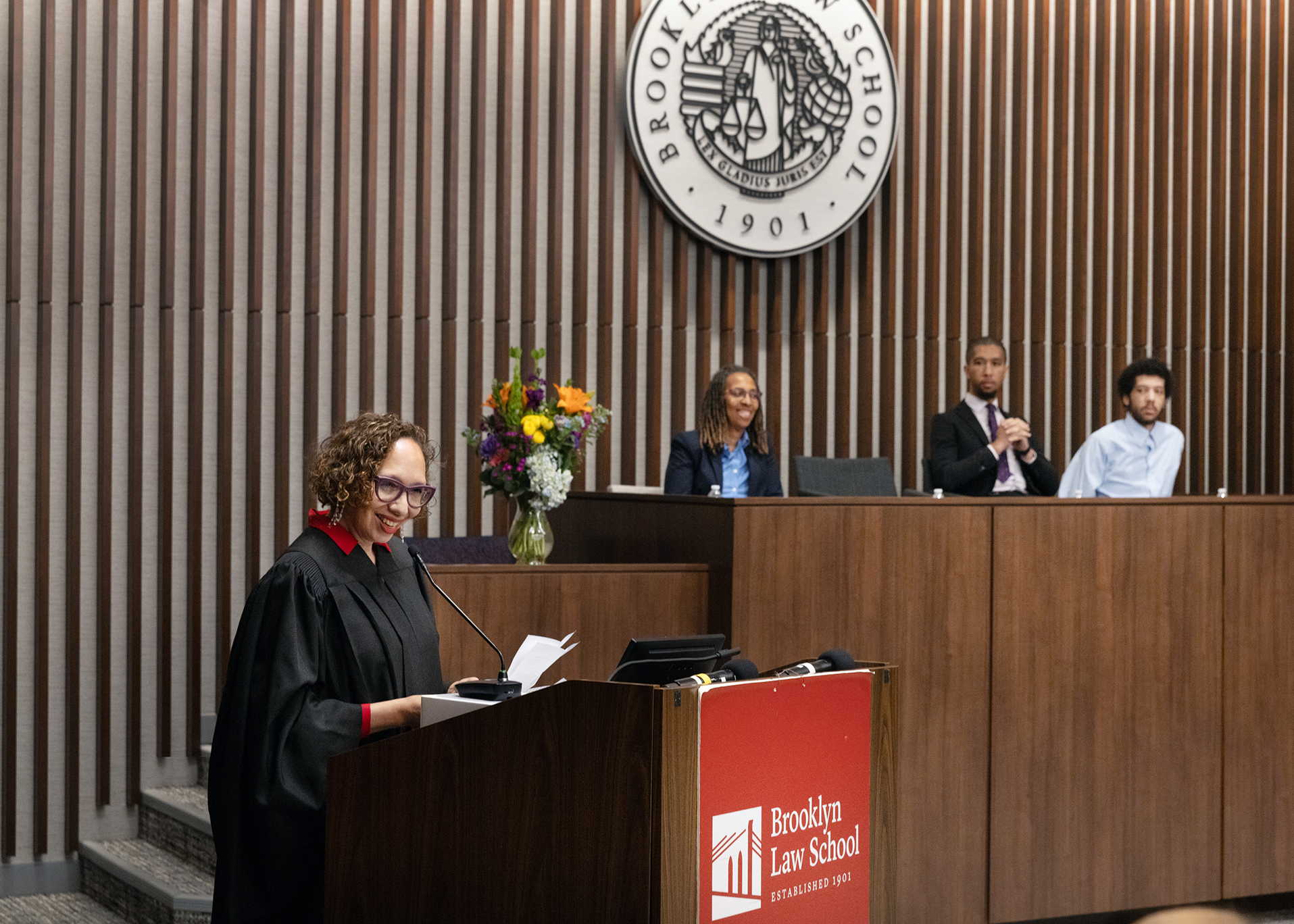
Howard grew up in the Sugar Hill neighborhood of Harlem, a short train ride north of Barnard College. In the home was her mother, a clerical assistant turned court clerk, and her grandmother, a domestic worker who did not attend school past the seventh grade. Before “Bring Your Child to Work Day” was a common cultural pastime, Howard’s mother brought her into the courtroom, allowing her to sit and watch the American justice system play out.
For Howard, these moments planted the first seeds of inspiration for a legal career. “I look back, and I think about how she made sure that I had the chance to meet attorneys of color and judges of color,” said Howard. “The truth is there weren’t that many back then.”
In 1982, Howard was accepted to Barnard College. It felt like a multi-generational accomplishment, representing the sacrifices her mother and grandmother made in order for her to succeed. She decided to major in English, and during college, her professional path started to become clear — public interest law would enable her to give back to others, re-entering the courtroom as an adult with a new wealth of knowledge and experience. After graduation, she soon went on to earn a JD from Brooklyn Law School.
Howard and Jennings’s stories dance and circle around one another. Both were raised by single mothers, but Howard is an only child, while Jennings is the youngest of seven. Howard is a born and bred New Yorker; Jennings is from New Jersey. The two were the first in their families to attend college (“I like to say that convincing my mom to let me go was my first successful argument,” Jennings jokes.) Shortly after Howard graduated from Barnard in 1986, Jennings enrolled at Columbia Law School across the street.
Their paths crossed at last when Howard started her first job out of law school. Both Jennings and Howard were working as attorneys at The Legal Aid Society, and a romantic connection was kindled at the office Christmas party.
“I guess sparks flew,” Jennings said. Howard claims she had a crush on Jennings first, although Jennings doesn’t seem convinced.
The pair have been together “ever since,” Jennings explained, now over 32 years. Howard interrupts her — almost 32 years.
Jennings laughed, “I’m going to get myself in trouble.”
The two remember being one of the first lesbian couples to raise children in their Brooklyn neighborhood. Parenthood has been a “blessing” for them, but painful memories of intolerance still linger. Howard recalled the excitement of taking their first trip with their oldest son, who was then just an infant. At this point, state law had changed to grant official parental status to each person in a same-sex relationship, but one member of airport staff was incredulous, demanding to know who the mother of the child was.
“We both are,” they answered.
“I feel like we grew up together,” said Howard. “Now, to have these careers as judges… it’s not something I expected. She’s believed in me and encouraged me through each stage of the process, which I appreciate so much.”
As her legal career developed, Howard also established a thriving creative practice as an author, poet, and educator, maintaining the ties to her Barnard English major. In 2011, she founded the “Women Writers in Bloom Poetry Salon,” an open mic series and potluck designed to celebrate and foster connection among women poets. Her next stop is the 2026 Barnard Reunion, where she will be a featured speaker on the intersection of law and creativity.
After a longtime civil partnership, Howard and Jennings wed in an intimate ceremony in 2017. Their sons, now 28 and 21, visit them often at their home in Downtown Brooklyn.
Both subscribe to a simple vision of the judicial role: giving back to their communities. Their shared time at Legal Aid was just the beginning of two dedicated careers in public service. Howard went on to practice in the Elder Law Clinic before joining the courts, first as an attorney and later as a judge in housing court. At the height of the AIDS epidemic, Jennings represented HIV-positive individuals through work with the Gay Men’s Health Crisis. Later, she held a series of judgeships in housing and civil court.
“I believe it is our duty to introduce young people of color to the court, and to show that this is a profession to aspire to,” said Jennings. “There’s no set road to take. There’s no requirement that a person go to college or major in political science to work in the courts. This is open and available to everyone.”
Jennings noted that people’s first introduction to the court system is often negative. She sees improving its image to the public as one of her foremost responsibilities as a judge, intertwined with her lived experience as a Black person. Sitting on New York’s Equal Justice Implementation Committee, where Howard was a co-chair, is a chance to reach the next generation of legal professionals — showing young people the range of positions that exist in a courtroom and the diverse groups of people who hold them.
That spirit of inclusiveness and personal connection is something the couple feels on the bench. “Even though I’m dealing with difficult issues, I get a chance to listen,” Howard said. “I get to make sure that a person feels like they’re being heard. I get to give them their day in court.”