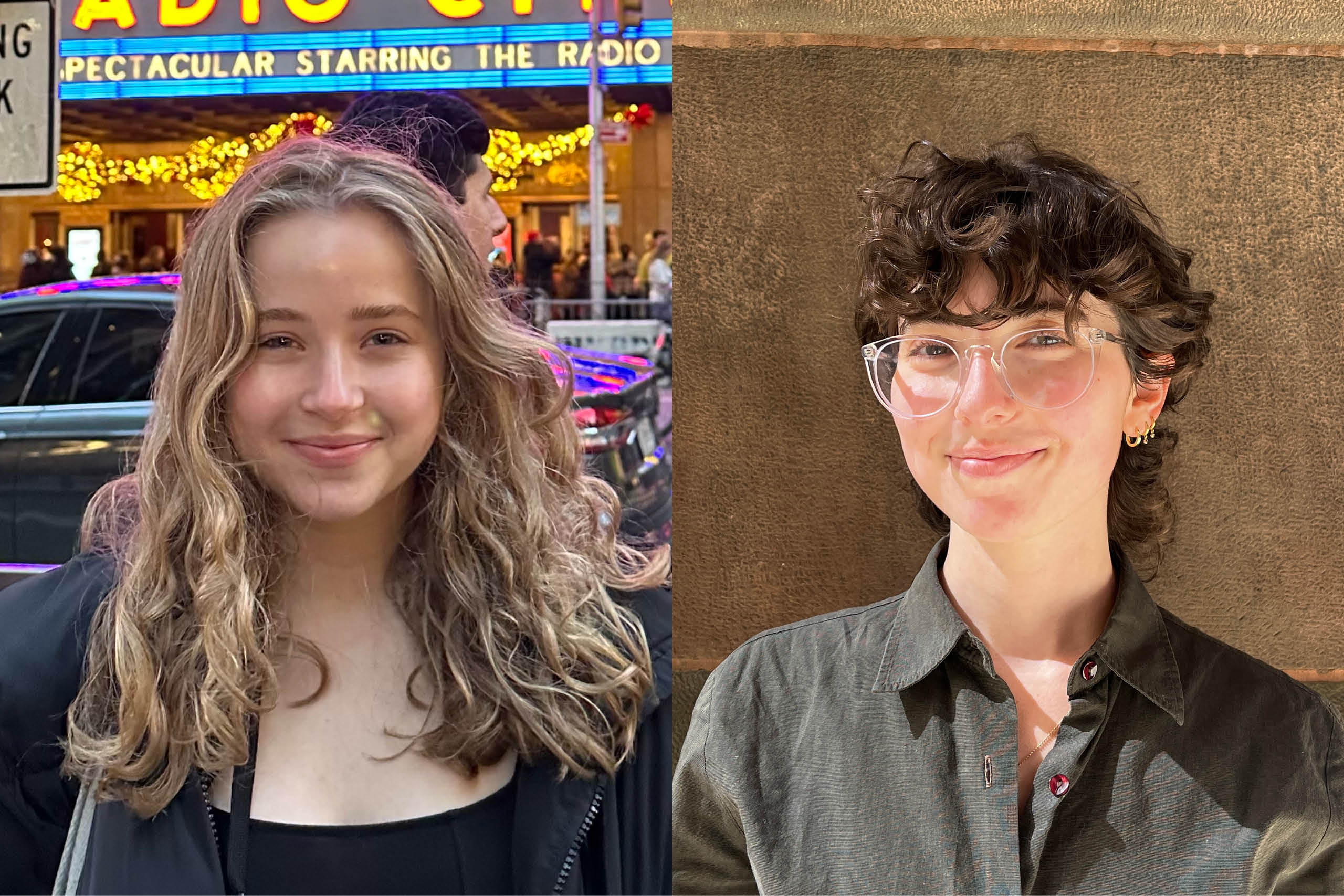
For many Barnard alumnae, the senior thesis is the highlight of their college education: the moment when all of their tools, knowledge, and resources come together to produce independent research on the topic of their choice.
In the second edition of our three-part series (read the first edition here), seniors in the Class of 2026 share what they’re researching, where it’s taken them, and how their final projects got done.
Ellen Keefe: Psychology
Title: Under-Screened and Underserved: Examining Perinatal Mood and Anxiety Disorders in Non-Birthing Parents
What’s your thesis about?
Did you know that dads can experience postpartum depression, too? So can adoptive parents and parents who use surrogacy. However, non-birthing parents of all types are rarely screened for perinatal mood and anxiety disorders and often struggle to receive proper diagnosis and treatment.
Is there a finding that surprised you?
One finding that surprised me is that when a non-birthing parent has a partner with a perinatal mood disorder, they are more likely to score higher on the Edinburgh Postnatal Depression Scale — the standard screening tool for postpartum depression used by doctors and psychologists.
Where did the project take you?
I’ve had the opportunity to conduct virtual interviews with participants from all over the country and received over 100 viable survey responses. It has been especially interesting to observe regional trends in how parental mental health is recognized and treated; for instance, large metropolitan areas tend to have better resources in terms of providing diverse parent groups for dads and adoptive parents.
What was your go-to research spot on campus?
I spent a lot of time on the fourth floor of the Milstein Center. I love the quiet atmosphere and the view of campus.
Dani Winkler: Religion
Title: Examining Holiness-Pentecostal Congregations Through the Eyes of Eleanor Dickinson
What’s your thesis about?
My research centers on the archival materials of Eleanor Dickinson, a visual artist and figure draftsman whose artistic projects led her to conduct 18 years of fieldwork in Southern Appalachia. Though the aims of Dickinson's fieldwork were not related to religious studies scholarship, the interviews she conducted and the sermons she recorded were largely oriented around religious life.
My research has focused on how Dickinson interacted specifically with Holiness-Pentecostal congregations in West Virginia, Tennessee, and Kentucky in order to study the presence of particular rituals unique to the branch and the region.
Is there a finding that surprised you?
I was definitely surprised to learn how little attention has been paid to Eleanor Dickinson in academic scholarship. When I visited the repositories in person, I was stunned by the width and breadth of the materials, but there are no records of her work in journals of religious studies or art history. I'm honored to be giving her flowers, although I think they are well overdue!
Where did the project take you?
I’ve gone to Washington, D.C. — twice! With the help of the Alan Segal Award, I was able to spend two cumulative weeks at the Library of Congress, looking at the archives of Eleanor Dickinson in person.
What was your go-to research spot on campus?
It has to be on the second floor of the Milstein Center, probably at one of the tables by the window.