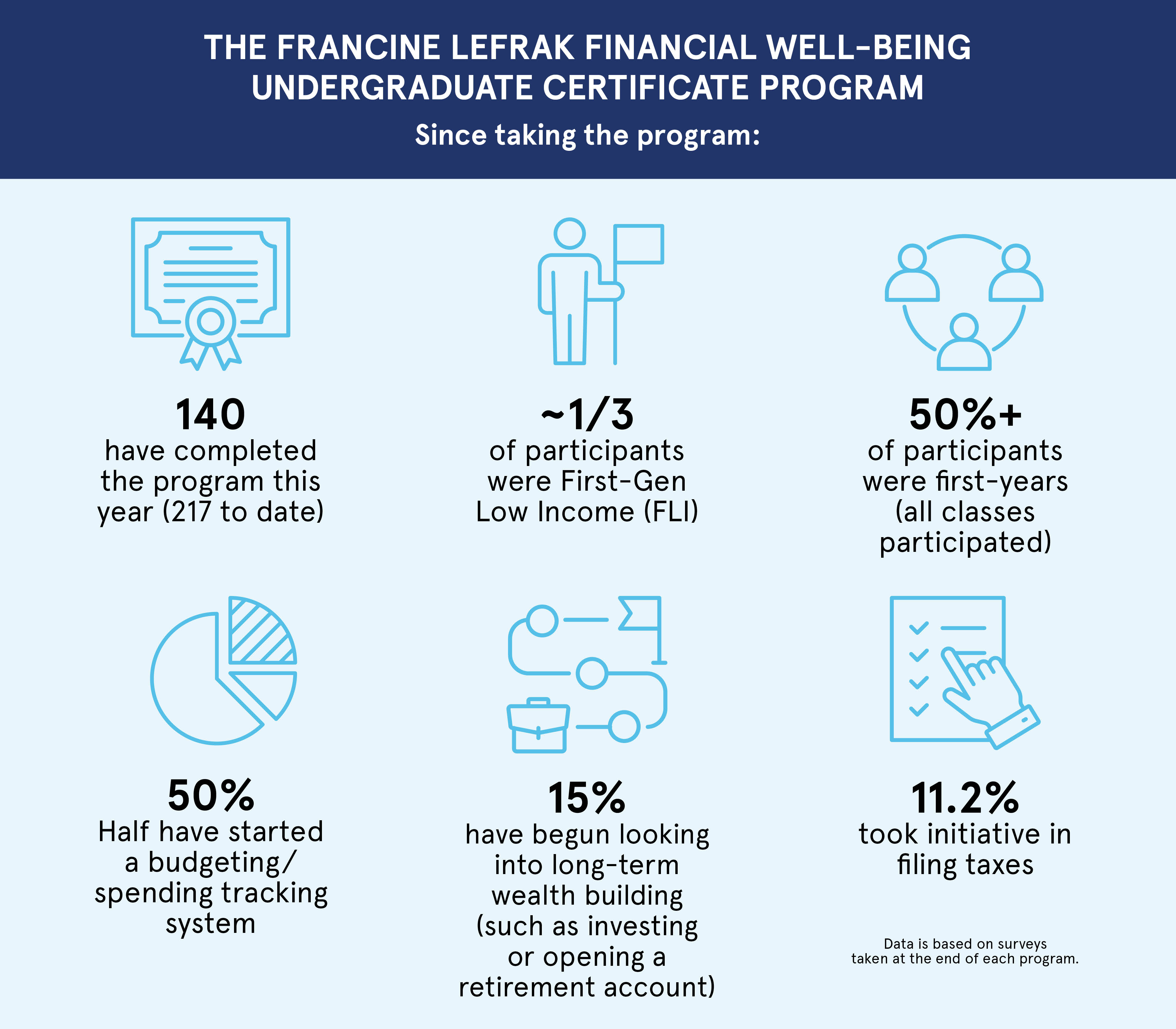
Since its inception the Francine LeFrak Financial Well-Being Undergraduate Certificate Program has served as an entry point for more than 200 students looking to learn more about finances and their future and during the 2025-2026 academic school year the program expanded fivefold.
The eight-week certificate program is held every semester and is open to all Barnard
students. Sessions are held in the evenings and led by student peers – “LeFrak Ambassadors" – who are trained across aspects of personal finance and certified through the National Financial Educators Council. The peer educators design the curriculum and hold 1:1 office hours for those with questions.
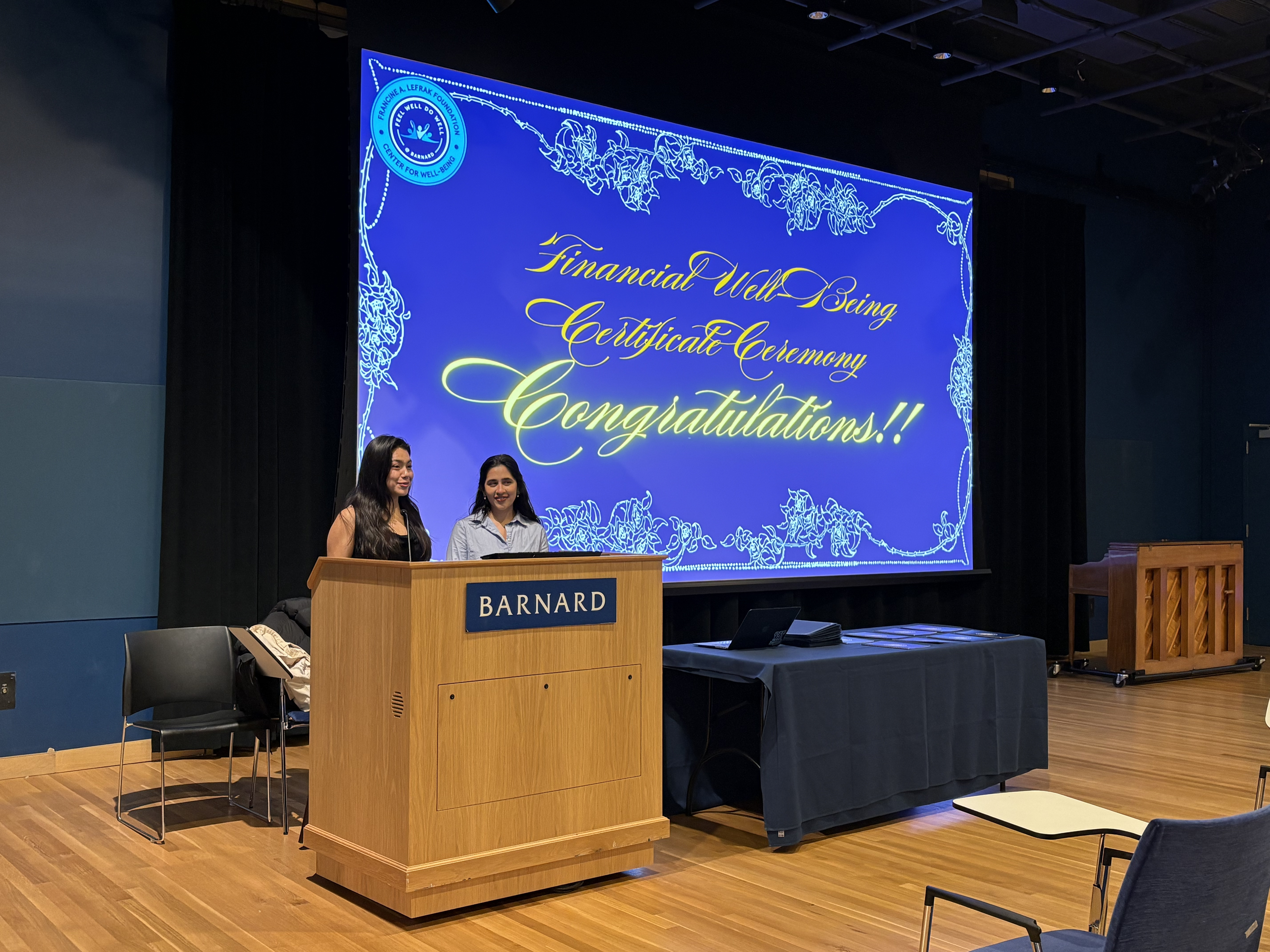
The program also emphasizes that financial well being is a part of overall wellness and underscores how important it is to make sure women are empowered and know how to manage finances etc because it will help them throughout their lives.
“We want to equip students with critical knowledge about managing their finances,” said Sarit Abramowicz, senior associate director of financial well-being. “The certification serves as a tool box for lifelong financial success – long after students leave our campus.”
The peer-led certificate program has made a pathway for the creation of other certificate programs, like the Relationship Toolkit Certificate Program a 7-week student-led workshop series that equips students with foundational skills to build, maintain, and navigate interpersonal relationships with confidence, both in-person and online — and expands on the College's long tradition of women leading women.
It boasts a supportive philanthropic community explicitly dedicated to advancing the program for the 40,000 strong alumnae community and beyond. Future plans include expansion of community partnerships like a high school version of the certificate program and exploration of curricular options.
Since completing the program, 95% of participants have taken concrete steps toward managing their finances — including making a budget, building credit, opening a high-yield savings account, creating a financial plan, opening a Roth IRA, and having conversations with family and friends about money.
At least half have started a budgeting or expense-tracking system. Overall, students report feeling more confident in managing their own money and less overwhelmed by financial stress.
Hear from students about their experience in the program:
“I would recommend this program to others because it provides a good starting point on a broad range of financial topics - the level of action you end up taking is up to you, but I think it was a good kickstart for me to start thinking about this stuff.”
“I feel more in control of my finances after taking this course.”
“I feel a lot more confident talking about my finances, navigating my credit, and understanding how taxes work/paying them. I really did not understand much of this before and just stuck to my debit card, but feel really proficient with my finances.”
“I came into this program with little to no knowledge about my finances (and with a history of confusion surrounding credit and tax fraud), and I'm leaving feeling exceptionally confident about where I'm at and where I'm going financially. Could not be more grateful for being able to do this program before I graduate <3 “