Most students enter archaeology thinking they will unearth dusty artifacts from the ancient past, far removed from the present. Few realize the importance their research will hold for contemporary communities whose heritage is bound up in those artifacts. But this is just what a current generation of Barnard students are learning through their archaeological studies in northern New Mexico.
This past semester, students enrolled in “Laboratory Methods in Archaeology” had the pleasure of welcoming Levi Romero, professor of Chicana/o Studies at the University of New Mexico, world-renowned Chicano author, and New Mexico’s inaugural poet laureate, to the Barnard campus. For nearly a decade, Romero has co-directed a summer research program in his ancestral village of San Antonio del Embudo in partnership with Professor Severin Fowles of Barnard’s Anthropology Department. San Antonio del Embudo was founded in 1725 on land granted by the Spanish crown. Over the centuries, as the region shifted from Spanish to Mexican to U.S. control, the village has been home to a persistent community of mixed settler and Indigenous heritage. Working with the community, Romero, Fowles, and their students have spent a decade conducting oral histories, excavating historic structures, and studying the recovered artifacts.
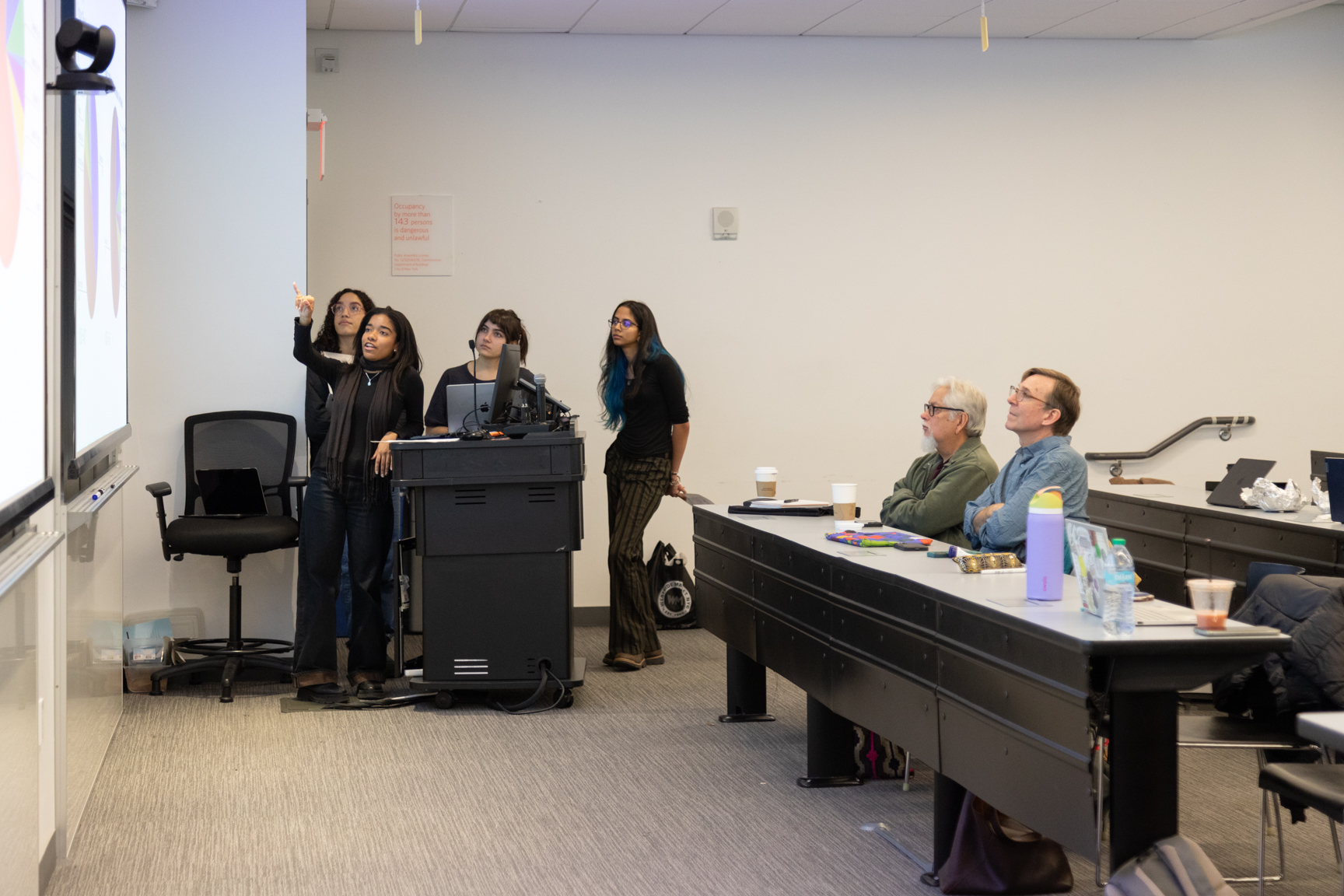
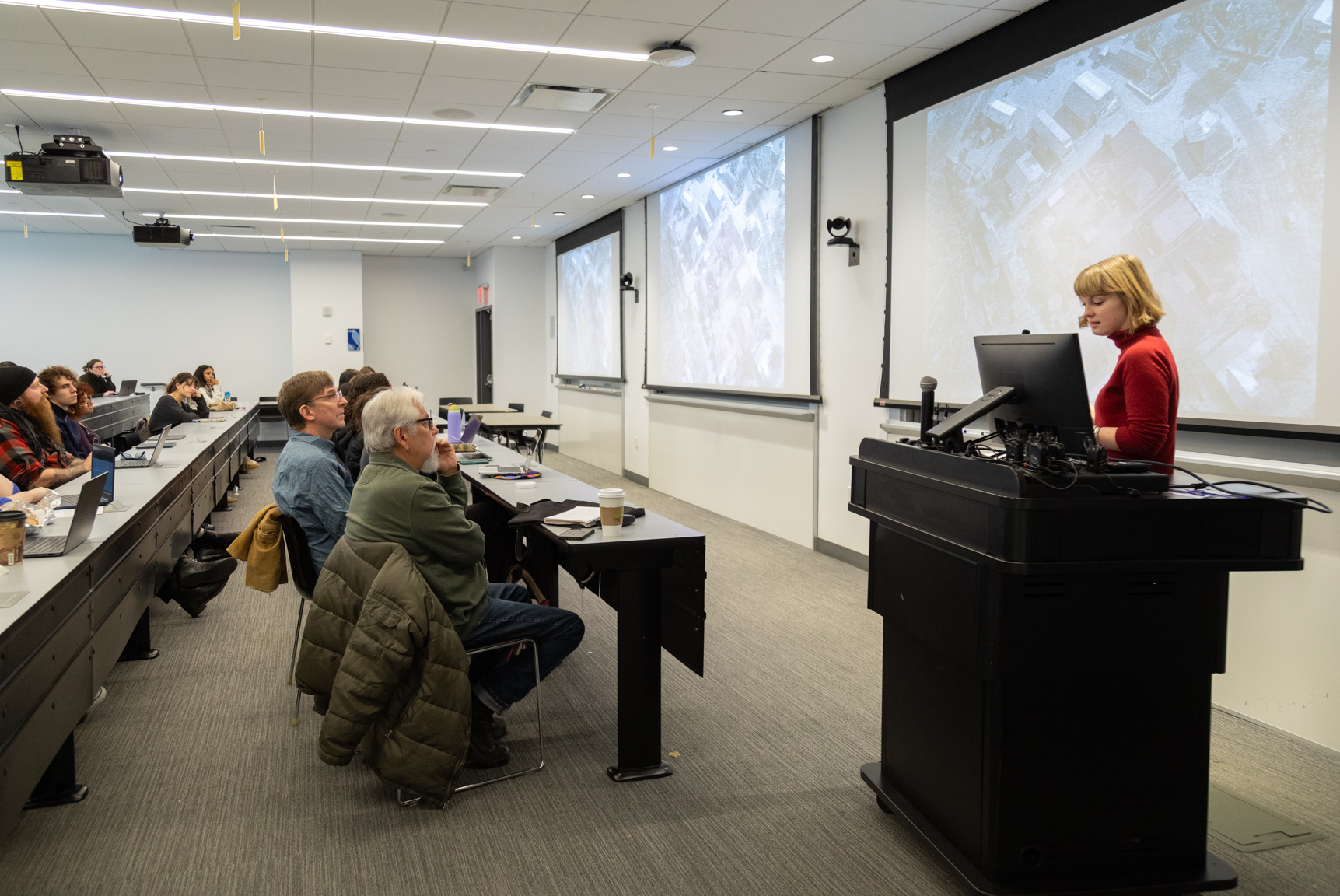
In commemoration of the village’s tercentenary, Barnard students conducted new excavations for the community on the historic plaza of San Antonio del Embudo during the summer of 2025. Back on campus, they spent the fall semester analyzing thousands of pottery fragments, animal bones, and related artifacts recovered during the excavations. Their research culminated in a morning of presentations to the Barnard community, with Romero — a direct descendant of the original families of the San Antonio del Embudo land grant — sitting in the front row.
The 14-part presentation, titled “An Archaeology of Indo-Hispano New Mexico,” guided observers through the historical timeline of San Antonio del Embudo and its waves of transformation. Fowles’s students took turns passionately presenting over a dozen sections, with topics ranging from precolonial technologies adopted by early settlers to the arrival of the railroad and the rise of commodity exchange at the end of the 19th century. The excavations uncovered a fascinating array of artifacts, like a Comanche-style metal spear, a worked bone lice comb, and even a Cracker Jack toy from the 1920s.
Romero watched intently, occasionally snapping photos of the ancestral artifacts displayed before him, before offering his own concluding commentary on the significance of the student’s research to the local community.
Julia Kiaer ’26 participated in the excavation last summer and presented her findings in the class. “[The dig] allows us to see into the life of the Indo-Hispano community,” Kiaer said. “These excavations were done for the community to honor the three-hundred-year anniversary of the land grant.”
Barnard’s excavation program offers students a unique opportunity to receive hands-on training in archaeological methods, living and working at the research site amongst the local community, while uncovering and preserving Indo-Hispano history. It also offered something extraordinary: the opportunity to share their findings with living descendants of the original land grant families and to learn from them in return.
“Archaeology is a mode of historical inquiry that constantly tacks back and forth between the past and the present; that is the source of its intellectual appeal and political relevance,” observed Fowles. “Students may pull a sheep bone from their excavation unit and date it to the mid-18th century, but as they consult with local Hispano elders, they begin to see the same bone as part of the descendent community’s identity and hopes for the future. The sheep bone becomes a symbol of the community’s ongoing struggle to contend with the dispossession of their traditional grazing lands, and also of their efforts to preserve and strengthen traditions of local food production.”
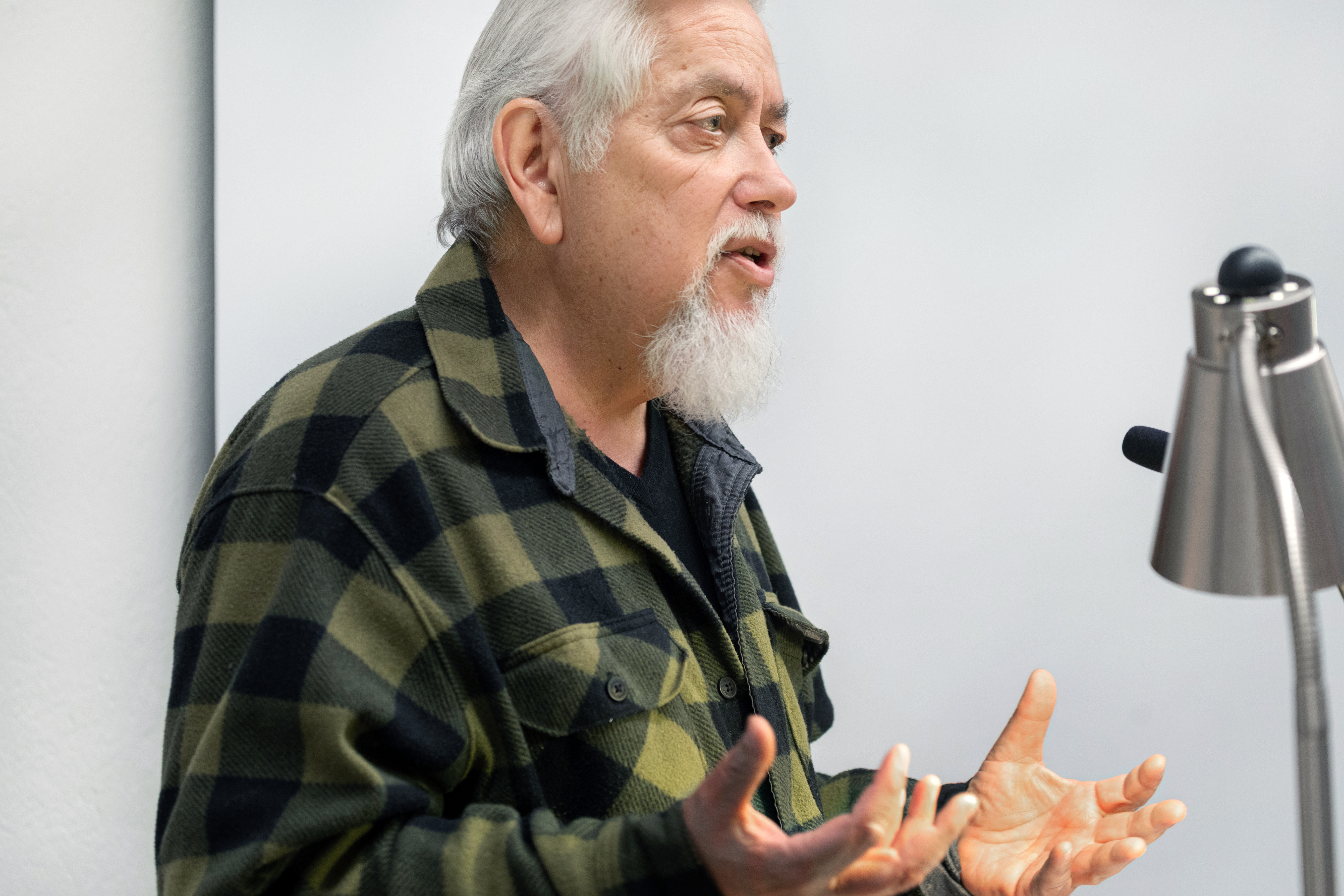 Romero concluded his visit by delivering a powerful reading of his poem on campus, “Mi Querencia: A Narrative Cruise Through the Manito Homeland,” to a packed audience. Weaving together poetry and story-telling, Romero cast a light on the distinctive racial and cultural contours of Indo-Hispano society in New Mexico. Now it was the students’ turn to be in the audience and consider how poetry might inform their scientific studies. The result was a unique exchange where history and the present met in real time. “We’ll be back to continue our excavations in San Antonio del Embudo this summer,” noted Fowles, suggesting that the exchange is poised to deepen in the years to come.