Many people have strong feelings about offshore wind — the promise of its renewable power, the effects it could have on its surroundings, the costs it incurs, or, from another angle, the costs it saves. But what exactly is offshore wind? Most spectators, even those with the loudest opinions, struggle to explain what the technology involves and the nature of its relationship to local communities, wildlife, and commercial interests.
In her role with the National Wildlife Federation’s Offshore Wind Energy team, Lily Sones ’25 is translating complex science and policy into language anyone can understand. As the nonprofit’s inaugural storytelling fellow, she is tasked with making information about offshore wind more accessible, from narrative-based on-the-ground reports to interviews with advocates and scientists.
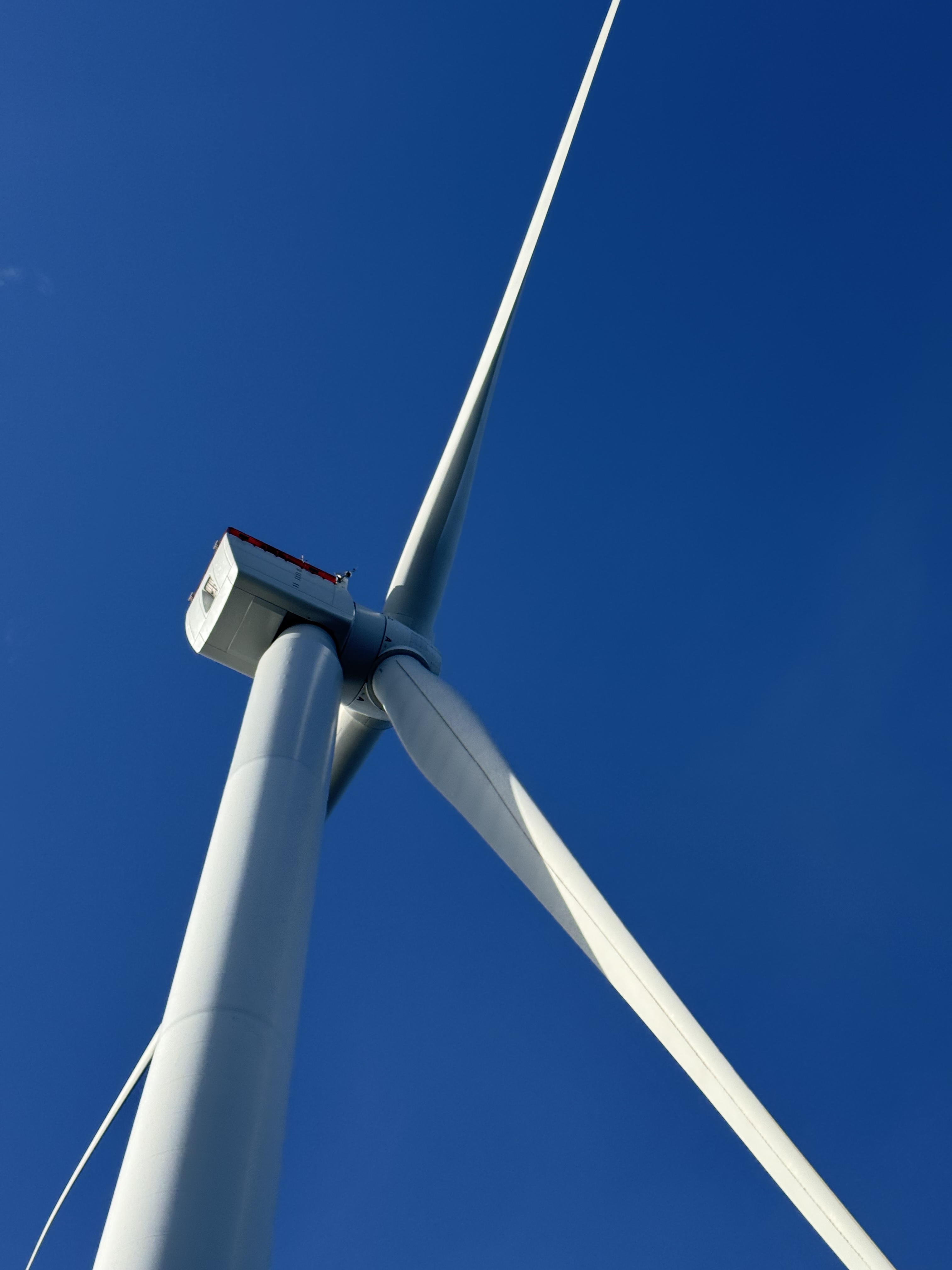
(And for the record: offshore turbines convert energy from the strong winds found at sea into electricity, powering a generator that can then transmit that energy to the grid on land.)
“When I came across the fellowship posting, I was taken aback,” said Sones. “It was at the crux of all the things I was interested in and had a deep passion for. There was this incredible connection to both the work I had done at Barnard and what I was seeing back home in Rhode Island.”
Raised in the coastal town of Newport, Sones grew up hearing the pushback against offshore wind development. Despite strong regulatory protections for the wildlife and fishing communities, these development projects were often met with deep suspicion. Sones was interested in where this disconnect came from, and how to improve public knowledge through positive local stories on the benefits of responsible offshore wind development.
Her interest in politics, the environment, and storytelling was fostered through coursework at Barnard. She decided to pursue a joint major in political science and human rights, combined with a minor in the environmental humanities, one of the College’s interdisciplinary programs. Her senior research project in a political science colloquium was a natural primer for the fellowship, following how fishermen communities in Rhode Island conceptualized their work, and how their identities informed their perspectives on offshore wind.
The one-year fellowship, which began in October 2025, has introduced Sones to projects across the country, with an emphasis on the East Coast. In December, she published her first report. Sones, along with 70 environmental advocates and New Englanders, boarded a ferry to the South Fork Wind Farm near Montauk on the New York coast, getting an up-close look at its infrastructure and operations.
“This is dense ocean marine science, and not everyone has a background in the sciences,” said Sones. “Through these stories, I get to dispel misinformation, helping to explain how responsible offshore wind mitigates the impact of climate change and makes us less reliant on fossil fuels.”
One of Sones’s responsibilities is uplifting information about marine conservation, emphasizing that offshore wind projects are in constant dialogue with wildlife advocates and experts. Her team focuses on mitigating impacts to a range of species — including the North Atlantic right whale, a critically endangered species with fewer than 400 remaining. Conservation efforts in New England have led to positive trends, and Sones’s team has been able to spotlight new calves born in the region.
After the fellowship runs its course, Sones plans to pursue a law degree, continuing her interest in environmental law and policy. “This has been a great place for me to start,” she said. “It's allowed me to learn about nonprofits and the work of advocates, building upon my academic experiences at Barnard.”