On a frigid Saturday morning in February 1973, hundreds filed into Barnard Hall — professors, college administrators, people from across New York City, graduate and undergraduate students alike. The James Room, built to hold 250, began to overflow. The gymnasium was set up with rows of chairs, but students found themselves sitting cross-legged on the wood floor. “It was as if people were there for their favorite team,” said Susan Riemer Sacks, Professor Emerita of Psychology and Education. “The Brooklyn Dodgers, except it was for feminist scholars.”
The event, “Women Learn from Women,” was the joint effort of a small group of women from eight colleges in the metropolitan area. Jane Gould ’40, the first permanent director of the Barnard Center for Research on Women (BCRW) – then simply known as “The Women’s Center” — seeded the initial idea. Women from diverse backgrounds and with different areas of expertise would come together in a series of workshops to discuss the complex and provocative issues coming out of the women’s movement of the 1960s.
Professor of English Catharine Stimpson organized workshops on contraception, legal abortion, and the realities of womanhood over 30. Marlene Sanders, the first woman to anchor an evening news broadcast for a major network, was enlisted to film. The planning committee expected a turnout of a few hundred. In the end, closer to one thousand showed up at the gates.
“Women Learn from Women” was such an enormous success that BCRW reconceived the event as an annual conference, “The Scholar and Feminist” (S&F), designed to bridge the worlds of academia and grassroots action. Sacks organized the first official S&F in 1974, putting together a program that asked new and expansive questions about what it means to be a woman, a feminist, and a scholar. It would be an event that acknowledged and encompassed women from both academic and non-academic fields, the scholar and the feminist, from all walks of life.
Now, with just a few breaks along the way, the conference is gearing up for its 50th iteration, appropriately titled “50 Years of Meeting the Moment.” From February 27-28, 2026, people across disciplines and professions will gather to think about the challenges of the present in order to imagine better futures.
To arrive at this point is no small achievement. The conference made it through a “historic mountain of obstacles” to get to S&F 50, Sacks reminded us. 1973’s “Women Learn from Women” preceded women’s studies courses at Barnard, and it would take another 15 years for the College to create a department dedicated to the exploration of gender.
In August 1971, professors Annette K. Baxter and Suzanne F. Wemple made their case for the field in a letter: “If we acknowledge that the purpose of a liberal arts curriculum is not merely to provide pre-professional preparation for our students but also to give them an appreciation of their cultural heritage, then, in an institution where women are educated, it is our duty to give them an awareness of their legacy as women.”
This is an academic imperative that flows through the decades of S&F at Barnard, now one of the longest-running feminist academic conferences in the United States. It continues to be free and open to the public, acting as an accessible meeting place to those interested in feminism’s cross-currents. “I’m not sure I thought it would last 50 years,” said Sacks. “But I damn well knew that it should.”
Scholar & Feminist Archives
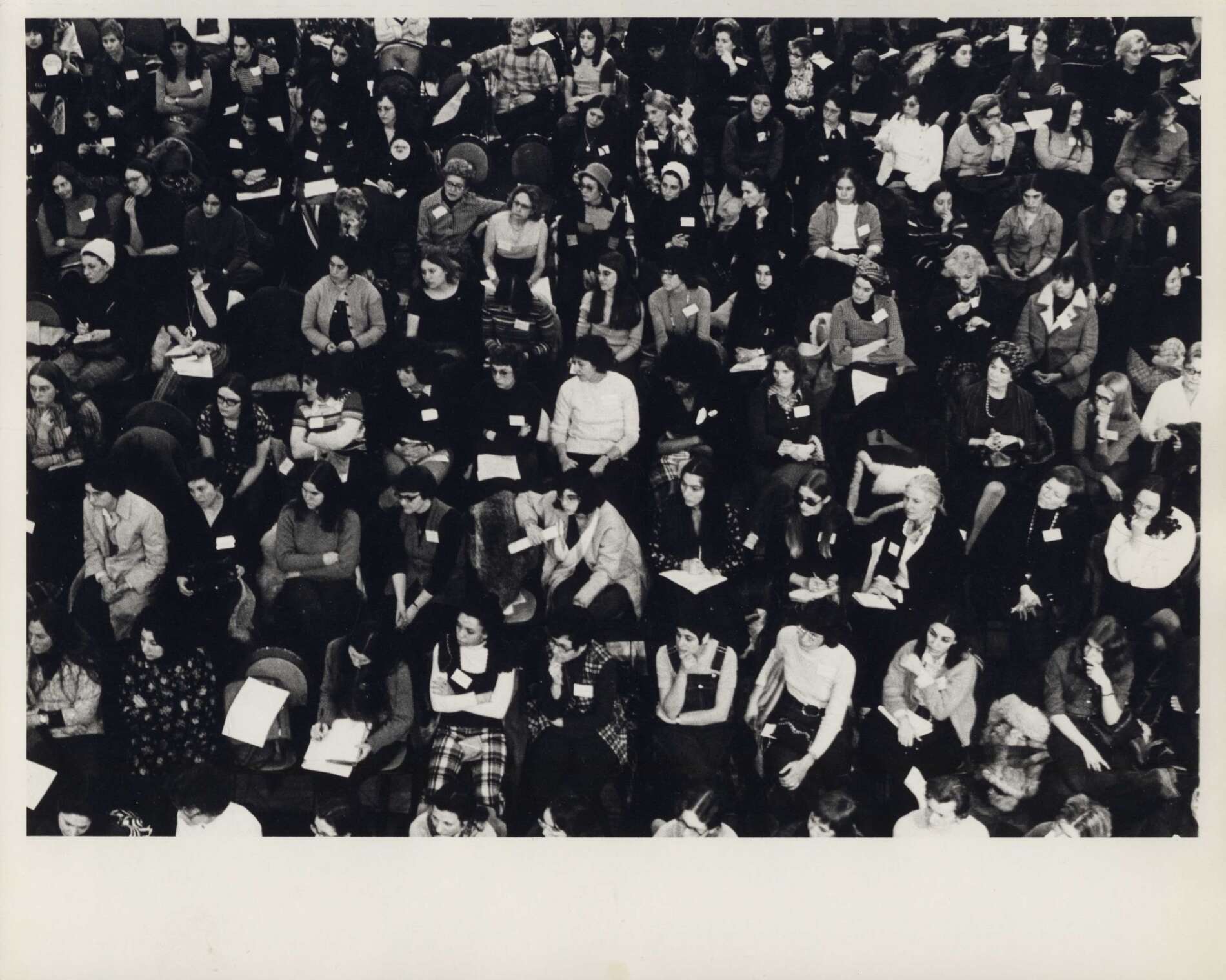
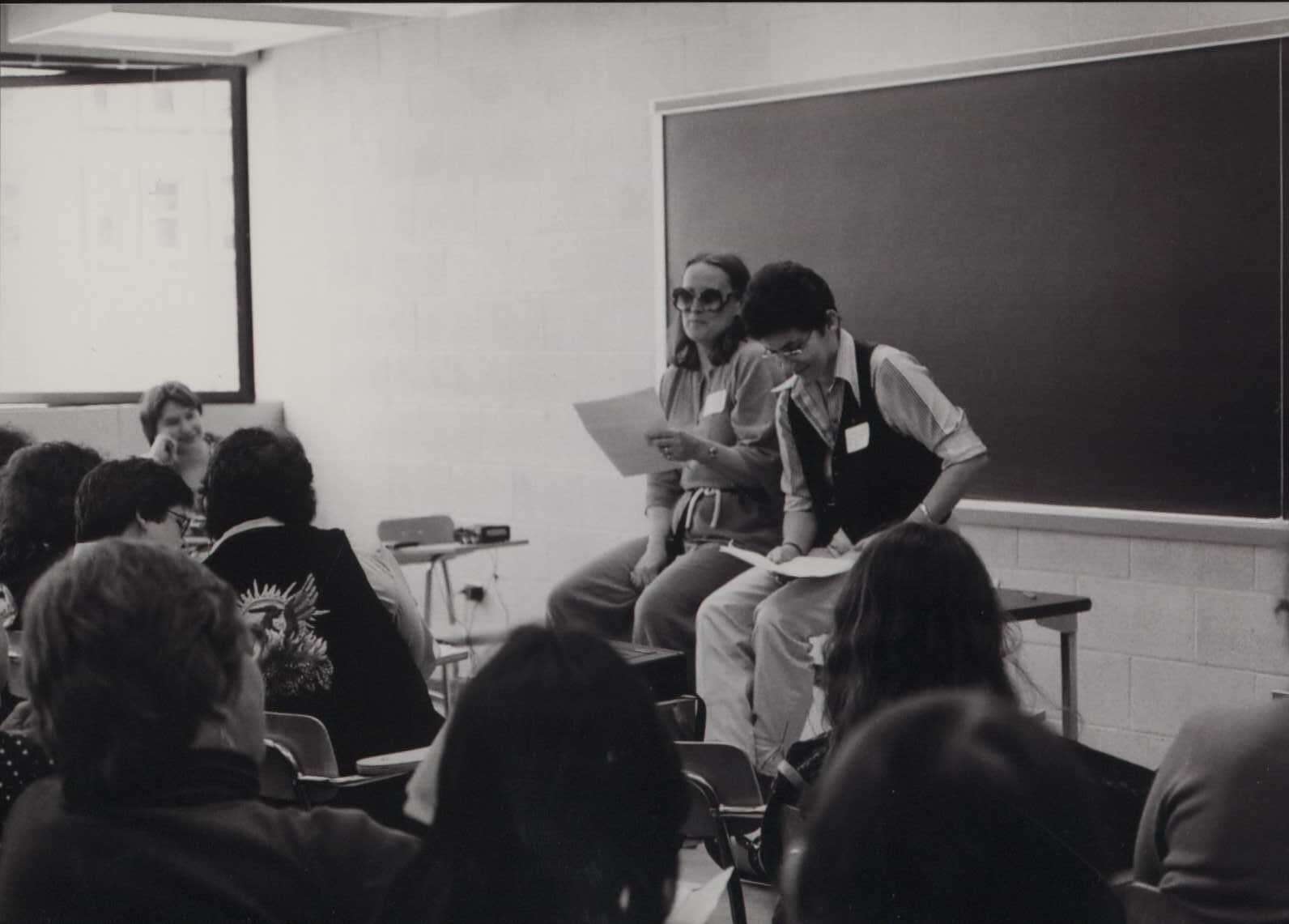
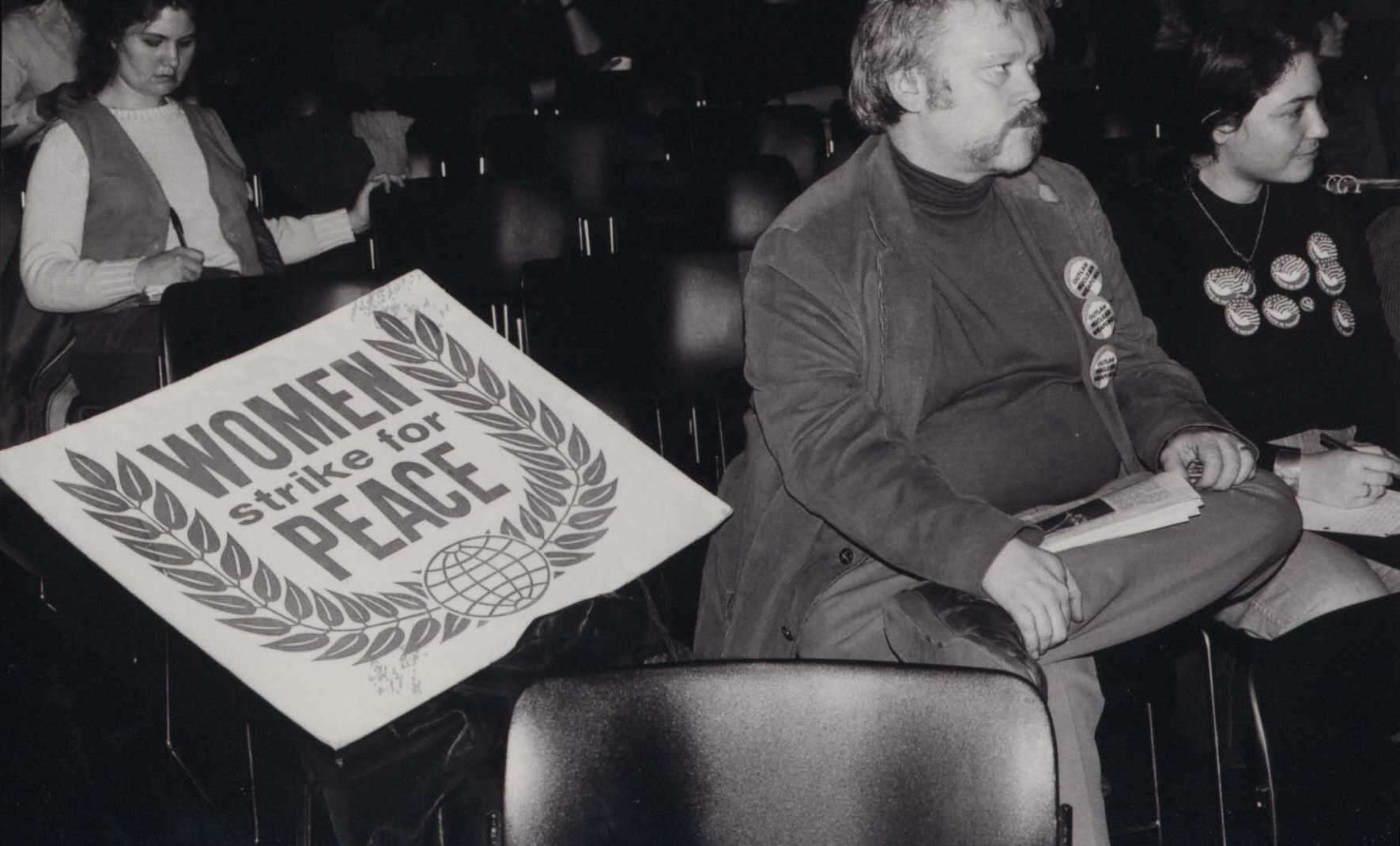
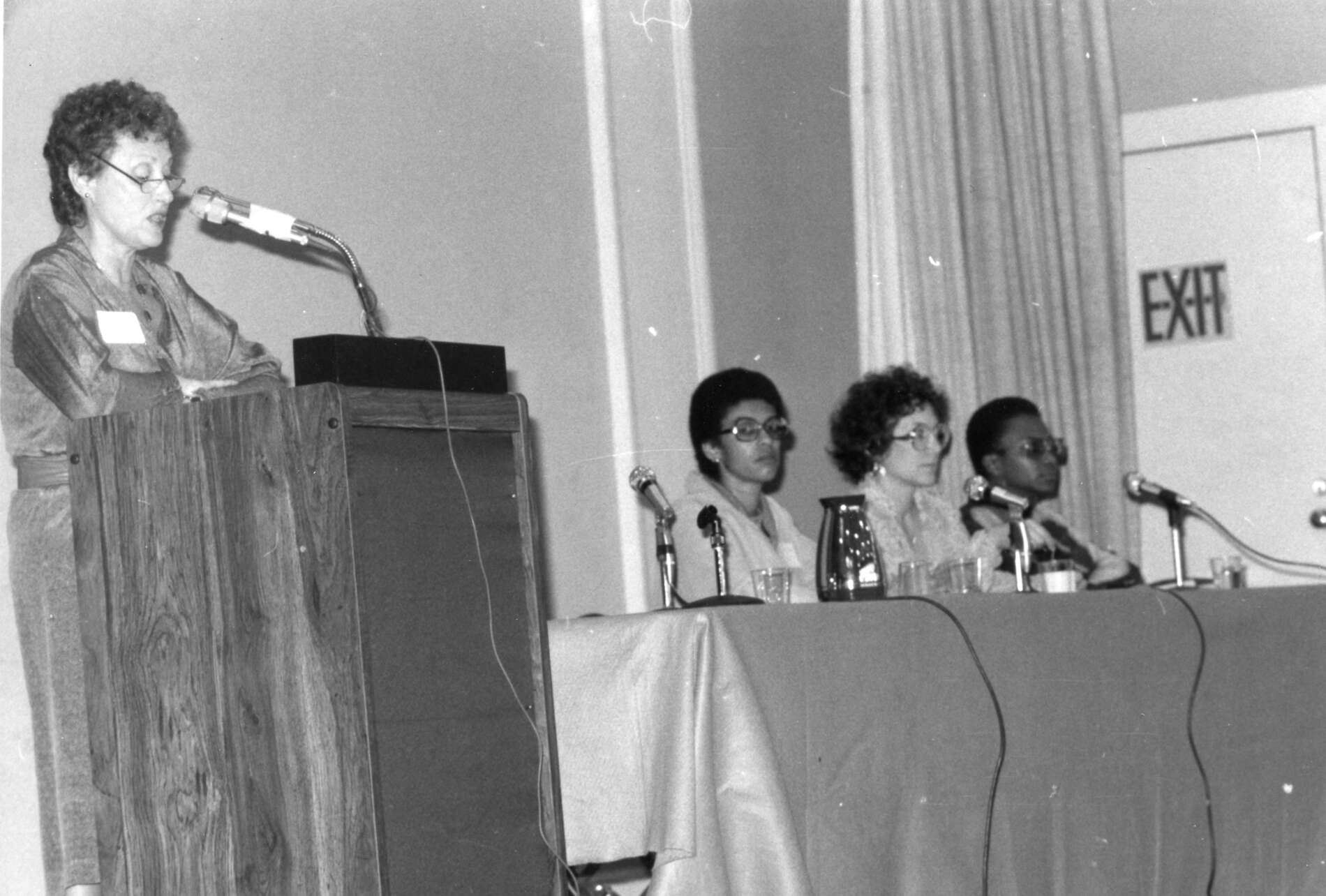
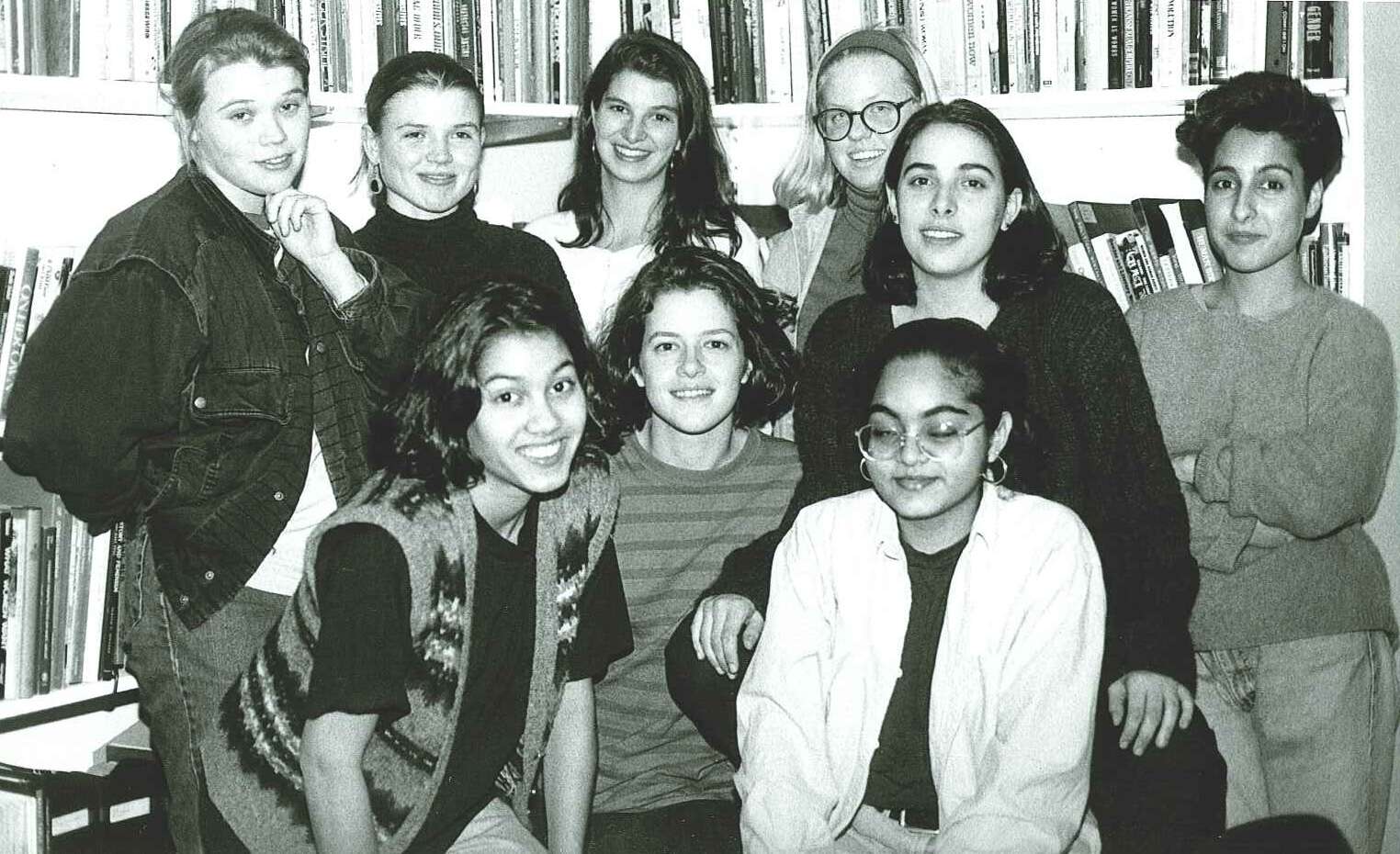
Under BCRW’s direction, the conference became a cradle of feminist thought. Through the early years of the conference, planning committees of feminists inside and outside the academy met each week ahead of the event, treating preparation as an exercise in collective knowledge-making. The decades-long cultural impact is etched into the archives. When sifting through programs, it is routine to stumble upon a topic or speaker that had yet to arrive in mainstream discourse, but in a matter of years, caused seismic shifts within their field.
In 1979, a then-45-year-old Audre Lorde arrived at Barnard to speak on a panel at S&F. The sixth conference, entitled “The Future of Difference,” was planned as an “exploration of the way sexual identity and difference is defined,” featuring the conference’s first panels centered around Black feminism. It was five years before the publication of Lorde’s landmark collection Sister Outsider, which included the essay “The Master’s Tools Will Never Dismantle the Master’s House,” now a part of the feminist canon. It would be another five before legal theorist Kimberlé Crenshaw coined the term “intersectional feminism” in 1989.
The next year, in 1980, BCRW pledged to organize its first planning committee for S&F that would take care to center the experiences of women across lines of race and class. Half of the committee members were associated with Barnard and Columbia, while the other half worked outside higher education. The conference, under the theme “Class, Race, and Sex – Exploring Contradictions, Affirming Connections” marked an intentional shift in the approach to S&F, prioritizing representation within the planning process.
“The conference was founded at a moment when feminist scholars were bringing research on women into established academic disciplines — such as history, psychology, and literary studies — and actively creating women’s studies as a field,” said Margot Kotler, senior associate director of BCRW and the organizer of S&F 50. “It became a space of energy and experimentation where the activist project of shaping this new discipline came into focus, a place where scholars could ignite debates, develop new methods, produce new knowledge, and build movements.”
BCRW’s interest in real, living issues means that S&F has, more than once, found itself on the cutting edge of public debate about women’s issues. But this is no accident — sites of tension and disagreement are inseparable from the conference’s origins, which came at a time when many inside and outside the College still bristled at the term “feminist.” Through an embrace of intellectual risk, the conference pushed dialogue past familiar conversations.
The ninth S&F, “Towards a Politics of Sexuality,” focused on the debate at the center of second-wave feminist discourse: sexual politics. “It might seem shocking now, but speaking publicly about women’s sexuality was not common at the time,” said Janet Jakobsen, who led BCRW from 2000 to 2015 and launched the peer-reviewed journal The Scholar & Feminist Online.
The event, which billed itself as a critical examination of sexual pleasure, choice, and autonomy, generated swift backlash from anti-pornography feminists, in part because of the explicit discussion of women’s sexuality. The College’s administration fielded complaints, and protesters greeted the over 800 registrants at the gates with leaflets on “sexual perversion.” The conflict on Barnard’s grounds confirmed fissures within the feminist movement, which came to be described as the “feminist sex wars.” Even so, “controversial moments can build something,” said Jakobsen. “Anything that runs the risk of controversy could become part of what made the Center vibrant and interesting to people. It showed that the conference had grown into something that really mattered.”
In 1996, the conference functioned as a feminist response to the “family values” debate, offering a critical lens to topics like welfare, single motherhood, and lesbian parenting. In the wake of 9/11, the 2002 conference situated itself within the context of historical trauma, exploring how private narratives are translated into public memories, including a keynote conversation with playwright and actor Anna Deavere-Smith.
Rebecca “Beck” Jordan-Young, interim director of BCRW, first engaged as a participant in S&F in 2006. Before coming to Barnard, Jordan-Young worked in harm reduction and research agencies in New York and Washington, D.C., contributing to HIV/AIDS prevention and education during the peak of the public health crisis in the eighties and nineties. In preparing for the 2006 conference, she found herself again in rooms with people she had previously known as a field director — people who worked on the ground with the issues explored onstage.
The 2006 conference focused on incarceration and the matter of women’s imprisonment. The figures at the time were startling. From the mid-eighties, the population of incarcerated women had increased by 400%, and the number of incarcerated women of color had multiplied eight-fold. “In an academic context, people were doing deep theoretical work to think about questions like, ‘How can we understand women’s incarceration rates as reflecting choices our society makes about issues like education and poverty? Is the very definition of ‘crime’ a feminist issue?’,’” said Jordan-Young. “It felt so validating to the work I had done as an organizer, like a deep sigh of relief. These issues were bound together. It wasn’t about separate populations of people.”
Scholar & Feminist Archives Cont.
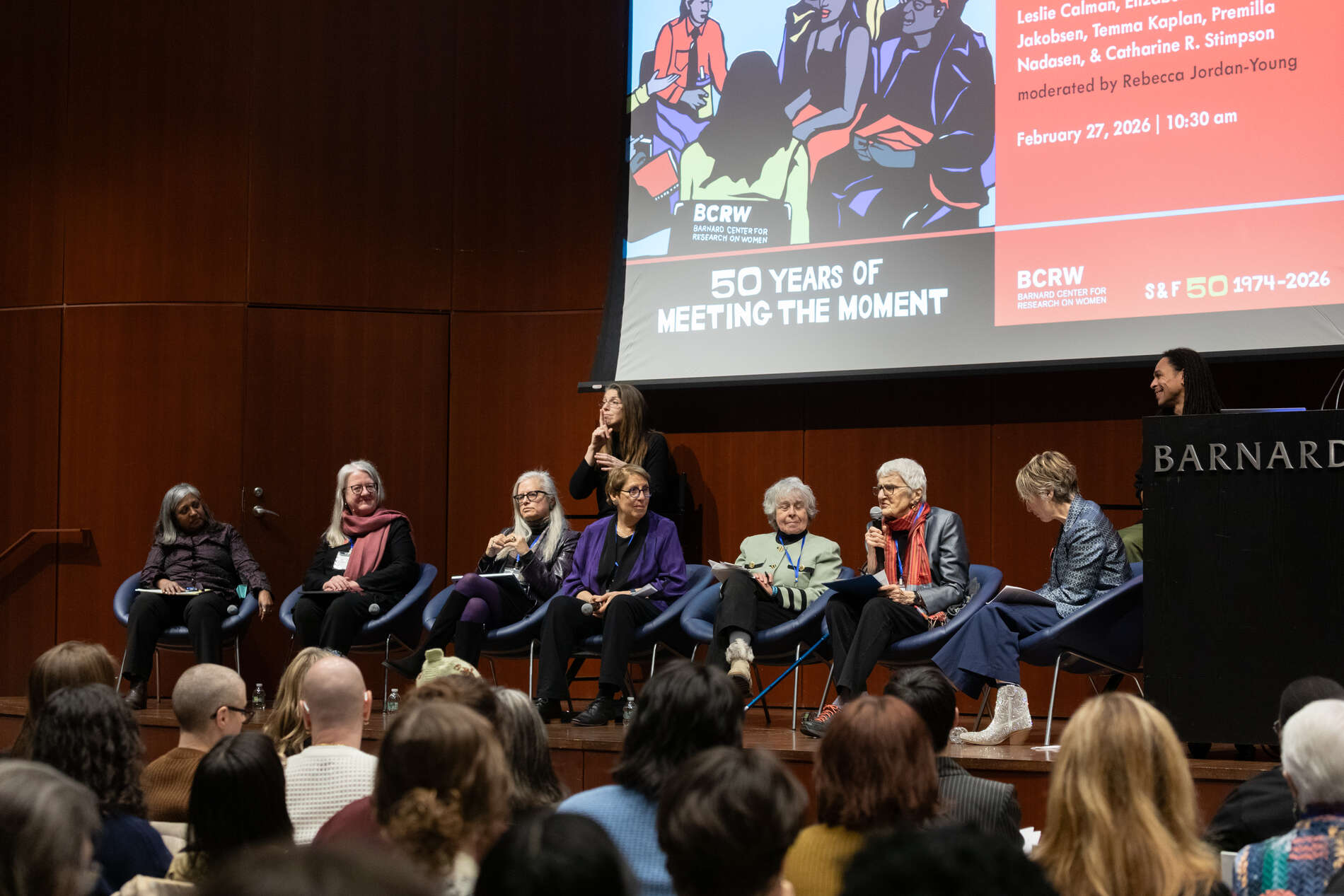
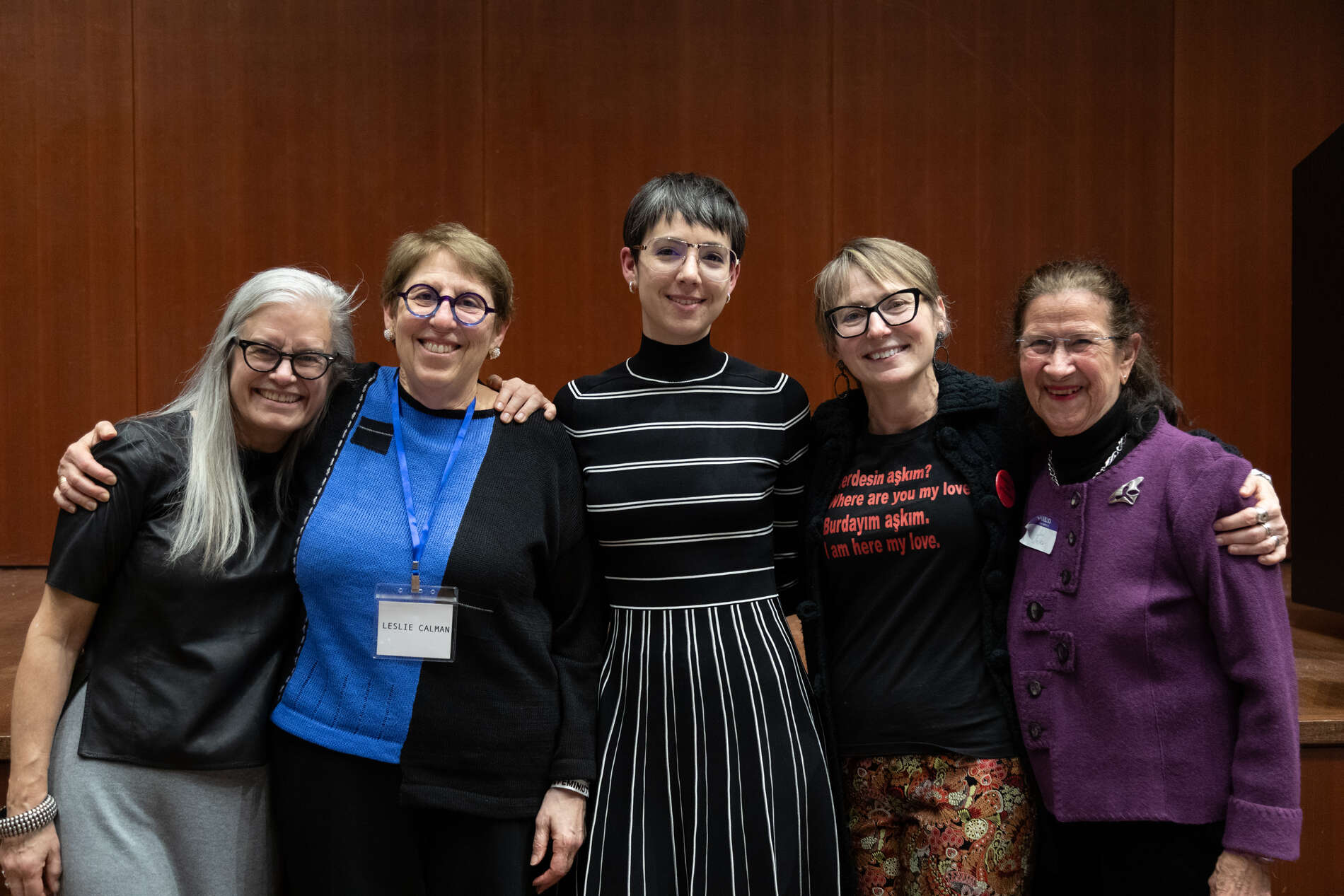
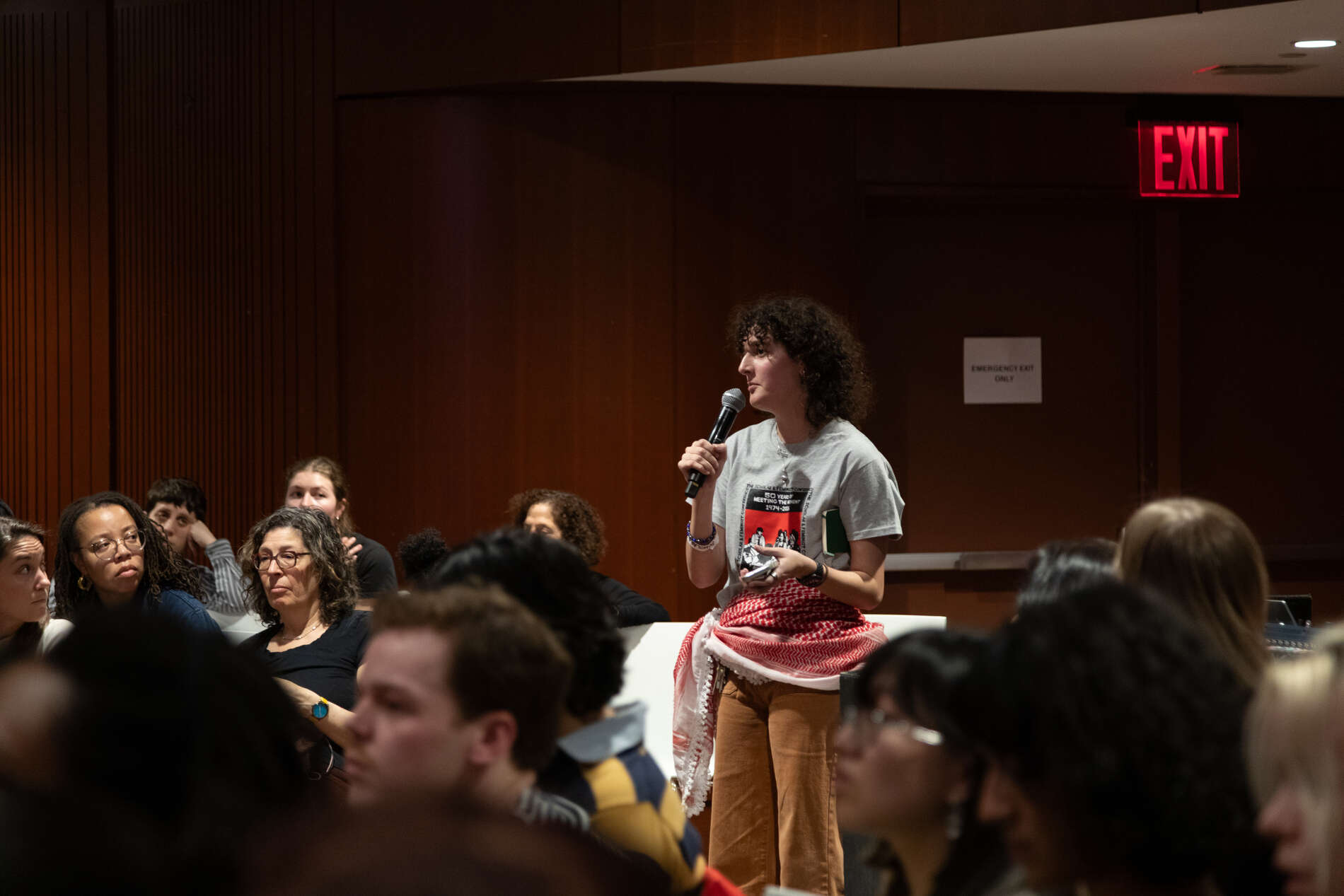
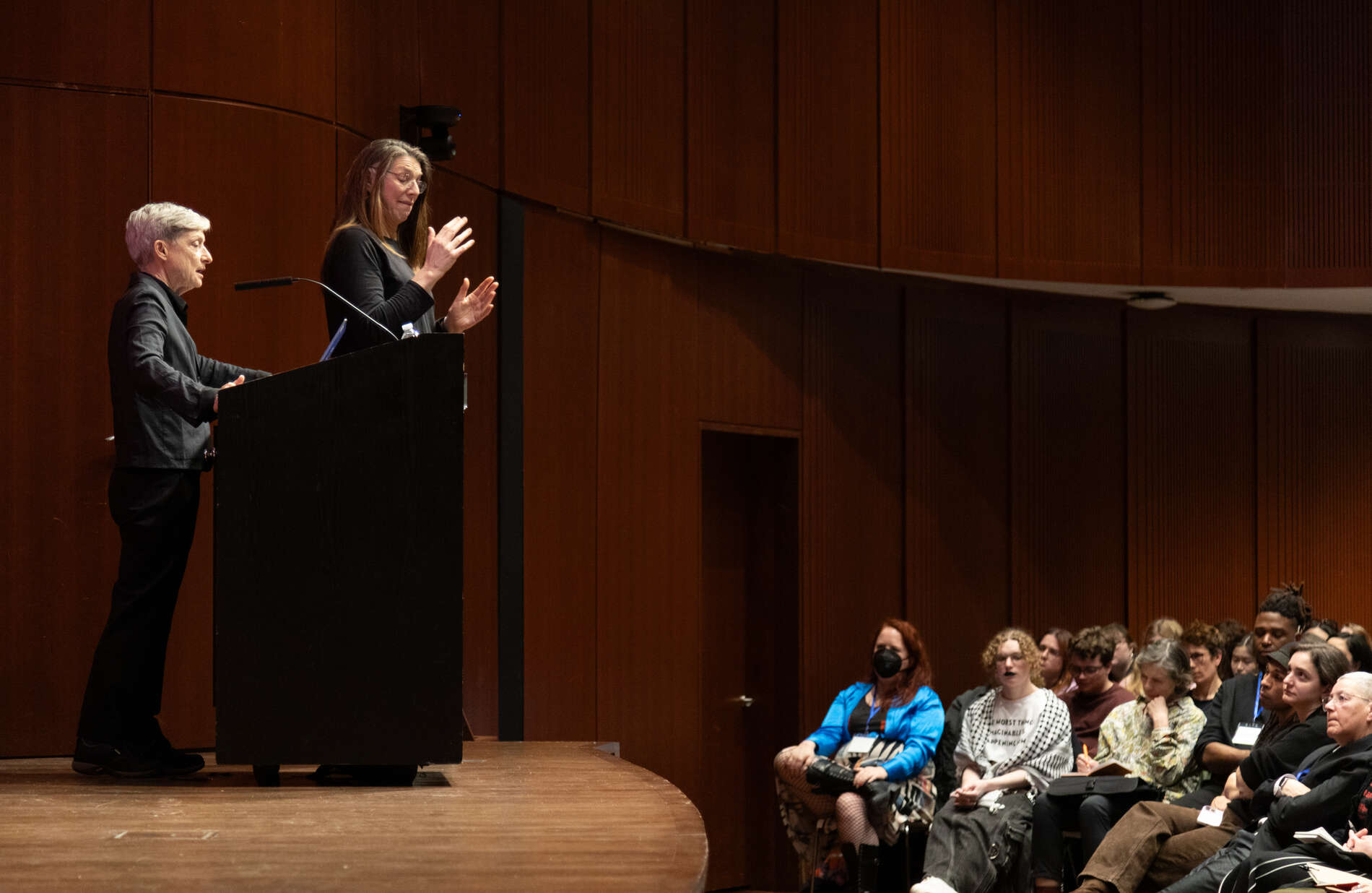
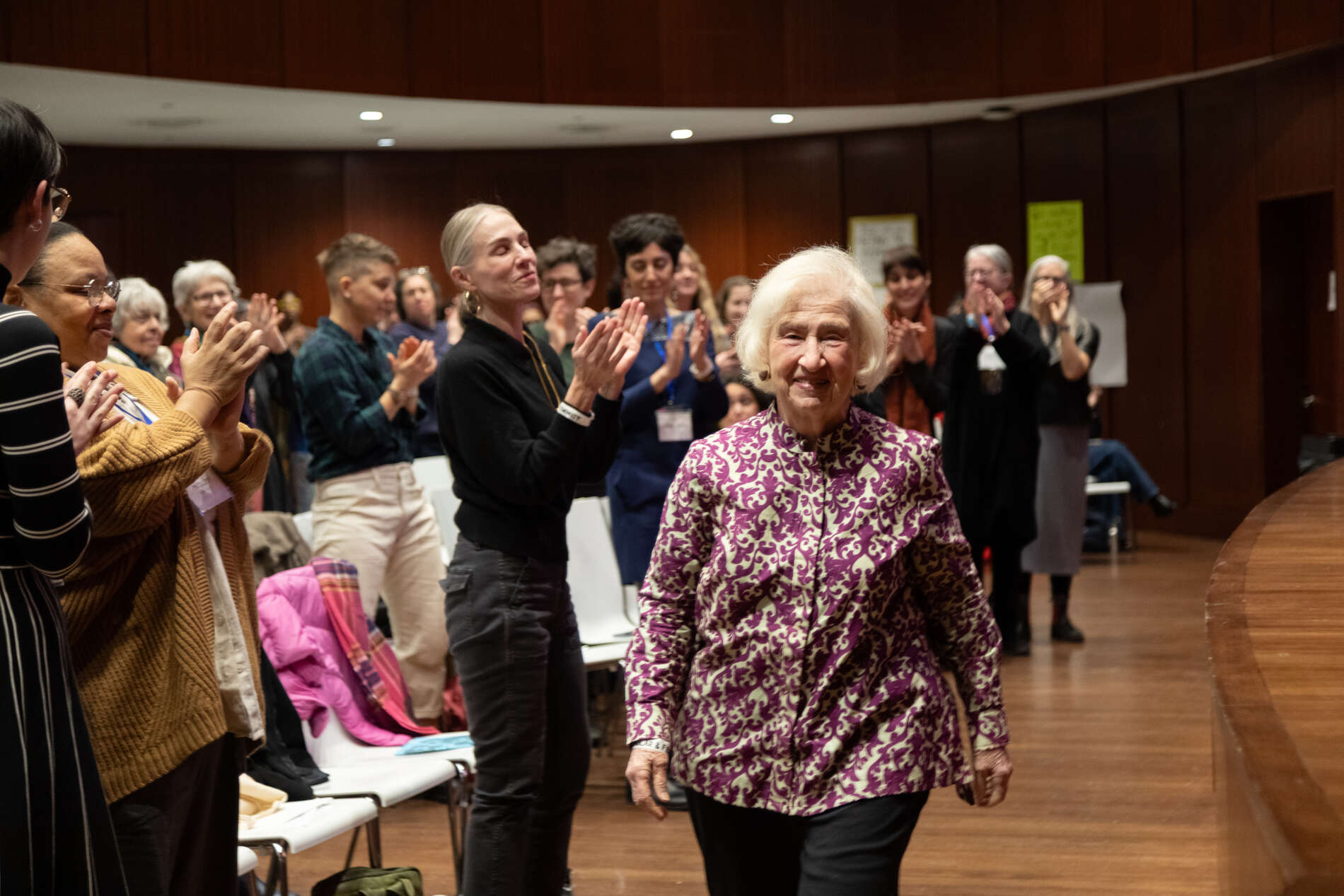
In more recent years, the conference has oriented itself around issues that strike the heart of contemporary discourse — climate change, disability, fair housing, and transnational feminism. Among those who have graced the program are visionaries (the author bell hooks), central voices in public discourse (journalist Rachel Maddow), founders (politician Bella Abzug), and MacArthur “Geniuses” (the scholar and writer Keeanga-Yamahtta Taylor, musician Rhiannon Giddens, and urban strategist Majora Carter).
In the lead up to S&F 50, student research assistants — who have been essential to the conference’s development since its inception — are helping to organize the archives, sifting through hundreds of photographs, hand-written notes, fliers, programs, and meeting minutes from the last five decades. Student research assistant Lea Salim ’26 found herself spending time with one brochure in particular during a creative collaging exercise. In blue writing, the conference’s title “Apocalypse Now? Race and Gender in the Nineties” laid over a woman extended from the clouds, eyes closed, head craning over the stars and moon. She cut out the single word, ‘apocalypse,’ and the question mark that doubted its premise. To Salim, it felt kismet to stumble upon the brochure at a time when current events can feel existential.
“The conferences have always been hopeful. It’s bringing people together to think through what concerns them most,” said Salim. “I think hope is a practice, and hope is about doing the hard work of being uncomfortable. Feminism has never been about comfort. It’s much more than that. It’s how we approach the world.”
This year, programming will cover topics like higher education and the aesthetics of liberation. Speakers range from emerging scholars and writers to professors looking back on powerful academic careers — anthropologist Lila Abu-Lughod, author Thenmozhi Soundararajan, and cultural historian Saidiya Hartman, among others. Judith Butler will be the keynote speaker — the “most important theorist of gender and gender studies in decades,” said Jordan-Young. Butler is the recipient of 14 honorary degrees and has been widely celebrated for their groundbreaking contributions to the humanities, with particular influence in the fields of ethics, philosophy, and gender.
Former BCRW director Tina Campt will sit on a panel moderated by poet Alexis Pauline Gumbs ’04, who was introduced to S&F as a Barnard first-year. Gumbs has participated in BCRW’s programming as both a speaker and audience member for the last 25 years. The topic of the panel she will moderate — "Black Feminist Futures and the Aesthetics of Liberation" — is brimming with possibilities, said Gumbs. “The most thrilling part is not knowing where we’ll end up in our conversation,” she noted. “I’m hoping that we’ll be able to bring the interventions and insights of generations of Black feminists into the room and leave the audience emboldened towards creative action by the power of radical love that is the Black feminist tradition.”
These moments of intervention — where there can be push and pull, call and response, deconstruction and recreation — are the living spirit of S&F. “When I meet Barnard alumnae and I mention BCRW, one of the first things that people want to talk about is 'The Scholar and Feminist',” said BCRW’s Creative Director Hope Dector, who began working at BCRW in 2002. “The event has gone on through different eras of Barnard and continues to be an experience for this current generation of students.”
Gould, in her 1997 memoir, describes how the conference came out of the magnitude of social revolution: “These were extraordinary times, and we were an extraordinary group." The times have changed, but "The Scholar and Feminist"'s founding proposition has not. “The conference is needed for these conversations about women to happen,” said Sacks. “If there is no structure, unfortunately, these things vanish. And we see this happen. But it’s more important than ever to have S&F. To stand up. Because it matters — women’s voices matter.”
Register for "The Scholar and Feminist: 50 Years of Meeting the Moment" on the BCRW website. The conference will be held February 27-28, 2026 at Barnard College.