It’s difficult for Pam Crabtree ’72 to estimate the number of countries she’s visited to conduct fieldwork across the span of her career as a zooarchaeologist. There are the standouts, of course. Ireland has a special place in her heart; she’s visited at least a half-dozen times, returning often to a site called Dún Ailinne in Kildare where architecture dates back to the Iron Age. In 2010, she was sent to the grasslands of eastern Ukraine for a project on the domestication of the horse. Then there were the trips to Egypt — “every archaeologist’s dream.”
This neglects to mention all the work she has done in Antwerp in Belgium and Maui in Hawaii, as well as the Turkish region of Cappadocia, alongside numerous other field sites around the world. Crabtree, a scholar of Medieval Europe, specializes in animal bone remains, using the recovered materials to search for clues about how people used to live some one-thousand years ago. Later this summer, she will retire from New York University, where she has worked as a professor in the Department of Anthropology since 1990. It closes the chapter on a 55-year career in the field.
 For Crabtree, the archaeological world is almost unrecognizable from when she began her career. For one, methods have changed; standardization of measurements has improved, as well as the processes for determining age. There is an increasing use of biochemical data, such as ancient DNA. But the composition of the field has also seen a transformation. “I was part of the first generation where women — and not just one token woman once in a while — were admitted to graduate programs,” Crabtree said. Her instructors were all men, and so was her entire doctoral committee. Now, women are represented throughout the field, including in leadership positions in college faculties.
The First Dig
In her words, it has been a “long and winding road” to get to this point. Crabtree arrived at Barnard College in 1968 with a childhood fascination in the ancient world but no strong feelings about the direction of her academic path. She enrolled in a range of introductory courses, settling on a major in art history (the subject was a chance to look at the material culture of different historical periods) coupled with an economics degree. It felt like a practical enough combination to appease her parents.
In the summer of 1971, after her junior year, she was invited to participate in her first archaeological dig. Martin Biddle CBE, FBA, FSA, the pioneering urban archaeologist, was leading an excavation at the Brook Street Site in Winchester, England. It was a lightbulb moment of, ‘This is what I want to do,’ Crabtree said. The strong visual memory she developed in art history translated neatly into working with archaeologically-recovered remains, and she found an immediate interest in the site’s period of transition — the bridge between the Roman and Medieval worlds, in and around the eighth century.
Before graduating from Barnard, she started to consider graduate programs. At the time, it was an unusual area of research; most programs were not invested in the intersection between the archaeological and the anthropological. But it happened to be the specialization of one faculty member in particular, Bernard Wailes at the University of Pennsylvania. Since her suitemate at Barnard had access to a car, the pair spent a weekend exploring the campus in Philadelphia.
Crabtree, in a leap of faith, introduced herself to Wailes. The lightbulb flickered again. During their meeting, Wailes, so impressed that she had excavated in Winchester, asked on the spot if she would be interested in traveling to Dún Ailinne for another project. “Is the Pope Catholic?,” Crabtree remembered thinking. The two would go on to work together throughout her master’s and doctorate at Penn.
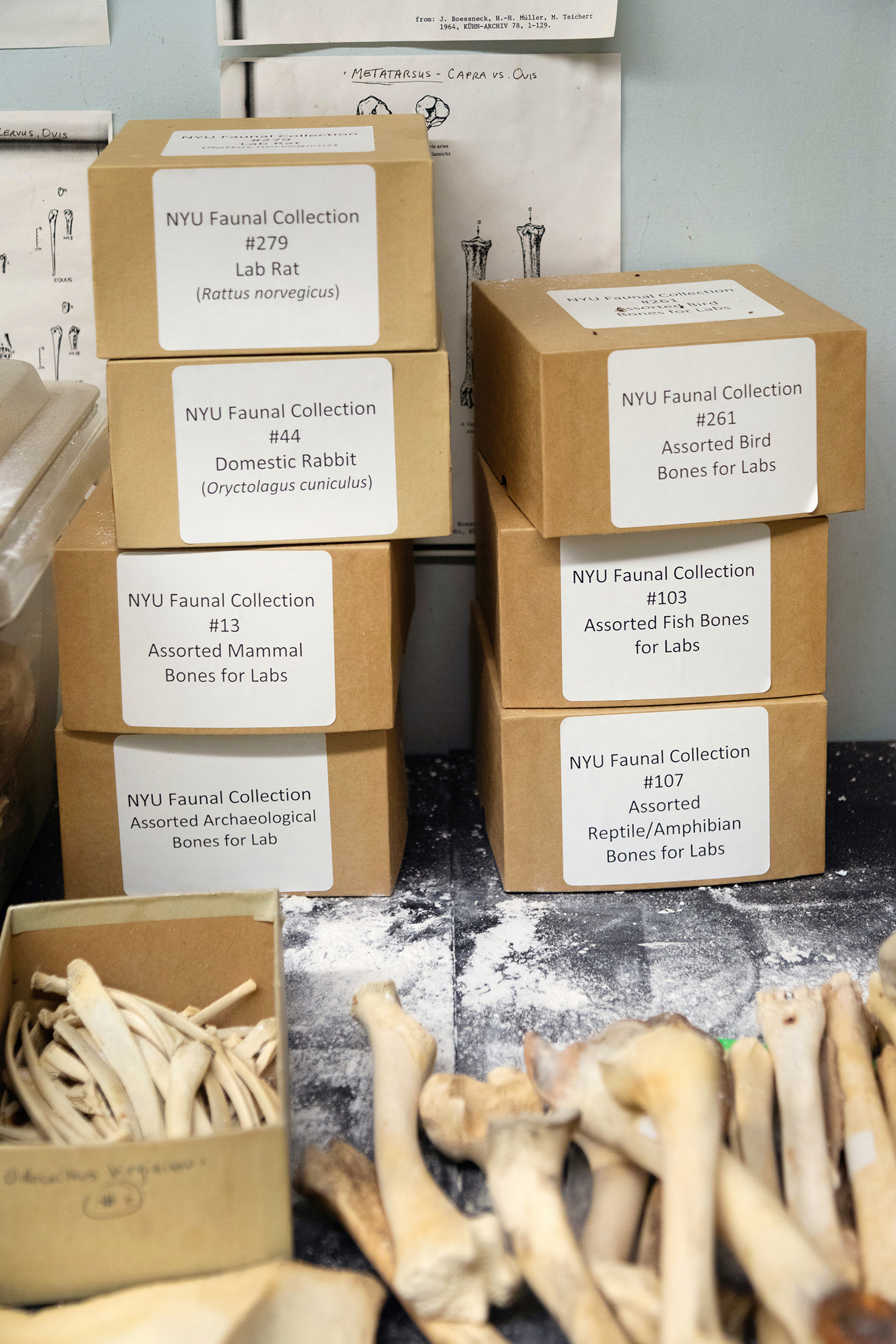
In graduate school, Crabtree narrowed her focus to the zooarchaeological. At excavation sites, she explained, the most common finds are animal bones. “It’s ‘Oh, here’s a little bit of pottery… and here are lots of animal bones’.” The bones, once assessed, can paint a picture of how entire cities functioned. What kinds of animals were being eaten? Are these remains of cattle for beef? Sheep for wool? Are there standardized cuts, suggesting specialist butchers? How was the meat distributed? “It can tell us an awful lot of things," Crabtree said.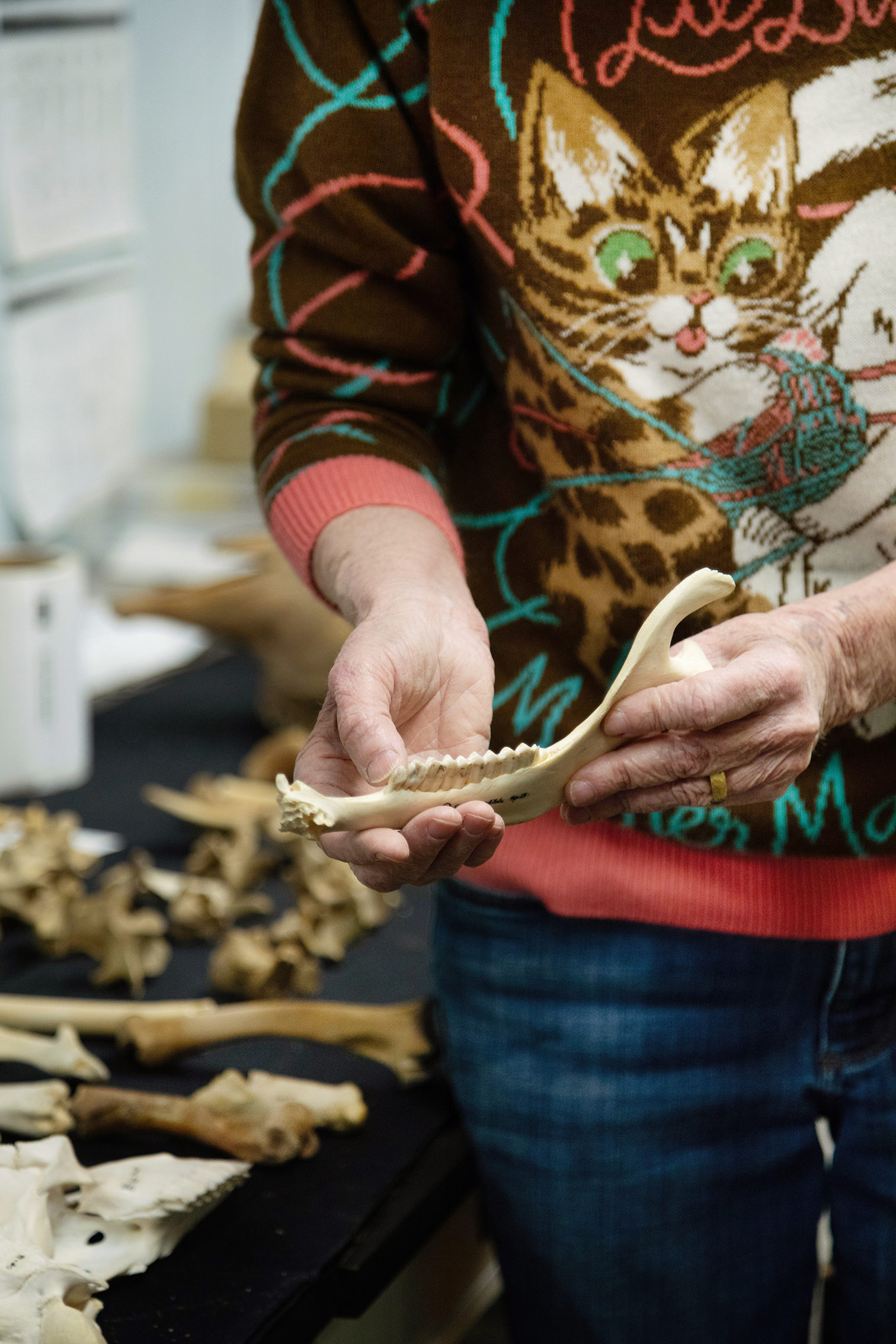
Leaving Behind a Legacy
Her scholarship emerged alongside and has made a lasting impression on the zooarchaeological sub-field. The research in Ukraine, for instance — it was often thought that modern domesticated horses could be traced back to around 3,500 BC, despite outstanding genetic and geographic uncertainties. The project’s team of archeologists searched for remains from suspected domestication sites across Iberia, Anatolia, and the steppes of Western Eurasia and Central Asia for greater insight. In the end, the origins of the domesticated horse tracked closer to 2,000 BC.
Even as her career evolved, Crabtree made it a point to continue training undergraduate students, in addition to those in master’s and doctorate programs working on specialized projects. It’s a point of pride that some of her first students are now full professors themselves. The final classes she will teach before retiring are “Zooarchaeology” and “Barbarian Europe,” which happen to be two undergraduate courses representing her major academic contributions. “That is what has felt important — getting the next generation involved,” Crabtree said.