Introduce yourself!
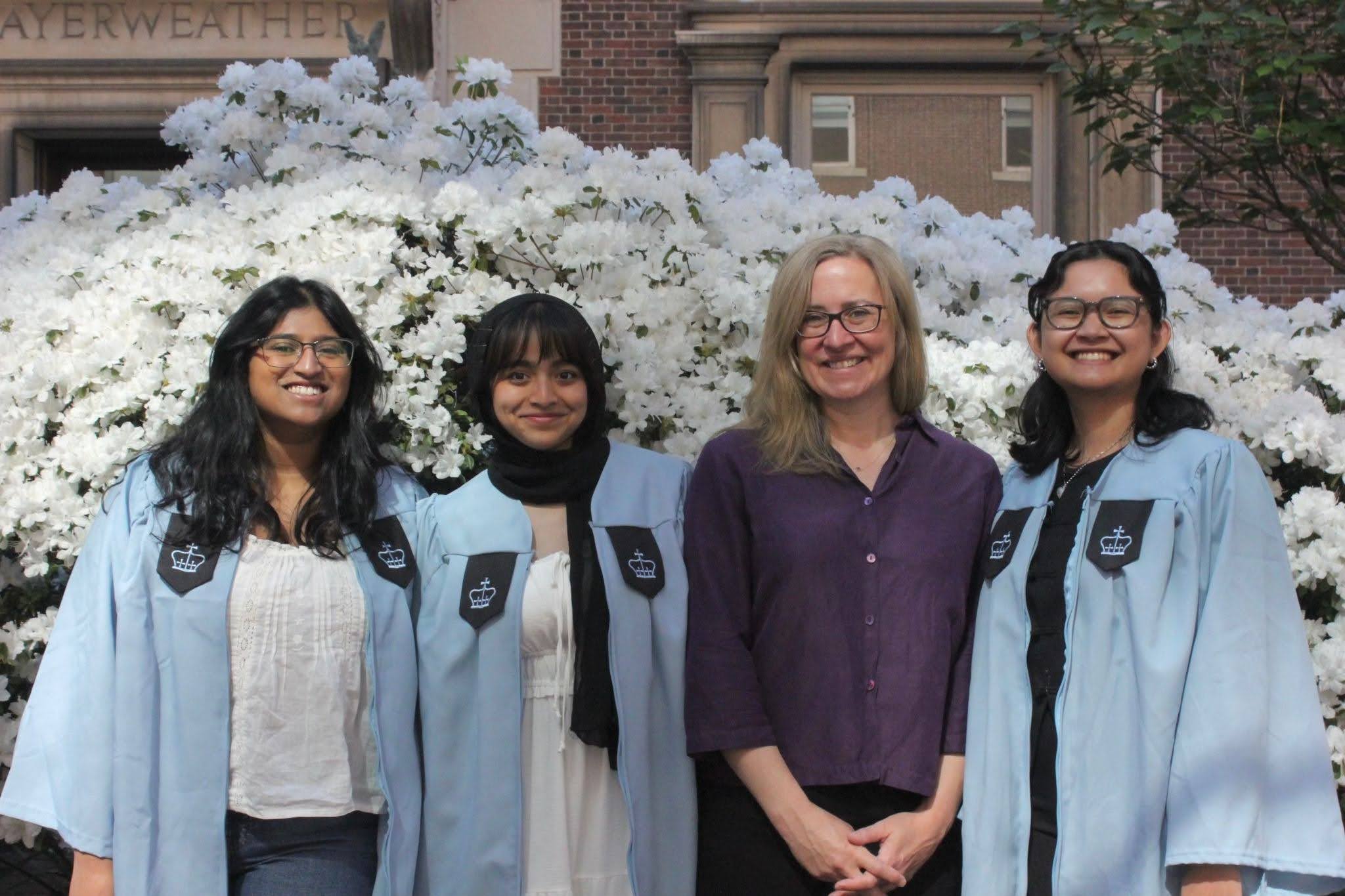
My name is Fatima and I’m a senior majoring in Biology on the Physiological and Organismal track. I’ve been a Biology Ambassador for the past three years and I conduct research on campus in the Mansfield lab.
How did you become interested in biology?
I’ve always gravitated towards science, but it was in high school when I realized I enjoyed biology in particular. I was able to take classes like Medical Human Genetics and AP Biology, and those courses really opened up my eyes to the world of understanding living things. Growing up, I often had questions like: “Why do we breathe? Why do we walk, and how? How are we able to do all the things that we do?” Biology was the field that helped me answer many of these questions.
Which Biology classes were your favorite? Did any of them surprise you?
For my favorite classes, I’m always toggling between Physiology, Molecular and Mendelian Genetics, and Development. Physiology was a class where I understood things from a more macro level and it answered many of my childhood questions about how our bodies work. It also reinforced my desire to pursue a career in the medical field. Genetics was the class that surprised me the most. After taking the Intro Bio sequence, I saw Genetics as the next-step prerequisite for taking the upper-level courses I was interested in. But it ended up being so captivating! It was so interesting to learn that the macro-physiological concepts I typically gravitated towards heavily rely on tiny interactions at the subcellular level.
Basically, within a cell, you have this chunk of DNA in the nucleus and it just rules the world!
What is the focus of your research?
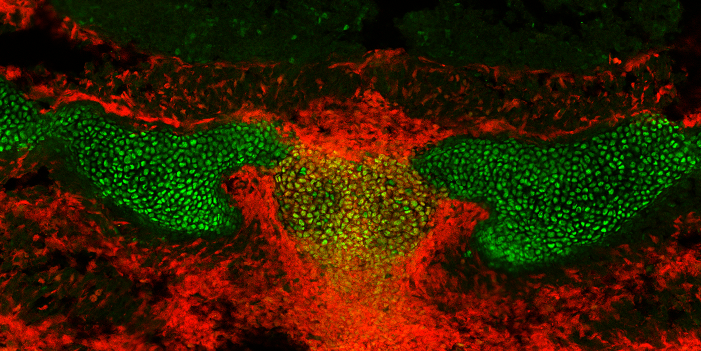
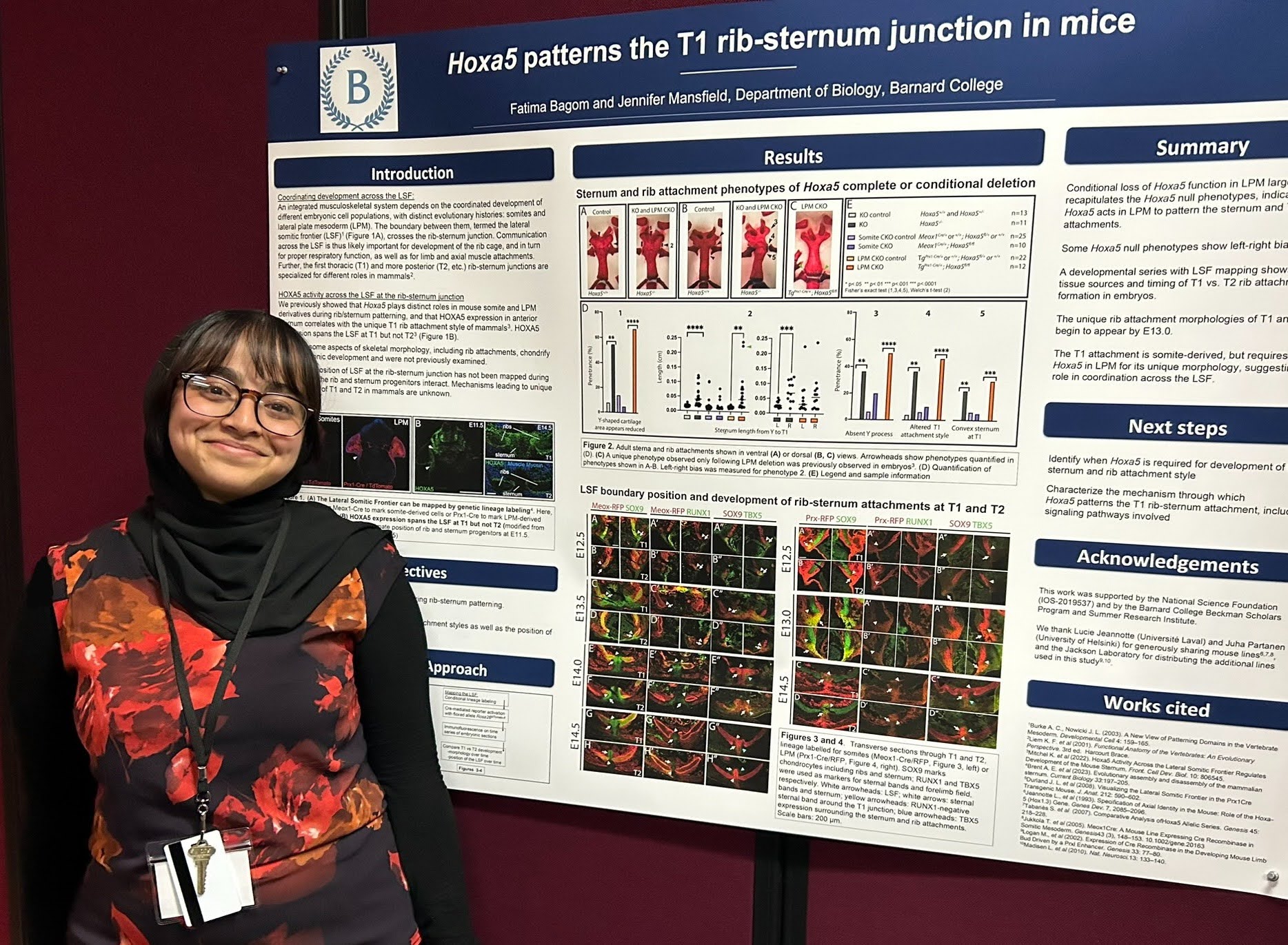
Currently I am studying the embryonic development of the attachment between the first rib and sternum in mice, which is unique compared to the other subsequent rib-sternum attachments. The way mammalian ribs and sternum attach is important for respiration and location, but not much is known about how it forms. I started my project by looking at the rib-sternum attachment in adult specimens. We wanted to identify how the deletion of the transcription factor HOXA5 affected the attachment morphology and if it played different roles in the ribs versus the sternum. The two structures come from separate embryonic cell populations, and we are interested in understanding how they coordinate their development with one another. Last summer, I started working in embryos to better understand the development of the rib-sternum attachment and the cellular communication that occurs between their respective embryonic progenitors. Broadly, our work will help us better characterize the key role of cellular interactions across differing embryonic tissues and how it shapes their development.
How did you get into your research work?
During my time taking Genetics in sophomore fall, I was able to get to know Professor Mansfield beyond just a teacher. I had built a mentorship connection with her and towards the end of the semester, I reached out to ask her for advice on getting started with research. We had chatted about my interests and we realized it aligned with the work she did, and I started working in her lab shortly after. However, this is just one of many ways to get involved with research while at Barnard.
What’s the most valuable thing you’ve learned in the research process, and how do you think it will support you in your future?
Of course, I’ve learned a lot of cool science: about how development occurs, how genes drive development, and the importance of interactions across different cell populations. I find it really cool that I can see with my own eyes the way structures change when gene expression is altered. I love the hands-on scientific learning that is integral to the scientific process.
I also learned how to be autonomous in my project and how to take responsibility for it. I was able to ask questions about my work, design and carry out experiments, analyze data, and share it with others. There’s so much thought that is put into running a project, from basic things like timing when to stop by the lab to change a solution to more complex things like figuring out the next steps for the project after obtaining preliminary results. I got to ask questions like: what stainings do I want to do next? What protein expression should I track? How can I move my project forward?
It’s so fulfilling to have a question, find ways to address it, and then come up with more questions, because research is never ending!
I have really enjoyed my time in the lab and could not imagine my undergraduate experience without it. Last year, I received the Beckman Scholar award, which has helped me dive deeply into the work I am doing. I have had amazing opportunities to share my research at conferences and through the Senior Thesis Research and Seminar course. I hope to incorporate research into my prospective career as a physician. I don’t want it to be something that I leave behind in my undergraduate years! I see myself working in some way as a physician-scientist in the future.
What has it been like to be a Biology Ambassador and what has been the most rewarding part of the position?
As a Biology Ambassador, I feel as though I have truly been a part of the department. I get to help out with events, write pieces for the website, and bridge a connection between the department and the students. I have been able to give my input at various settings on how to improve the department and to make the major more accessible for students. I came into college knowing very little about research and scientific careers. I knew you could be a doctor with a biology degree, and that was about it. However I think the Biology department did a great job (and continues to!) at shining light on the possibilities of biology careers. The department’s efforts to make science and scientific careers more approachable for students is really important and I am grateful to be part of it.
I think the work I do for the Research Corner is meaningful because it helps students learn about the type of work students, staff, faculty, and alumni are doing. It gives them a sense of the options that are out there while also getting to know someone in the field a bit better. I hope that the Research Corner pieces help to make science and research more accessible to students who are interested in pursuing careers in these fields. I think having the experiences of people at different stages of training being highlighted is very important to see for those who may be unfamiliar with what science careers can look like.
Sometimes all it takes is to see someone else do it to believe that you can too.
Why Barnard?
Barnard is a special place for me because I come from a culture where women being educated and choosing a career as their path for life is difficult. It's not always the first option for many women in my community, so I'm really privileged to be able to do that. It's an empowering place to be knowing that my identity does not hold me back from doing awesome things. I really love being in this space where I’m surrounded by all of these amazing, successful, and inspiring people.
Any words of advice for current undergraduate students?
Taking your time is important. College, and life in general, is a marathon, not a sprint! That doesn’t mean doing absolutely nothing; it just means taking it slow and being intentional. There’s a lot of things that start grabbing your attention when you’re in college, and doing the work to find balance early on is a game changer. I think I was able to successfully find my groove in the first few months of college by intentionally building my foundation. Now, as I balance the workload of senior year with my other priorities, I have systems in place that protect my time and wellbeing.
Another piece of advice I would give is that you want to make space and open doors for yourself and also allow others to do the same for you. It is really valuable to build a strong support system. I don’t think I could have accomplished the things I did without all of the support I have found within my peers, my mentors, the Biology department, and Access Barnard. I want to give a shoutout to Professor Mansfield, my supervisor Jesse, my advisor Raul, my sister Tia and many others who have invested in me. College has been transformative for me. I’ve had so much growth throughout these years. I could not have done it if it wasn't for the hard work that I have put in and the work of the people who supported me.
- ANN DAI '28