“Inside the Situation Room” does not resemble the average college course. For one, an hour before class starts, 350 students organize themselves into a single-file line to enter the Altschul Auditorium. The first rows are filled in minutes, a reward for those who arrived the earliest. And when the professors take the stage — Keren Yarhi-Milo, the dean of the School of International and Public Affairs (SIPA), and Hillary Rodham Clinton, the 67th Secretary of State — murmurs go quiet and students break into applause.
20 Barnard students enrolled in the course in fall 2025, selected from a pool of applicants that extends to SIPA, Columbia College, the School of Engineering and Applied Science, and the School of General Studies. “Inside the Situation Room” was created in 2023 to provide students with an exclusive window into the complex decision-making processes world leaders face. It is just one example of the expanded opportunities Barnard students have access to from Columbia and affiliated schools, including the Accelerated 4+1 Pathway that allows students to earn an undergraduate degree from Barnard and a postgraduate degree from SIPA in five years.
The semester’s final class focused on communicating across difference — not least ideological differences that can be seen as insurmountable — and addressing conflict from a place of empathy. “It goes to the heart of democracy... whether there’s enough trust between people with different backgrounds, perspectives, and experiences to be able to have civil discourse,” Clinton told the class. “You have to work at developing the discipline and the patience to be able to engage in this kind of bridge-building, or at least attempt to bridge those differences.”
Clinton referred back to an example from her own life, pointing to an experience from high school. She was raised in a family of conservatives. Her father was a small business owner and lifelong Republican (“He never voted for a Democrat until he voted for my husband… family relations, you know,” Clinton joked). Her school decided to host a mock debate ahead of the presidential election between Democratic incumbent Lyndon B. Johnson and Republican Senator Barry Goldwater, and a discerning teacher assigned Clinton to represent the views of Johnson and a left-leaning friend, Ellen, to represent Goldwater.
To prepare for the debate, Clinton started reading about the substance of Johnson’s policies — programs like Medicare and Medicaid — and surprised herself by agreeing with his positions. “Well, I think people should get healthcare. Oh, dear,” she remembered thinking. Letting go of her preconceived ideas about partisanship was painful, but engaging with the other side transformed her political view. “Look where I ended up,” Clinton reminded the class. And her friend Ellen? She went on to become a Republican.
Throughout the semester, Clinton and Yarhi-Milo pulled from their wealth of personal and professional experiences to demonstrate the connections between theory and practice in foreign policy strategies. Yarhi-Milo, the youngest dean in SIPA’s history, is recognized around the world as an expert in crisis decision-making and the psychology of leadership. How does a leader approach the competing priorities embedded in all political choices? How is the complex puzzle of diplomacy pieced together? In 2023, she founded and launched Columbia SIPA’s Institute of Global Politics to train the next generation of leaders, with Clinton as chair of the faculty advisory board.
For Clinton, there are more than five decades of experience in public service to draw from during "Inside the Situation Room" lectures. After graduating from Wellesley College — one of Barnard’s “Seven Sisters” — and Yale Law School, Clinton became a trailblazer for women in politics, crossing off firsts at each post. She was the first woman elected to statewide office in New York, the first woman nominated for president by a major U.S. political party, and the first woman to win the national popular vote in a presidential election, earning the support of over 65 million voters.
The phrase “White House Situation Room” often invokes the image of Clinton during the 2011 raid on Osama bin Laden’s compound. She is sitting at a crowded table alongside President Obama and then Vice President Joe Biden as the team receives live updates, and her hand is held over her mouth. In one class, Clinton walked students through the mission and its challenges, including her experience in the 38-minute-long Situation Room meeting. “Hearing her thoughts and what she had to consider in each moment was enlightening,” said Alexa Weinmaster ’27, an economics and political science double major.
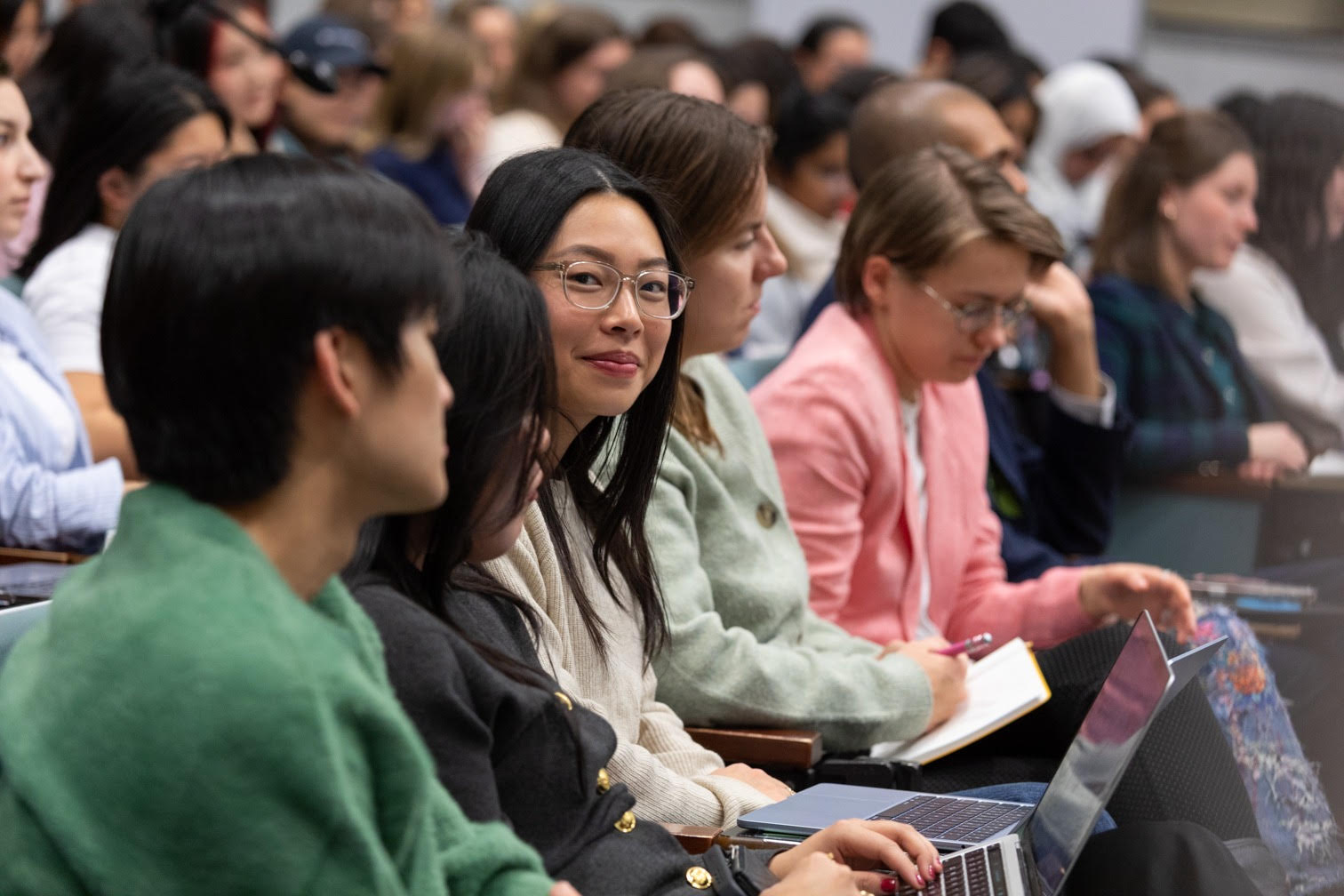
Megan Chui ’27 emphasized that the course is a unique opportunity for Barnard students — there is no equivalent to hearing first-hand from Clinton. Chui, a political science major, aspires to attend law school and appreciated Clinton’s personable approach to teaching. “She was able to speak about her own experiences, which made it more accessible,” Chui said. “Even though I’m not a human rights or international affairs major, I could understand what she’s talking about.”
Aside from the weekly lectures with Clinton and Yarhi-Milo, students participated in small discussion sections and critiqued assigned readings on a range of domestic and international issues. Learnings from the class were applied to a semester-long group project on the decisions that influenced the outcome of an item of foreign policy, which was then used to generate a “post-mortem.”
Clinton has embraced her academic responsibilities since becoming a professor of practice at SIPA in 2023, holding office hours during the semester and allotting time for questions after lectures. In the semester’s final class, students sat on the edge of their seats for the Q&A portion, a single-file line forming in the center aisle within seconds. One student who secured a place in the queue was Barnard junior Ella-Rose Levy ’27. Her question: Is there a single meeting or piece of intelligence that shifted the professors’ world view?
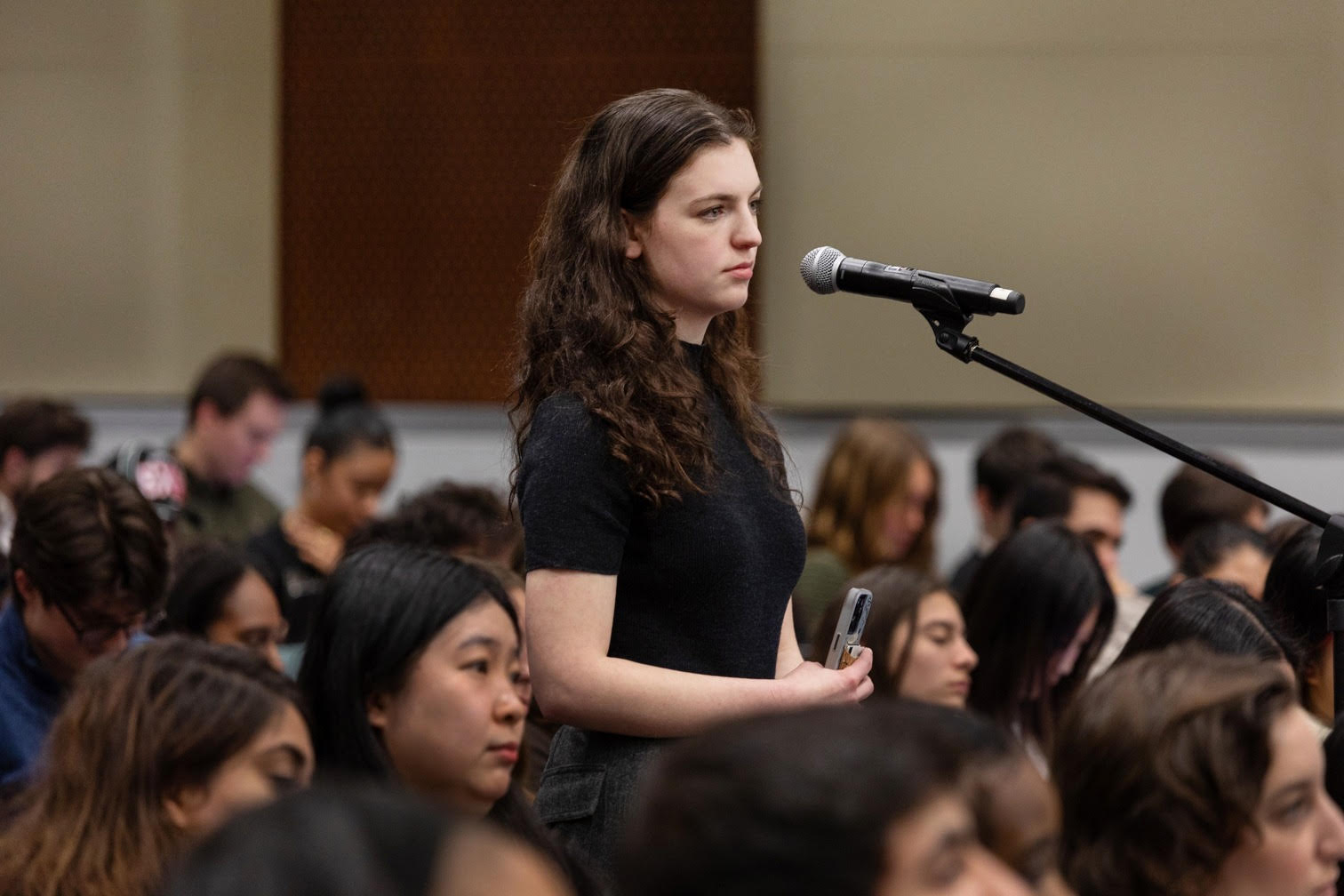
Clinton and Yarhi-Milo considered the question for a moment, mulling over what could be shared in a public forum. “I’ve had information that took me off the fence,” Clinton said, pointing to times when new information clarified an actor’s motivations or interests. “It can give you a lot of information. But whether it changes your mind or not — that’s hard to say.”
For Levy, a history major, approaching the microphone was nerve-wracking. Clinton is the first political candidate she can remember watching on TV, and the 2016 election is one of her earliest political memories. But it felt like a once-in-a-lifetime opportunity, and after interning on the Hill for both Democrats and Republicans, she was curious about whether Clinton’s outlook had changed over time.
“Earlier in the semester, we had an entire lecture about women in politics, and, for me, working in politics is a lifelong dream,” Levy said. “You read about these different theories in books, but then you hear Secretary Clinton talk about how she’s applied them to real-life situations... it was fascinating. The class was inspirational.”
“Inside the Situation Room” will return in fall 2026 for rising juniors and seniors. Interested Barnard students must apply through the application form no later than 11:59 p.m. on Monday, April 20. The goal is to notify students by the end of April. Please note that once selected, students will be vetted by the U.S. Secret Service.